

TL;DR:
- Traditional hand stamps are versatile tools used for craft personalization, branding, and metalwork identification. Rubber stamps produce temporary ink impressions on soft surfaces, while metal stamps create permanent marks on hard materials using a hammer. Mastering proper technique ensures clear, consistent impressions that enhance a brand’s physical presence and authenticity.
Traditional hand stamps are often dismissed as relics of a pre-digital age, used only for rubber-stamping office paperwork. That assumption misses the point entirely. If you are exploring what is a traditional hand stamp for the first time, you will find a tool that spans craft personalisation, product branding, metalwork identification, and packaging design. This article covers the main types of traditional hand stamps, explains how each works, compares their differences, and gives you the practical knowledge to choose the right tool and technique for your project.
Table of Contents
- What is a traditional hand stamp and how does it work
- Uses of traditional hand stamps for personalisation and branding
- How metal hand stamps differ from wood-handle rubber stamps
- Techniques for achieving consistent and clear impressions with traditional hand stamps
- Selecting the right traditional hand stamp for your project needs
- Rethinking the value of traditional hand stamps in modern branding
- Explore traditional hand stamps for your personal and small business brand
- Frequently asked questions
Key Takeaways
| Point | Details |
|---|---|
| Definition and types | Traditional hand stamps include wood-handle rubber stamps and metal hand stamps used for different marking purposes. |
| Uses for branding | Hand stamps are popular tools for personalisation and consistent branding impressions on products and crafts. |
| Technique matters | Achieving clear impressions depends on correct placement, striking speed, and avoiding multiple hammer strikes. |
| Choosing stamps | Select stamp type based on permanence needs, surface type, and branding goals. |
| Modern relevance | Traditional hand stamps combine heritage and authenticity with practical modern branding applications. |
What is a traditional hand stamp and how does it work
A traditional hand stamp is, at its core, a physical marking tool operated entirely by hand. A traditional hand stamp is a physical tool with a handle used to create inked or impressed marks by manual pressing. The two main formats serve quite different purposes, and understanding each one prevents costly mistakes when selecting tools for a project.
Wood-handle rubber stamps consist of a carved or moulded rubber die attached to a wooden or sometimes acrylic handle. You press the rubber face onto an ink pad, then apply it to paper, card, fabric, or other soft surfaces. The impression is temporary and ink-based, meaning it can be replicated quickly and repeatedly without any special equipment.
Metal hand stamps, also called steel dies or touch marks, are entirely different in construction and application. These are solid hardened steel tools engraved with a letter, number, symbol, or custom design. Instead of ink, they use mechanical force, typically a hammer blow, to press a permanent indentation into metal, leather, or wood surfaces.
The key distinctions between the two types are:
- Material: Wood and rubber versus hardened steel
- Application method: Pressed by hand using body weight versus struck with a hammer
- Surface compatibility: Paper, card, and fabric versus metal, leather, and hard wood
- Impression permanence: Ink-based and removable versus permanently indented
- Typical use case: Branding packaging and stationery versus marking tools, jewellery, and metalwork
If you are unsure which format fits your needs, choosing the right rubber stamp is a useful starting point for most personalisation and business branding projects.
Uses of traditional hand stamps for personalisation and branding
With a clear understanding of what traditional hand stamps are, it is useful to explore the practical uses these tools offer for personalisation and branding.
Traditional hand stamps help create consistent impressions of logos, text, and maker’s marks as final branding steps in crafts. That consistency is what makes them genuinely valuable for small businesses and makers. A logo printed by a rubber stamp on kraft paper packaging looks deliberate and considered. A touch mark pressed into a handmade leather belt identifies the maker for the lifetime of the product.
Common uses across both types include:
- Product packaging: Stamping a logo or brand name onto boxes, bags, tissue paper, and card tags
- Office and administrative use: Dating, approving, or categorising documents with repeatable text stamps
- Craft personalisation: Adding monograms, patterns, or sentiments to handmade cards, notebooks, and gifts
- Maker’s marks on metalwork and leatherwork: Permanently identifying handcrafted knives, tools, belts, and jewellery with a steel die
- Event and retail branding: Stamping loyalty cards, receipts, and promotional materials with a business logo
For small businesses in particular, custom logo stamps offer a low-cost way to add a branded finish to every item that leaves the workshop or shop floor. The stamp pays for itself quickly when you consider it can produce thousands of impressions before any noticeable wear.
There are also more creative applications. Textile designers use rubber stamps with fabric ink to create surface patterns on tote bags and cushions. Food producers stamp branded paper wrapping. Potters use clay stamps to press a maker’s mark into the base of each piece before firing. These creative custom stamp uses demonstrate how far the tool reaches beyond conventional office applications.
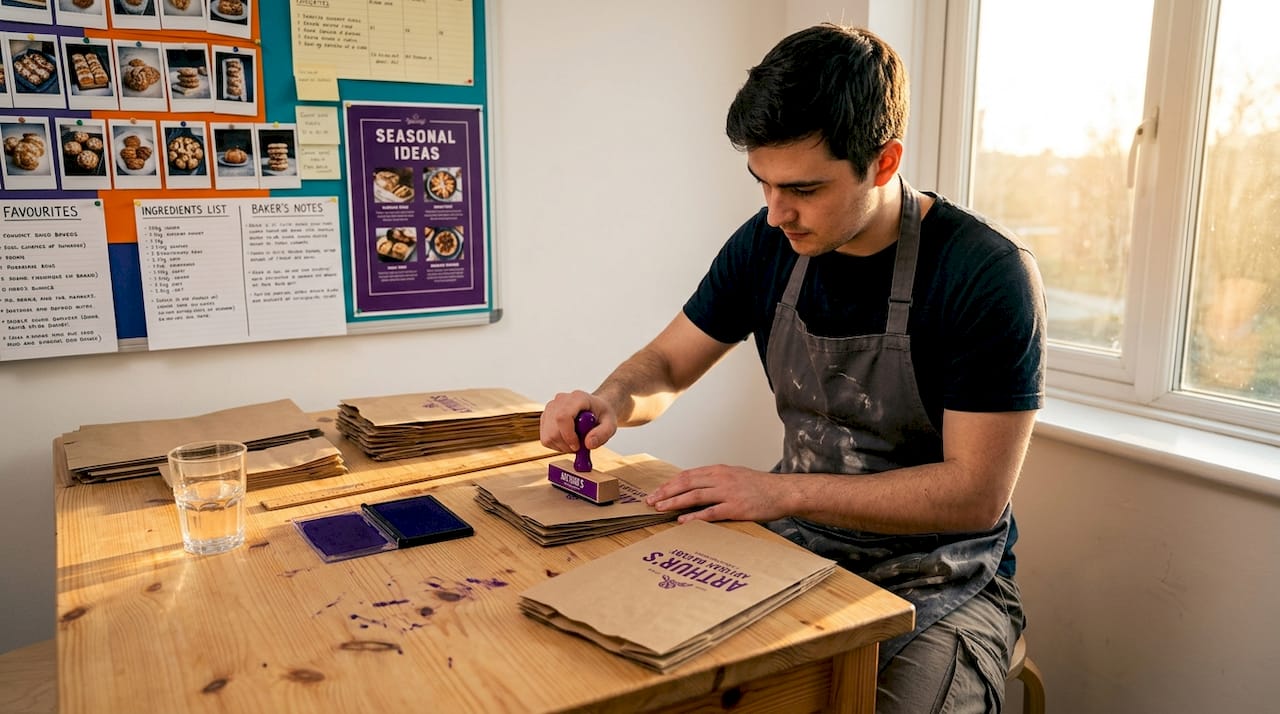
Pro Tip: Always clean the rubber face of a wood-handle stamp after use and before re-inking. Dried ink builds up in fine details and causes blurred impressions over time. A simple rinse with water or a dedicated stamp cleaner keeps impressions sharp across thousands of uses.
How metal hand stamps differ from wood-handle rubber stamps
To make informed choices, understanding the differences between metal and wood-handle stamps is essential.
Metal hand stamps are hardened steel die tools used with a hammer for permanent identifications, whereas wood-handle rubber stamps use ink pads for temporary marks. The practical implications of that difference are significant.
| Feature | Metal hand stamp | Wood-handle rubber stamp |
|---|---|---|
| Material | Hardened steel | Wood handle, rubber die |
| Impression type | Permanent indentation | Ink-based, removable |
| Surfaces | Metal, leather, hard wood | Paper, card, fabric |
| Application method | Hammer strike | Hand pressure |
| Lifespan | Decades with correct use | Years with regular re-inking |
| Skill required | Striking technique essential | Minimal learning curve |
| Typical users | Blacksmiths, jewellers, leatherworkers | Offices, crafters, small businesses |
A few important practical distinctions worth noting:
- Metal stamps produce a one-time permanent mark, so positioning matters enormously before you strike
- Rubber stamps allow repositioning before pressing down, making them far more forgiving for beginners
- Metal stamps require a steel backing plate beneath the work piece to absorb the hammer blow correctly
- Rubber stamps work well on uneven or slightly textured surfaces like rough paper or recycled card, while metal stamps need a flat, stable workpiece
Understanding which identity stamp types suit your trade will save time and materials from the outset.
Pro Tip: When using metal hand stamps, practise your striking technique on scrap metal before working on the actual piece. A single clean blow produces a sharper, deeper impression than several lighter taps, which risk creating a blurry double image.
Techniques for achieving consistent and clear impressions with traditional hand stamps
Understanding the right technique is key to getting the best results with either metal or rubber traditional hand stamps.
Poor impressions almost always come down to technique rather than tool quality. A misaligned stamp, an uneven surface, or an inconsistent hammer strike are the three most common causes of blurred or incomplete marks. The good news is that all three are correctable with deliberate practice.
Follow these steps for consistent results:
- Prepare the surface. Ensure the item you are stamping is flat, clean, and stable. For metal stamping, place a thick steel plate or anvil beneath the workpiece to absorb impact. For rubber stamping, use a firm, padded surface such as a mouse mat under the paper.
- Ink the stamp properly (rubber stamps only). Press the rubber face onto the ink pad evenly, covering the full design without overloading. Too much ink fills in fine details; too little produces a faint impression.
- Position carefully before committing. For rubber stamps, lower the stamp straight down without rocking. For metal stamps, hold the die vertically against the surface and check alignment before striking.
- Apply force in one motion. Strike a metal stamp with one firm, controlled hammer blow. Press a rubber stamp with firm, even body weight through both hands, hold for two seconds, then lift straight up.
- Lift cleanly. Do not slide or rock the stamp when lifting. A sliding motion smears ink impressions and can shift a metal stamp mid-strike.
- Inspect and adjust. Check the first impression before continuing. Adjust ink coverage, striking force, or surface preparation as needed before repeating.
“The speed and accuracy of the hammer impact is essential for a successful mark.”
Correct striking speed and flat placement are crucial to achieve consistent depth and avoid double impressions when hand stamping with a hammer. This principle applies equally to rubber stamping: a consistent, controlled motion produces a cleaner result than a rushed or uncertain one.
For those pursuing business branding practical steps, consistent technique is what separates a professional-looking branded item from something that looks homemade.
Pro Tip: A hand stamp holder or alignment jig removes guesswork from positioning, especially when you need to stamp the same location on dozens of identical items. This is a small investment that dramatically improves accuracy and saves wasted materials.
Selecting the right traditional hand stamp for your project needs
Having covered usage techniques, it is important to know how to select the right traditional stamp for your specific project needs.

The type of stamp and technique is selected based on whether a permanent or temporary mark is needed and the nature of the surface to be marked. That single question narrows the choice considerably.
Key factors to consider before purchasing:
- Permanence required: If the mark must last indefinitely (tool identification, jewellery hallmarks, leather goods), choose a metal die. If the mark is functional and may need replacing over time (packaging, correspondence), a rubber stamp is appropriate.
- Surface type: Paper, card, and fabric suit rubber stamps. Metal, leather, and hard wood suit steel dies. Attempting to use a rubber stamp on uncoated metal produces no visible result.
- Detail complexity: Fine text and intricate logos reproduce well in rubber. Metal dies work better with bolder, simpler designs because fine details can fill with scale or oxidisation over time.
- Usage frequency: High-volume users should consider self-inking rubber stamps for speed. Occasional metal marking does not require the same throughput considerations.
- Maintenance and running costs: Rubber stamps need replacement ink pads. Metal stamps need only occasional cleaning and correct storage.
| Criteria | Metal hand stamp | Rubber stamp |
|---|---|---|
| Permanence | Permanent | Temporary |
| Best surface | Metal, leather, hard wood | Paper, card, fabric |
| Appearance | Debossed indentation | Inked impression |
| Upkeep | Minimal, clean and store dry | Regular re-inking required |
| Initial cost | Higher | Lower to moderate |
For most small businesses starting with branded packaging, choosing a rubber stamp aligned to your logo dimensions and ink colour is the practical first step. Makers and artisans producing physical goods may benefit from both: a rubber stamp for paper branding and a metal die for permanent product identification. There are useful branding practical steps worth reviewing when building a complete approach.
Rethinking the value of traditional hand stamps in modern branding
There is a tendency to assume that because digital printing exists, physical stamps are simply a nostalgic workaround. That framing misses something important. A laser-printed logo on a postal box looks identical to ten thousand others. A rubber-stamped logo on the same box carries a physical presence that digital printing cannot replicate. The ink sits on the surface differently. The slight variation from impression to impression signals that a human being applied it. That is not a flaw. For many buyers, it is exactly the point.
The traditional value of hand stamps lies in controllable, repeatable physical imprinting where technique influences quality and consistency. The operative word there is technique. Most people who pick up a hand stamp for the first time treat it as foolproof. It is not. The results improve measurably with practice, and that gap between a careless impression and a considered one is visible to any customer who handles the finished item.
“The quality of the stamp and technique strongly affect clarity and consistency.”
Small businesses that invest time in mastering their stamping technique do not just produce cleaner marks. They produce marks that communicate attention to detail across everything the brand touches. That is a branding signal that no amount of digital design work can fake. A custom logo stamp becomes a brand asset when it is used consistently and correctly, not just an administrative shortcut.
Pro Tip: Treat your first fifty impressions with a new stamp as practice, regardless of whether they are on the actual product. By impression fifty, your pressure, speed, and placement will be calibrated for that specific stamp and surface. From that point, consistency becomes automatic.
Explore traditional hand stamps for your personal and small business brand
If you are ready to put what you have learned into practice, the range available at Stamp Design 4U covers both standard and custom formats suited to individual and small business needs.
The Trodat Printy 4927 rubber stamp offers a larger impression area ideal for multi-line text and logo designs, making it well suited for packaging and correspondence branding. For businesses running loyalty programmes, the Traxx 9021 loyalty stamp provides a compact, durable option designed for repeated daily use. You can also explore the SD4U personalised stamp range for custom designs tailored to your specific branding requirements. Each product is available with customisation options so your stamp reflects your identity accurately from the first impression.
Frequently asked questions
What materials are traditional hand stamps usually made from?
Traditional hand stamps commonly use wood handles with rubber dies for ink-based stamping, and hardened steel for permanent metal marking dies. The material determines both the surfaces the stamp can mark and the permanence of the impression it creates.
Can traditional hand stamps create permanent marks?
Yes. Metal hand stamps made from hardened steel produce permanent impressions when struck with a hammer on metal, leather, or hard wood surfaces. Rubber stamps, by contrast, produce ink-based marks that can fade or be removed over time.
How can I ensure clear impressions with a traditional hand stamp?
Place the stamp flat on a stable surface and apply force in one controlled motion, whether pressing by hand for rubber stamps or striking once firmly with a hammer for metal stamps. Multiple lighter attempts cause blurring and double impressions.
Are traditional hand stamps suitable for small business branding?
Yes. Small businesses use traditional hand stamps to apply consistent logos and text to packaging, products, and paperwork at low cost and with high repeatability. A single custom rubber stamp can produce thousands of clean impressions before requiring replacement.
What is the difference between ink-based and metal hand stamps?
Rubber stamps use ink pads to create temporary impressions on soft surfaces such as paper and card, whereas metal hand stamps create permanent indentations by hammering hardened steel dies directly into metal, leather, or wood.