

TL;DR:
- Choosing the right identity stamp affects impression quality, branding consistency, and surface suitability for your specific needs.
- Understanding your surface, volume, and design requirements helps you select the most effective stamp type and ink chemistry.
Choosing the right identity stamp is more than a minor purchasing decision. The wrong choice can mean smudged impressions on loyalty cards, ink that fades on packaging within weeks, or a logo that looks blurry instead of sharp and professional. Whether you run a small business, manage office admin, or pursue creative projects, the stamp type you select directly affects how your brand or identity is perceived every single time it is used. This article walks you through every major identity stamp type, the selection criteria that matter most, and how to match the right stamp and ink to your exact purpose.
Table of Contents
- What to consider before choosing an identity stamp
- Types of identity stamps explained
- Direct comparison: How the main identity stamps stack up
- Choosing the right stamp for your purpose
- A stamp is more than a mark: Rethinking your identity stamp investment
- Ready to personalise your identity stamp?
- Frequently asked questions
Key Takeaways
| Point | Details |
|---|---|
| Match stamp to purpose | Select an identity stamp type that aligns with your specific branding, organisational, or creative needs. |
| Ink matters most | Choose your ink based on surface and durability requirements, not just the stamp mechanism. |
| Personalisation pays off | Investing in a custom-designed stamp enhances your brand and makes a stronger impression. |
| Versatility or convenience | Opt for traditional rubber stamps for flexibility, or self/pre-inked designs for speed and ease. |
What to consider before choosing an identity stamp
Before comparing specific stamp types, it is worth stepping back and thinking clearly about how and where you plan to use your stamp. The selection criteria you apply at this stage will save you time, money, and frustration later.
Usage environment and purpose are the first things to pin down. A stamp used on paper invoices and filing folders in an office has very different requirements from one pressed onto kraft paper gift bags in a craft studio, or onto plastic loyalty cards at a café counter. Each context demands different ink formulations and different stamp mechanisms.
Here are the key factors to assess before you buy:
- Surface type: Paper, cardboard, fabric, plastic, vellum, or mixed media all respond differently to ink.
- Impression volume: Will you stamp five documents a day or five hundred? High-volume tasks favour integrated-ink mechanisms.
- Detail level: Fine logos with intricate lines need sharper, firmer stamp surfaces and particular ink viscosities.
- Ink permanence: Admin stamps can use water-based inks, but archival records or product labelling require something more durable.
- Portability: On-location use (markets, pop-up shops, events) calls for self-contained, compact stamp options.
- Personalisation depth: Some projects need a full logo; others only require a name and address.
Ink durability is largely dictated by chemistry and surface, not only by stamp type. This is a critical point that many first-time stamp buyers overlook entirely. They assume a “good quality” stamp automatically produces lasting impressions, but a high-end self-inking stamp loaded with standard water-based ink will still fade on a glossy surface.
Good stamp design for branding demands that you think about ink chemistry from the outset, not as an afterthought once the stamp arrives. Similarly, understanding self-inking stamp benefits early in your decision process will help you rule options in or out before spending time on design.
Pro Tip: If you are unsure which ink suits your surface, test a small sample stamp impression on your actual material before placing a full order. Ink behaviour on glossy card differs dramatically from behaviour on uncoated paper, and the only reliable test is a real-world one.
Types of identity stamps explained
With your criteria in hand, you can now assess each stamp type clearly and objectively. Each mechanism brings distinct advantages, and the best choice depends on the factors you have already identified.
Self-inking stamps are the most popular choice for office and retail settings. The ink pad is built directly into the casing. After each impression, the mechanism rotates the die back through the ink pad automatically. This means no separate ink pad, no mess, and consistent impressions impression after impression. They are ideal for high-volume tasks such as date-stamping, address marking, or loyalty card programmes.
Pre-inked stamps produce the sharpest, most detailed impressions of any stamp type. The ink is impregnated directly into the stamp die itself rather than applied via a pad. This creates crisp, precise lines, making pre-inked stamps the preferred option for logos with fine detail, signatures, or any design where visual clarity is essential. Self-inking and pre-inked stamps offer varying levels of convenience and longevity, with ink type affecting durability significantly.
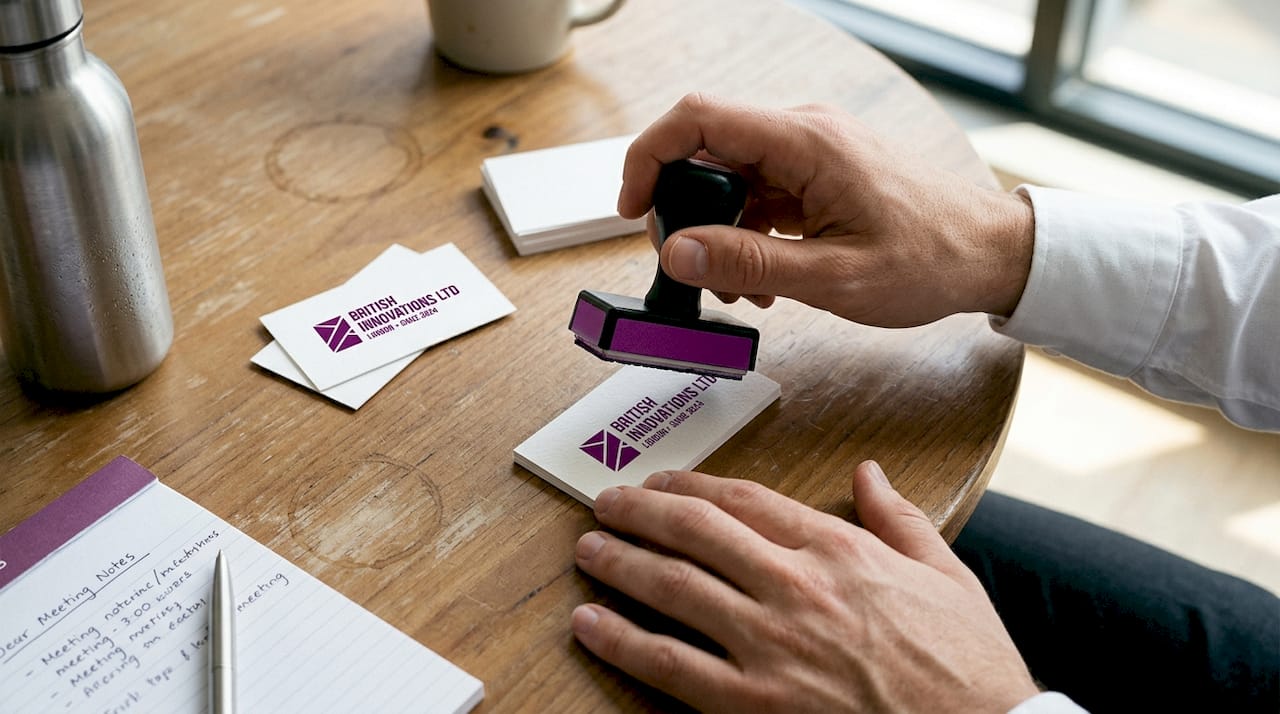
Traditional rubber stamps use a separate, removable ink pad. This gives you the greatest flexibility because you can swap ink pads freely, change colours instantly, and use the same stamp on multiple surface types simply by selecting the right ink pad. They also accommodate the largest and most complex custom shapes and sizes. For artists, crafters, and businesses needing multi-colour stamping, this versatility is difficult to replicate with integrated-ink options.
Specialty and novelty stamps cover a broad range of function-specific tools:
- Date and numbering stamps automate sequential data entry on documents.
- Embossing stamps create raised, ink-free impressions on paper, giving a premium look to certificates or correspondence.
- Loyalty stamps are compact, durable, and designed for repeated single-impression use on loyalty cards.
- Address stamps consolidate name, address, and branding in one clean block.
The right self-inking stamp guide will confirm that self-inking mechanisms are almost always the best starting point for businesses stamping more than twenty documents per day. However, reviewing the full range of business stamp types helps you understand where specialty options become valuable. For context on practical applications, consider stamp uses for small business across retail, admin, and creative industries.
Pro Tip: Clean your stamp die with a damp lint-free cloth after each session and store it face-down or in its protective cap. Dried ink residue on the die surface is the single biggest cause of blurred or incomplete impressions over time.
Direct comparison: How the main identity stamps stack up
After reviewing each stamp type individually, a side-by-side comparison makes the differences much easier to act on.
| Feature | Self-inking | Pre-inked | Traditional rubber | Specialty |
|---|---|---|---|---|
| Impression quality | Good | Excellent | Good to excellent | Variable |
| Ease of use | Very high | High | Moderate | High |
| Customisation range | High | High | Very high | Moderate |
| Ink longevity | Moderate | High | Depends on pad | Varies |
| Surface compatibility | Paper, card | Paper, card | Most surfaces | Purpose-specific |
| Best context | Office, retail | Logo, branding | Craft, mixed use | Loyalty, admin |
| Ongoing cost | Low (re-ink) | Low (re-ink) | Pad replacement | Low |
Some ink types such as oil-based, alcohol-based, and UV-curable formulas work better on certain surfaces or for permanence, while standard office ink will not suit all cases. This matters most when you look at the “surface compatibility” row above. A pre-inked stamp loaded with standard dye ink will not perform on plastic or coated card, no matter how sharp its die surface is.
Most popular choice for small businesses: Self-inking stamps consistently rank as the top choice for small business owners because they combine low running costs, reliable impression quality, and minimal maintenance. For businesses handling loyalty programmes, address marking, and branded packaging simultaneously, a combination of a self-inking stamp for admin and a pre-inked stamp for logo impressions covers most operational needs without significant expense.
For office stamp essentials, the comparison table above is a useful reference point. Office environments prioritise ease of use and consistency. Creative studios often prioritise customisation and surface range. Retail settings weight durability and speed most heavily.
It is also worth noting that ink re-fill availability varies between stamp types and brands. Pre-inked stamps generally use proprietary re-ink fluid specific to the manufacturer. Self-inking pads are more universally compatible with standard replacement pads. Traditional rubber stamps simply require a compatible ink pad from any supplier. Factor this ongoing availability into your long-term cost calculations.
Choosing the right stamp for your purpose
With stamp types compared, matching the right option to your specific use case is the final and most practical step.
For branding and marketing use: If your primary goal is representing your business visually, sharp logo reproduction matters above all else. A pre-inked stamp with oil-based or pigment ink delivers the crispest brand impressions on paper and card stock. For packaging on non-standard surfaces, a traditional rubber stamp with an alcohol-based ink pad gives you the flexibility to adapt. Explore branding stamps for small business and logo branding stamps to understand how design choices translate into real impressions.
For organisational and admin use: Self-inking stamps are the clear choice. Date stamps, received stamps, and address stamps all benefit from the speed and consistency of an integrated ink mechanism. Volume and reliability outweigh fine detail concerns in these scenarios.
For creative and craft use: Traditional rubber stamps with swappable ink pads give artists the colour range and surface flexibility they need. Different types of ink, such as water-based for paper, oil or alcohol for special surfaces, affect the effectiveness of your stamp directly. Craft users often work across paper, fabric, wood, and mixed media in a single session, making the swappable pad system invaluable.
For loyalty programmes: Compact specialty loyalty stamps are purpose-built for this task. They are small, durable, and designed for thousands of clean impressions on card stock.
Here is a quick reference list of dos and don’ts for first-time stamp buyers:
- Do test ink on your actual surface before committing to a large order.
- Do match your stamp mechanism to your impression volume requirements.
- Do factor in re-ink availability for your chosen stamp brand.
- Don’t assume a self-inking stamp works on all surfaces without checking the ink type.
- Don’t choose a stamp based solely on price if quality impressions matter for your brand.
- Don’t ignore cleaning and storage requirements, as they directly affect stamp lifespan.
A simple decision process for narrowing your options:
- Define your primary surface (paper, card, fabric, plastic, or other).
- Estimate your daily impression volume (low, medium, or high).
- Identify your detail requirements (text only, mixed, or full logo).
- Select the ink chemistry appropriate for your surface and permanence needs.
- Choose the stamp mechanism that best fits your volume and detail requirements.
- Review customised logo stamp uses to confirm your choice suits real-world applications.
Working through these six steps in order prevents the most common mistakes, particularly selecting a stamp mechanism first and then discovering the available inks do not suit the intended surface.
A stamp is more than a mark: Rethinking your identity stamp investment
Most people approach stamp buying the way they buy a stapler. They find the cheapest functional option, assume all stamps are essentially equivalent, and move on. This framing costs businesses far more than the price difference between a generic stamp and a quality custom one.
Every time you use an identity stamp, you are either reinforcing your brand or subtly undermining it. A blurry, ink-smeared logo impression on a customer’s order does not read as “professional business.” A crisp, well-designed mark on packaging, correspondence, or a loyalty card communicates care, consistency, and attention to detail. Those signals accumulate. They affect how customers perceive value and whether they return.
The most common mistake we see from businesses and individual creators is buying on price first and design second. Generic stamps with stock layouts save a small amount upfront and cost considerably more in reprinting, rebranding, or simply in the lost impression that a well-designed stamp would have made. A properly considered stamp design workflow builds in design quality, surface testing, and mechanism selection from the start rather than retrofitting fixes later.
The second mistake is treating stamps as purely functional tools rather than marketing assets. A stamp used a hundred times a week is interacting with a hundred potential brand moments every week. That is a significant, low-cost branding channel that most small businesses do not consciously manage.
Invest once in the right stamp for your context. The difference in cost between a generic option and a well-specified custom stamp is small. The difference in output quality, brand consistency, and operational efficiency over months of daily use is substantial.
Ready to personalise your identity stamp?
Selecting the right identity stamp becomes straightforward once you know your surface, your volume, and your design requirements.
At Stamp Design 4U, you can design and order personalised stamps built for real business and creative use. For text and logo stamping with professional-grade results, the custom Trodat logo stamp offers a 60 x 40mm impression area suited to detailed branding. For loyalty programmes, the loyalty stamp options provide compact, durable performance across thousands of card impressions. Browse the full range to find the stamp that fits your exact purpose, and put your brand to work with every impression.
Frequently asked questions
What is the advantage of a self-inking identity stamp?
Self-inking stamps are clean, convenient, and ideal for repetitive tasks as the ink pad is built in and re-inks automatically. Self-inking and pre-inked stamps offer varying levels of convenience and longevity, making them a reliable choice for high-volume office use.
How long does the ink from a typical identity stamp last?
The longevity depends on the ink chemistry used; archival or oil-based inks last considerably longer than standard water-based office ink. Ink durability depends on chemistry, with oil-based and alcohol-based options offering greater permanence on most surfaces.
Can I use identity stamps on non-paper materials?
Yes, but you need ink types specifically suited for non-porous or specialist surfaces. Standard office ink will not adhere reliably to non-porous surfaces, so oil-based, alcohol-based, or UV-curable inks are the recommended alternatives.
What are the most customisable types of identity stamps?
Traditional rubber stamps with separate ink pads offer the widest range of sizes, shapes, and design possibilities, making them the preferred choice for artists and businesses with complex or large-format designs.