

Over 80 percent of British businesses believe consistent branding increases customer trust and recognition. When it comes to creating personalised company stamps, small details make a big difference for marketing managers and owners across the UK. Whether you want to reinforce your visual identity or add a professional touch to every document, this guide reveals practical steps to assess your branding needs and design a stamp that shows off your company’s unique character.
Table of Contents
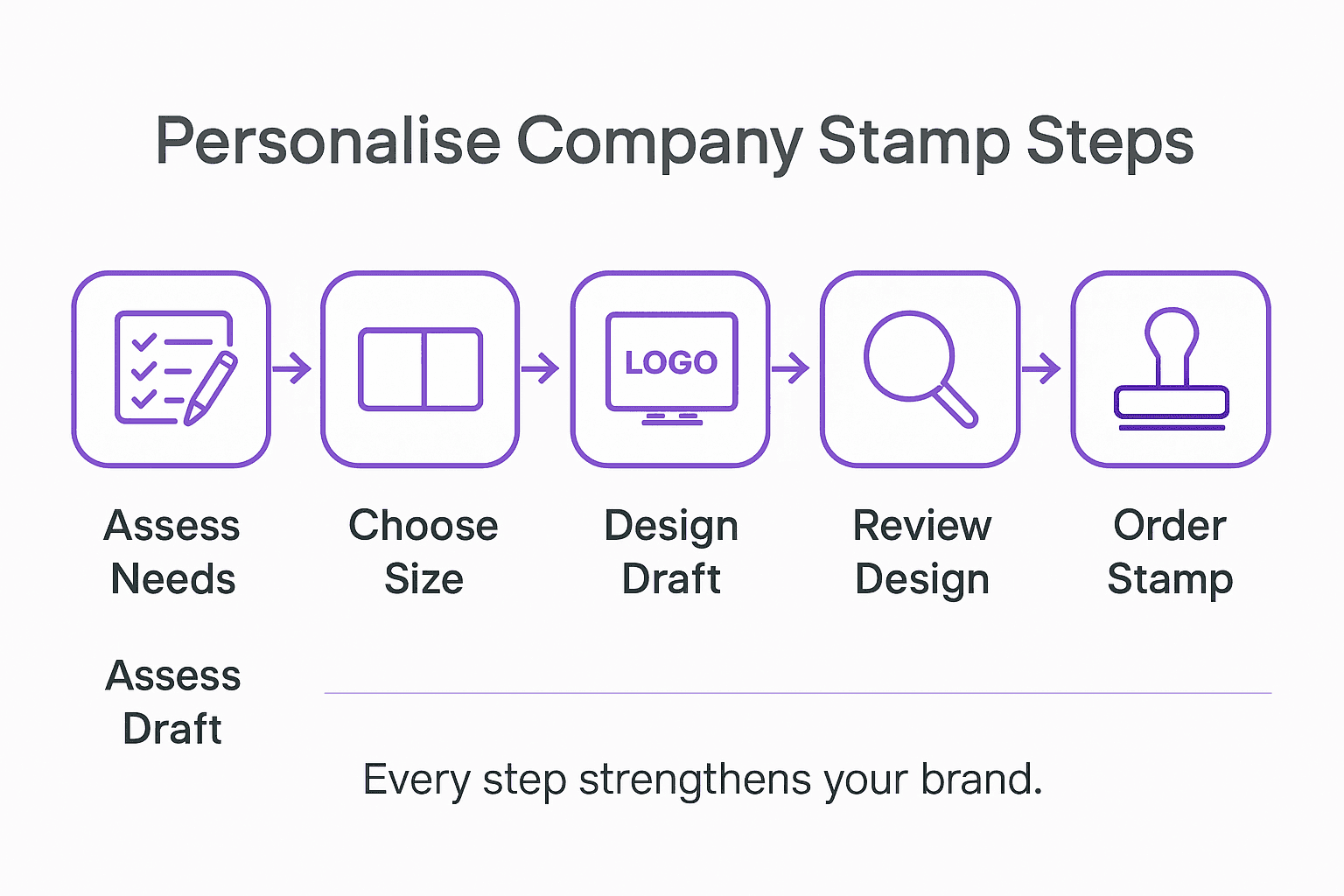
- Step 1: Assess Your Company’s Branding Needs
- Step 2: Select The Stamp Type And Size
- Step 3: Design Your Personalised Company Stamp
- Step 4: Review And Approve The Custom Design
- Step 5: Order And Receive Your Personalised Stamp
Quick Summary
| Key Insight | Explanation |
|---|---|
| 1. Understand Your Branding Needs | Assess existing brand elements and values to ensure your custom stamp supports your identity. |
| 2. Choose the Right Stamp Type | Select a stamp based on use frequency and intended surface to effectively convey your brand. |
| 3. Design for Clarity and Impact | Incorporate core brand elements while ensuring your stamp design maintains legibility and appeal. |
| 4. Engage Stakeholders in Reviews | Involve multiple teams in the design review process for a comprehensive feedback perspective. |
| 5. Verify Before Final Approval | Conduct a quality check of your stamp design against your specifications to ensure accuracy. |
Step 1: Assess your company’s branding needs
Understanding your company’s branding requirements is a critical first step in creating an impactful custom stamp that resonates with your organisational identity. The process involves carefully examining your current brand assets, communication strategies, and visual representation to ensure your stamp becomes a powerful extension of your brand messaging.
Begin by conducting a comprehensive review of your existing brand elements such as logos, colour palettes, typography, and design language. The UK government provides helpful guidance for assessing branding requirements that can help you systematically evaluate your current brand positioning. Consider how your company communicates its values visually and how a custom stamp can reinforce these elements. This means looking beyond mere aesthetic considerations and understanding how each design choice reflects your organisational personality.
Review your past marketing materials, website design, and client communication tools to identify consistent visual themes. Ask yourself key questions: What emotional response do you want your stamp to evoke? How can the stamp design align with your brand’s professional image? Which specific design elements most effectively communicate your company’s unique identity?
Expert Recommendation: When assessing branding needs, involve multiple stakeholders including marketing, design, and leadership teams to ensure a comprehensive and aligned approach to your custom stamp design.
Step 2: Select the stamp type and size
Selecting the appropriate stamp type and size is fundamental to creating a custom branding tool that effectively communicates your company’s professional identity. Your choice will depend on various factors including frequency of use, application surface, and the specific design requirements of your organisation.
Start by evaluating your primary stamping needs. The UK government documentation on official document stamping provides crucial insights into the legal and regulatory considerations for corporate stamp usage. Consider whether you require a traditional rubber stamp, self-inking stamp, or digital stamp. Rubber stamps work well for occasional use and offer crisp impressions, while self-inking stamps provide convenience for frequent applications. Digital stamps are ideal for electronic documentation.

Size selection is equally critical. Measure the typical document or surface where you will use the stamp and choose a size that provides clear visibility without overwhelming the space. Small stamps work perfectly for letterheads and invoices, medium stamps suit general correspondence, and larger stamps can make bold statements on packaging or marketing materials.
Expert Recommendation: Always order a stamp size slightly smaller than your intended print area to ensure clean, precise impressions and professional appearance.
Here is a comparison of key stamp types commonly used in British business environments:
| Stamp Type | Best Use Case | Pros | Cons |
|---|---|---|---|
| Rubber Stamp | Occasional manual stamping | Crisp impressions, low cost | Requires separate ink pad |
| Self-Inking Stamp | Frequent daily operations | Fast application, convenience | Ink may dry out over time |
| Digital Stamp | Electronic documentation | Secure, easy digital distribution | Not suitable for physical documents |
Step 3: Design your personalised company stamp
Designing a personalised company stamp requires careful consideration of your brand identity and visual communication strategy. This crucial step transforms your stamp from a simple administrative tool into a powerful branding instrument that represents your organisation’s professionalism and unique character.
Begin by incorporating your core brand elements. Intellectual property guidelines for design rights recommend creating a stamp that is distinctively yours while ensuring legal compliance. Focus on integrating your company logo, colour palette, and typography in a way that remains clear and legible when stamped. Consider how different design elements will appear when reduced to stamp size consider the clarity of lines, text readability, and overall visual impact.
Pay close attention to technical specifications during the design process. The UK government’s guidance on design registration emphasises the importance of detailed illustrations that capture your stamp’s unique configuration and decorative elements. Experiment with different layouts that balance aesthetic appeal with practical functionality. Ensure your design works across various surfaces and maintains crisp, consistent impressions whether used on paper, packaging, or official documents.
Expert Recommendation: Create multiple design drafts and test them at actual stamp size to evaluate visual clarity and professional appearance before finalising your stamp design.
Step 4: Review and approve the custom design
The final stage of creating your personalised company stamp involves a meticulous review process that ensures your design meets both aesthetic and functional requirements. This critical step transforms your conceptual design into a professional branding tool that represents your organisation with precision and clarity.
Begin by carefully reviewing your company documentation details to verify that all information included in the stamp design is accurate and compliant with official requirements. Check every element including typography, logo placement, and text alignment. Zoom in on the design to examine the fine details that will impact the stamp’s overall quality. Consider how the design will appear when pressed onto different surfaces such as paper, cardboard, and official documents.
Involve multiple stakeholders in the review process to gain comprehensive feedback. Request input from your marketing team about brand consistency, your legal department regarding compliance, and team members who will frequently use the stamp. Look for potential issues such as text legibility, colour contrast, and overall visual impact. The goal is to create a stamp that not only looks professional but also functions seamlessly across various business contexts.
Expert Recommendation: Request a digital proof or sample stamp impression before final approval to validate the design’s actual performance and visual quality.
Below is a summary of essential elements to verify during the stamp design approval process:
| Element to Check | Importance for Branding | Business Risk if Missed |
|---|---|---|
| Logo Placement | Ensures brand consistency | Misidentification of documents |
| Text Legibility | Maintains professional image | Poor communication |
| Colour Contrast | Enhances visual clarity | Diminished readability |
| Legal Compliance | Prevents regulatory issues | Potential legal penalties |
Step 5: Order and receive your personalised stamp
Placing your order for a personalised company stamp is the culmination of your careful design and branding efforts. This final step transforms your creative vision into a tangible professional tool that will represent your business across various documents and communications.
Navigate the ordering process by carefully reviewing the official documentation guidelines to ensure your stamp meets all legal and regulatory requirements. Select a reputable stamp designer who offers clear proof options, allowing you to verify the design before final production. Consider factors such as turnaround time, delivery options, and potential rush processing if you need the stamp urgently.
Once you receive your stamp, conduct an immediate quality check to confirm every detail matches your approved design. Test the stamp on multiple surfaces to validate its performance and print clarity. Ensure the stamp produces clean, consistent impressions and that all text and logo elements are precisely positioned. Store the stamp in a protective case to maintain its condition and prevent damage that could compromise its professional appearance.
Expert Recommendation: Always keep a digital backup of your stamp design and maintain a log of its first usage date for potential future reference or intellectual property protection.
Elevate Your Brand with Custom Company Stamps
Creating a personalised company stamp that truly reflects your brand identity can be challenging. From selecting the right stamp type and size to ensuring your design aligns perfectly with your company’s professional image, each step requires careful attention. You need a solution that simplifies this process while delivering exceptional quality and design precision.
At Stamp Design 4U, we understand the importance of bringing your brand to life through expertly crafted stamps. Whether you need a crisp rubber stamp for occasional use or a self-inking model for daily operations, our platform offers easy-to-navigate design options, tailored to your branding needs. Take control of your custom stamp design with our intuitive tools and see your ideas come alive with clarity and professionalism.
Don’t settle for generic stamps that fail to represent your organisation’s unique personality. Visit Stamp Design 4U today and start designing a personalised company stamp that embodies your brand’s professionalism and creativity. Achieve branding success by ordering your custom stamp now and enjoy quick delivery and exceptional customer support.
Frequently Asked Questions
How do I assess my company’s branding needs for a custom stamp?
To assess your company’s branding needs, conduct a thorough review of your existing brand elements, such as logos, colour palettes, and typography. Involve stakeholders from marketing and leadership teams to create a cohesive approach.
What factors should I consider when selecting the type and size of my company stamp?
Consider your primary stamping needs, including the frequency of use and the surfaces you’ll stamp on. Measure the typical document sizes to choose a stamp size that ensures clear visibility without overwhelming the page.
How can I effectively design my personalised company stamp?
Integrate key brand elements like logos and colours into your stamp design while ensuring legibility and clarity. Create multiple design drafts and test them at actual stamp size to evaluate their effectiveness before finalising the design.
What steps should I take to approve the custom stamp design?
Review all design elements for accuracy and compliance, involving team members from marketing and legal for comprehensive feedback. Request a digital proof or sample impression to validate the design’s quality before final approval.
What should I do once I receive my personalised company stamp?
Immediately check the stamp for quality, confirming that all details match the approved design. Test the stamp on various surfaces to ensure it produces clear, consistent impressions.
How can I protect and maintain my personalised company stamp?
Store your stamp in a protective case to keep it in good condition and prevent damage. Additionally, maintain a digital backup of your design and log the date of first use for future reference.
Recommended
- Complete Guide to Branding With Custom Stamps – Stamp Design 4U
- Why Personalise Stamps: Your Complete Guide for 2026 – Stamp Design 4U
- Boost Your Branding: Custom Logo Stamps For Businesses – Stamp Design 4U
- Why Design Your Own Custom Stamp: A Complete Guide – Stamp Design 4U
- 7 Expert Tips for Stylish Prescription Glasses for Men – ministry of sight