

Stamping documents should be quick and consistent, but juggling messy ink pads and faded impressions slows down even the most organised British businesses. For small business owners and home-based entrepreneurs across the UK, choosing a smarter stamping solution is crucial for maintaining a professional brand and handling daily operations efficiently. Discover how pre-inked stamps deliver sharp impression quality and thousands of uses before re-inking, helping you sidestep common myths and make a confident choice to boost your business workflow.
Table of Contents
- Pre-inked Stamps: Definition And Common Myths
- Varieties Of Pre-inked Stamps Explained
- How Pre-inked Stamps Work In Practice
- Essential Features And Top Benefits For Businesses
- Comparing Pre-inked Stamps With Alternatives
- Cost, Longevity, And Maintenance Considerations
Key Takeaways
| Point | Details |
|---|---|
| Efficiency | Pre-inked stamps streamline operations by eliminating the need for separate ink pads, saving time and enhancing workflow. |
| Professional Quality | They provide consistent, high-quality impressions that enhance branding and professionalism for client-facing documents. |
| Low Maintenance | Pre-inked stamps require minimal upkeep, with users needing to focus less on maintenance and more on core business activities. |
| Cost-Effectiveness | While the initial cost may be higher, the longevity and reduced maintenance make pre-inked stamps more economical over time. |
Pre-inked stamps: Definition and common myths
Pre-inked stamps are self-contained printing tools that come with ink already built into the stamp mechanism itself, eliminating the need for separate ink pads. Unlike traditional rubber stamps that require you to press them onto an external ink pad before each use, pre-inked stamps have a reservoir of ink stored within the stamp’s interior. This design means you can stamp repeatedly without stopping to re-ink, making them ideal for businesses processing high volumes of documents. The ink is typically held in a porous polymer core that slowly releases ink to the printing surface with each application, providing consistent impressions across thousands of stamps before requiring a refill.
What distinguishes pre-inked stamps from other stamp varieties is their convenience factor. If you’re running a small UK business handling invoices, receipts, or promotional materials, pre-inked stamps reduce the friction in your daily operations. You simply pick up the stamp and press it onto your document. No messy ink pads to maintain, no worrying about accidental spills on your desk, and no time wasted waiting for ink to dry between applications. Many business owners underestimate how much these small efficiencies add up when you’re stamping dozens or hundreds of documents each week. Understanding the distinction between self-inking stamp technology and traditional alternatives helps you make the right choice for your operation.
However, several myths persist around pre-inked stamps that can lead business owners away from them. The first misconception is that pre-inked stamps aren’t durable enough for regular commercial use. In reality, quality pre-inked stamps can deliver thousands of clear impressions before needing replacement or re-inking. Another common myth suggests that pre-inked stamps produce lighter, less professional-looking marks compared to traditional pad-based stamps. This simply isn’t accurate with modern manufacturing standards. Pre-inked stamps from reputable providers deliver crisp, dark impressions that look just as professional as any other stamping method. Some people also worry that pre-inked stamps will dry out if left sitting for weeks between uses, but this is partially true only for extremely cheap, poorly manufactured stamps. Quality pre-inked stamps maintain their ink consistency even with intermittent use, though they do work best when used regularly.
A third myth worth addressing is the cost concern. Yes, pre-inked stamps may have a slightly higher upfront cost than basic rubber stamps. That initial investment typically pays for itself within weeks through improved efficiency and reduced need for separate ink pad maintenance. Businesses processing 50 stamps daily recover their investment cost through time savings alone. The truth is that dismissing pre-inked stamps based on myths rather than facts means missing out on a practical tool that genuinely improves your branding consistency and operational workflow.
Pro tip: When comparing pre-inked stamps for your business, request samples from suppliers to test the impression quality and ink consistency yourself rather than relying on marketing claims.
Varieties of pre-inked stamps explained
Pre-inked stamps come in several distinct varieties, each designed to serve different business needs and preferences. The most common type you’ll encounter is the self-inking stamp, which operates with an automatic re-inking mechanism. When you press down, the stamp makes contact with an internal ink pad that automatically re-inks the rubber die after each impression. This means minimal effort on your part and consistent results every time. The entire mechanism sits within a plastic casing, and the stamp returns to its original position automatically once you lift your hand. For most UK small business owners processing documents regularly, self-inking stamps represent the sweet spot between convenience and reliability.
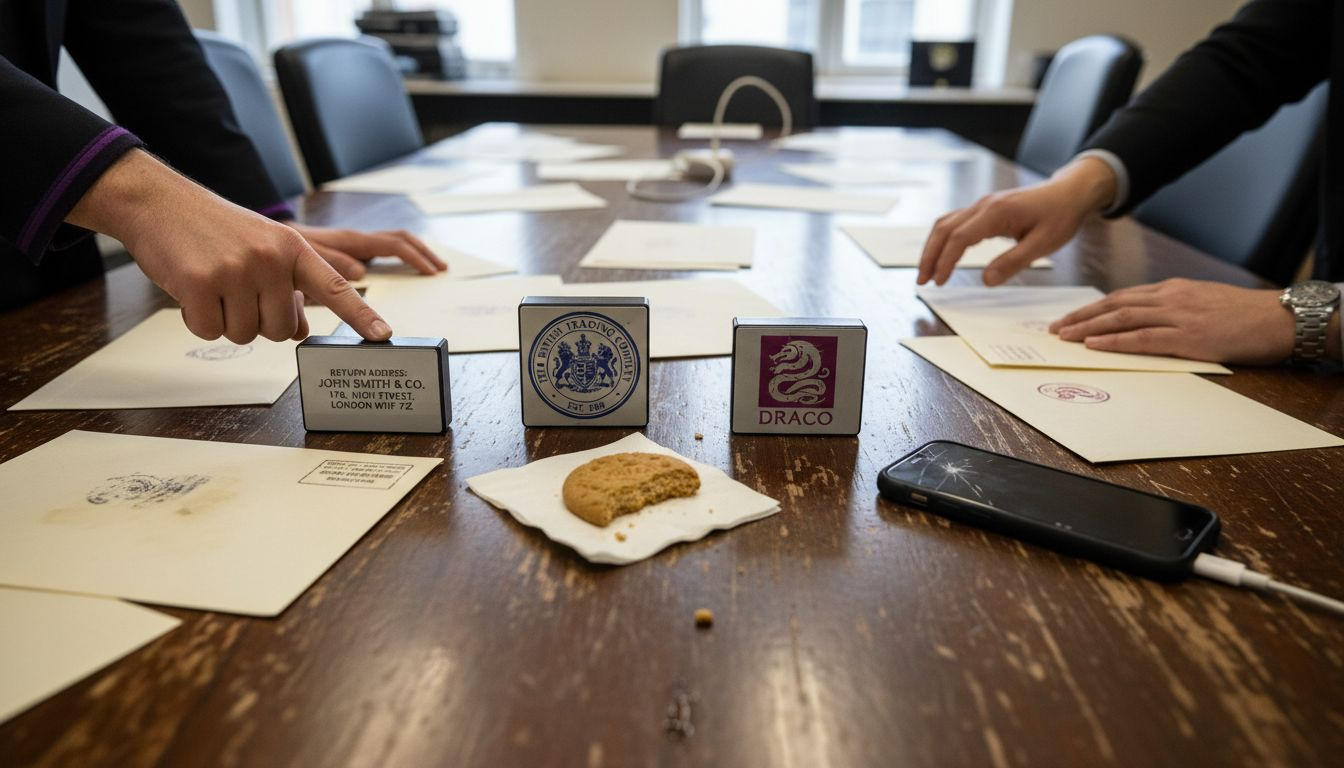
Another significant variety is the handheld pre-inked stamp, sometimes called a direct stamping tool. Rather than relying on an internal mechanical system, these stamps have ink infused directly into the rubber or polymer die itself. You simply press the stamp onto your document and lift it away. What makes these different from self-inking models is their simplicity. There’s no spring mechanism to wear out, no internal components to maintain. Many home-based entrepreneurs prefer handheld pre-inked stamps because they’re genuinely durable, affordable, and require virtually no maintenance. The trade-off is that you need to apply slightly more pressure and they don’t re-ink automatically between uses, though the ink does distribute reasonably well across multiple stamps when used regularly.
You’ll also come across rolling stamps and stamp pads with integrated ink systems. Rolling stamps work brilliantly for large surface areas or repeated patterns across documents. They’re less common in general office environments but invaluable for specific applications like date stamping across multiple pages or creating decorative borders on promotional materials. Understanding which variety suits your workflow is crucial. If you’re processing 20 invoices daily, a self-inking stamp with automatic re-inking saves genuine time. If you’re stamping promotional stickers or gift labels intermittently, a handheld pre-inked stamp might serve you better. The broader category of stamp types for business use includes many options beyond just pre-inked varieties, so understanding where pre-inked stamps fit within that spectrum helps inform your purchasing decision.
A lesser-known but increasingly popular variety is the custom pre-inked stamp, which combines personalisation with pre-inked convenience. These allow you to design a stamp with your company logo, address, or specific branding elements, then have it manufactured with pre-inked technology. This eliminates the need to find ink pads that match your design and ensures your branding stays consistent across thousands of documents. For businesses that rely heavily on postal mail, package labelling, or official documentation, custom pre-inked stamps transform branding from an afterthought into a professional touchpoint. The investment in a custom pre-inked stamp typically ranges higher than standard varieties, but the payoff in professional presentation and operational efficiency justifies the cost for established businesses looking to scale their operations.
Pro tip: Test-stamp several document types before committing to a specific variety, as impression quality can vary depending on paper texture, thickness, and whether you’re working on cardboard, glossy materials, or standard office paper.
How pre-inked stamps work in practice
When you pick up a pre-inked stamp in your office, the mechanics happening behind the scenes are straightforward yet effective. The internal reservoir holds a water-based or oil-based ink that sits in a porous foam or polymer core. This material acts like a sponge, slowly releasing ink to the rubber or polymer die surface with each press. Here’s what actually happens when you stamp a document. You press the stamp down with moderate pressure, the die makes contact with your paper, and the ink transfers cleanly onto the surface. Once you lift the stamp away, a spring mechanism (in self-inking models) automatically retracts the die upwards, repositioning it over the ink reservoir. On your next use, the die makes light contact with the porous core again, picking up fresh ink without any manual re-inking required. This cycle repeats thousands of times before the ink reservoir depletes.
What makes this system work reliably in real business environments is the balance between ink saturation and restraint. Too much ink and you get blurry, oversaturated impressions. Too little and the stamp produces faint, unprofessional marks. Quality pre-inked stamps are manufactured with precise calibration so that the porous core releases exactly the right amount of ink with each impression. This is why cheaper, poorly manufactured stamps often disappoint business owners. The ink either floods out immediately or dries up within weeks. When you’re stamping invoices, delivery notes, or official correspondence daily, consistency matters enormously. A quality pre-inked stamp delivers virtually identical impressions from the first to the five-thousandth application. The ink distribution across the die remains uniform because the internal mechanism controls saturation automatically. You never need to worry about patchy impressions or fading marks mid-batch.
In practice, most pre-inked stamps perform best with regular use. If you stamp documents daily, your pre-inked stamp will operate flawlessly for months. If you use it sporadically, say once a week, the ink will still perform well but may take a few extra impressions to reach optimal consistency after sitting idle. This is perfectly normal behaviour. The ink doesn’t truly dry out in quality stamps because the porous core maintains moisture balance internally. However, storing your stamp in extreme temperatures or leaving it exposed to intense heat can eventually affect performance. For home-based entrepreneurs and small business owners, standard office storage conditions present no problems whatsoever. Keep your stamp in a drawer or desk organiser at room temperature, and it will serve you reliably. When stamping high volumes, you’ll notice the impression gradually becomes slightly lighter as the ink depletes over thousands of applications. This happens gradually, not suddenly, giving you plenty of warning before you need to refill or replace the stamp.
The practical workflow advantage comes from speed and convenience. Compare pre-inked stamps to traditional rubber stamps requiring separate ink pads. With rubber stamps, you must position the pad, press the stamp into it, ensure proper ink coverage, then stamp your document. Pre-inked stamps collapse these steps into one simple action: press and lift. For someone processing 50 or 100 documents daily, this efficiency adds up significantly. Your hands stay cleaner without external ink pads. Your desk stays neater without ink pad maintenance. Most importantly, your stamped documents look consistently professional because the impression quality never varies. Understanding how custom stamps enhance office workflows helps you appreciate why many businesses standardise on pre-inked technology for their core stamping needs.
Pro tip: Store your pre-inked stamp with the die facing upwards, not downwards, to prevent accidental ink leakage and maintain optimal ink distribution within the internal reservoir.
Essential features and top benefits for businesses
Pre-inked stamps deliver several standout features that make them genuinely valuable for UK business operations. The most immediately noticeable advantage is impression quality. Pre-inked stamps produce sharp, clear marks that look professional on every application, whether you’re stamping official documents, invoices, or promotional materials. This consistency matters because your brand representation stays uniform across hundreds or thousands of stamped items. Unlike traditional rubber stamps where impression quality varies depending on how much ink you’ve picked up from the pad, pre-inked stamps eliminate this variability entirely. Every single impression looks identically crisp. For businesses handling client-facing documents, this professional appearance builds confidence and credibility. Your customers notice the difference between a faint, irregular stamp and a bold, consistent one, even if they cannot articulate why.
Another essential feature is operational efficiency through minimal maintenance. Pre-inked stamps require virtually no upkeep once purchased. You don’t need to worry about cleaning ink pads, replacing dried-out pads, or managing separate ink supplies. Simply use your stamp and put it away. The internal ink reservoir handles everything behind the scenes. For small business owners already juggling multiple responsibilities, this simplification genuinely matters. You’re not tracking inventory for separate supplies or spending time on maintenance tasks. Additionally, pre-inked stamps deliver extended usage capacity before re-inking becomes necessary. A quality pre-inked stamp can produce thousands of clear impressions before the internal reservoir depletes. Most business users find that a single pre-inked stamp lasts several months or longer depending on daily stamping volume. This means fewer purchasing cycles and lower long-term costs compared to traditional stamping methods that require frequent ink pad replacements.
For businesses stamping detailed designs, logos, or intricate text, the precision and clarity of pre-inked stamps shine distinctly. The controlled ink release mechanism ensures that fine lines remain sharp and small text stays legible. Sharp impression quality from pre-inked technology proves particularly valuable when your stamp carries complex branding elements or official logos that demand professional reproduction. Home-based entrepreneurs running gift labelling businesses, postal operations, or document processing services benefit enormously from this precision. Your stamps become a genuine branding asset rather than a functional necessity. The aesthetic quality of a well-executed pre-inked stamp impression can actually enhance perceived value of your products or services.
Beyond these core features, pre-inked stamps offer cleanliness and workspace hygiene. No loose ink splashing across your desk. No stained fingers from handling ink pads. Your work environment stays neater and more professional. This matters when you’re working from home or meeting clients at your premises. The speed factor also compounds benefits throughout your workday. Stamping becomes a single, quick motion rather than a multi-step process. Processing an invoice that requires stamping now takes seconds instead of the ten or fifteen seconds needed to position an ink pad, apply the stamp, and verify impression quality. For businesses processing even modest document volumes, this accumulates to meaningful time savings weekly.
The consolidated benefit is operational excellence paired with professional appearance. Your business looks more organised and established when stamped documents carry consistent, professional impressions. Your operations run smoother because stamping doesn’t interrupt your workflow or create maintenance headaches. For the investment cost, which typically ranges from reasonable to moderate depending on customisation level, you’re acquiring a tool that will serve your business reliably for years. Most business owners discover that quality pre-inked stamps pay for themselves within weeks through efficiency gains alone.
Pro tip: Invest in a custom pre-inked stamp featuring your company name and contact details rather than a generic stamp; the marginal cost difference is minimal, and the professional branding impact on every stamped document becomes substantial over time.
Comparing pre-inked stamps with alternatives
When deciding on a stamping solution for your UK business, you’re essentially choosing between several fundamentally different technologies. Understanding these differences prevents costly mistakes. Traditional rubber stamps with separate ink pads remain the most basic option. You purchase a rubber stamp and keep it alongside an external ink pad. Before each use, you press the stamp into the pad to load it with ink, then apply it to your document. This method works but introduces inconsistency. Depending on how much pressure you apply to the pad and how saturated it becomes, your impressions vary significantly. Some marks appear dark and crisp, others faint and blurry. For businesses where appearance matters, this variability becomes frustrating. Additionally, maintaining separate ink pads means tracking inventory, replacing dried-out pads, and managing messy external supplies.
Self-inking stamps represent a middle ground solution. These feature an internal automatic re-inking mechanism similar to pre-inked stamps, but with a crucial difference in design philosophy. A self-inking stamp has a built-in ink pad that automatically re-inks the die after each impression. You press down, the stamp applies ink automatically, and the stamp returns to its original position. The convenience factor here is genuinely superior to traditional rubber stamps. However, the trade-off involves comparing pre-inked versus self-inking stamp technologies. Pre-inked stamps have ink infused directly into the rubber die rather than relying on an internal pad mechanism, which means they typically deliver sharper, more consistent impressions suitable for detailed designs and professional branding elements. Self-inking stamps prioritise speed and automation slightly more than perfect impression quality.
For businesses stamping large quantities, digital printing alternatives technically exist but rarely make financial sense. Digital printing allows you to integrate stamped elements directly into documents during the printing process itself. The advantage is absolute consistency and integration with your broader document design. The disadvantage is significant cost. Digital printing becomes economical only when you’re producing hundreds or thousands of identical documents simultaneously. For a small business stamping existing documents one at a time or in small batches, digital printing costs exponentially more than physical stamps. You’re also locked into digital workflows, which doesn’t work when clients hand you documents to stamp or when you need flexibility to mark documents from various sources.
The practical comparison for most UK business owners narrows to pre-inked stamps versus self-inking stamps. Pre-inked stamps excel when impression quality and professional appearance matter most. Your stamp becomes a branding element, and every impression reinforces your professional image. They suit businesses handling client-facing documents, official correspondence, or promotional materials where aesthetics influence perception. Self-inking stamps excel when processing speed and convenience matter most. They’re marginally faster in high-volume environments because the automatic re-inking eliminates even the slight delay of manual ink transfer. However, self-inking stamps have more moving parts, meaning more components can eventually wear out or fail. Pre-inked stamps, with their simpler design, often outlast self-inking alternatives.
Cost considerations tip toward pre-inked stamps over time. Yes, quality pre-inked stamps cost more initially than basic rubber stamps or some self-inking options. However, they deliver thousands of impressions before needing replacement. Their durability, combined with zero maintenance requirements, makes them genuinely economical across the lifespan of your business. You’re not replacing dried-out ink pads quarterly. You’re not dealing with mechanical failures in spring mechanisms. Home-based entrepreneurs and small business owners operating on tight budgets often discover that investing in quality pre-inked stamps upfront saves money and frustration over months and years of operation. The professional appearance also creates subtle business benefits. Customers receiving documents with crisp, professional stamp impressions perceive your business as more established and trustworthy than competitors using faint, inconsistent marks.
Here’s how the main stamp types compare for business use:
| Stamp Type | Impression Consistency | Maintenance Needs | Best For |
|---|---|---|---|
| Pre-inked | Exceptionally consistent | Minimal | Branding, high volume, professional look |
| Self-inking | Good, minor variations | Occasional refilling | Fast stamping, moderate daily use |
| Traditional rubber | Highly variable | Frequent cleaning | Very low budgets, infrequent stamping |
| Digital print | Perfect, print-level | External only | Mass production, not practical for small runs |
Pro tip: Request sample impressions from suppliers before purchasing; test them on the actual paper types and materials you use daily to ensure the stamp meets your specific quality and appearance standards.
Cost, longevity, and maintenance considerations
The financial case for pre-inked stamps becomes clearer when you calculate total cost of ownership rather than just upfront purchase price. Yes, quality pre-inked stamps cost more initially than basic rubber stamps or budget self-inking alternatives. A decent pre-inked stamp might cost between fifteen and fifty pounds depending on customisation and complexity, whereas a simple rubber stamp with basic ink pad might cost five to fifteen pounds. This initial gap matters when you’re starting out. However, this comparison ignores the complete financial picture. Pre-inked stamps deliver exceptional longevity. A quality pre-inked stamp can produce up to 50,000 impressions before requiring re-inking. For most small business owners, that translates to six months, a year, or sometimes longer of regular stamping before any maintenance becomes necessary. If you’re stamping fifty documents daily, you’re looking at approximately two years before that stamp needs attention. Over that two-year period, you’ve invested perhaps thirty pounds in a single tool that reliably delivers thousands of professional impressions.
Compare this longevity to traditional rubber stamps with separate ink pads. You purchase an ink pad for five to ten pounds. Within two or three months of regular use, that pad dries out and requires replacement. You’re buying multiple ink pads annually, adding up to twenty or thirty pounds yearly just in consumables. Beyond cost, you’re also spending time managing inventory, ordering replacement pads, and dealing with occasional mess when pads leak or dry unevenly. Self-inking stamps split the difference. They cost slightly less upfront than pre-inked stamps but more than basic rubber stamps. However, their internal mechanisms have more components that can wear out. Spring mechanisms weaken over time. Internal pads dry out and require refilling more frequently than pre-inked ink reservoirs. Many self-inking stamp users find themselves refilling or replacing their stamps annually, creating ongoing maintenance cycles and costs.
A summary of cost and longevity factors for common stamp choices:
| Stamp Type | Typical Upfront Cost | Average Lifespan | Ongoing Supply Costs |
|---|---|---|---|
| Pre-inked | £15–£50 | Up to 50,000 uses | Very low, rare refills |
| Self-inking | £10–£35 | Thousands of uses | Moderate, regular refills |
| Rubber (with pad) | £5–£15 | Few months per pad | High, frequent pad replacements |
Maintenance requirements genuinely favour pre-inked stamps for busy business owners. Once you purchase a quality pre-inked stamp, your maintenance obligation is straightforward: keep it stored properly in a drawer or desk organiser at room temperature. That’s genuinely it. You’re not cleaning anything. You’re not replacing parts. You’re not refilling ink reservoirs. If you use your stamp regularly, it simply works day after day without intervention. Compare this to self-inking stamps, which require occasional refilling as the internal ink pad depletes. Some users find refilling straightforward using refill bottles designed for their specific stamp model. Others struggle with the process or discover that refill bottles aren’t readily available for their particular stamp. Rubber stamps with external pads require even more maintenance attention. You’re managing the ink pad separately, potentially dealing with spills, keeping inventory of replacement pads, and troubleshooting impression quality issues.
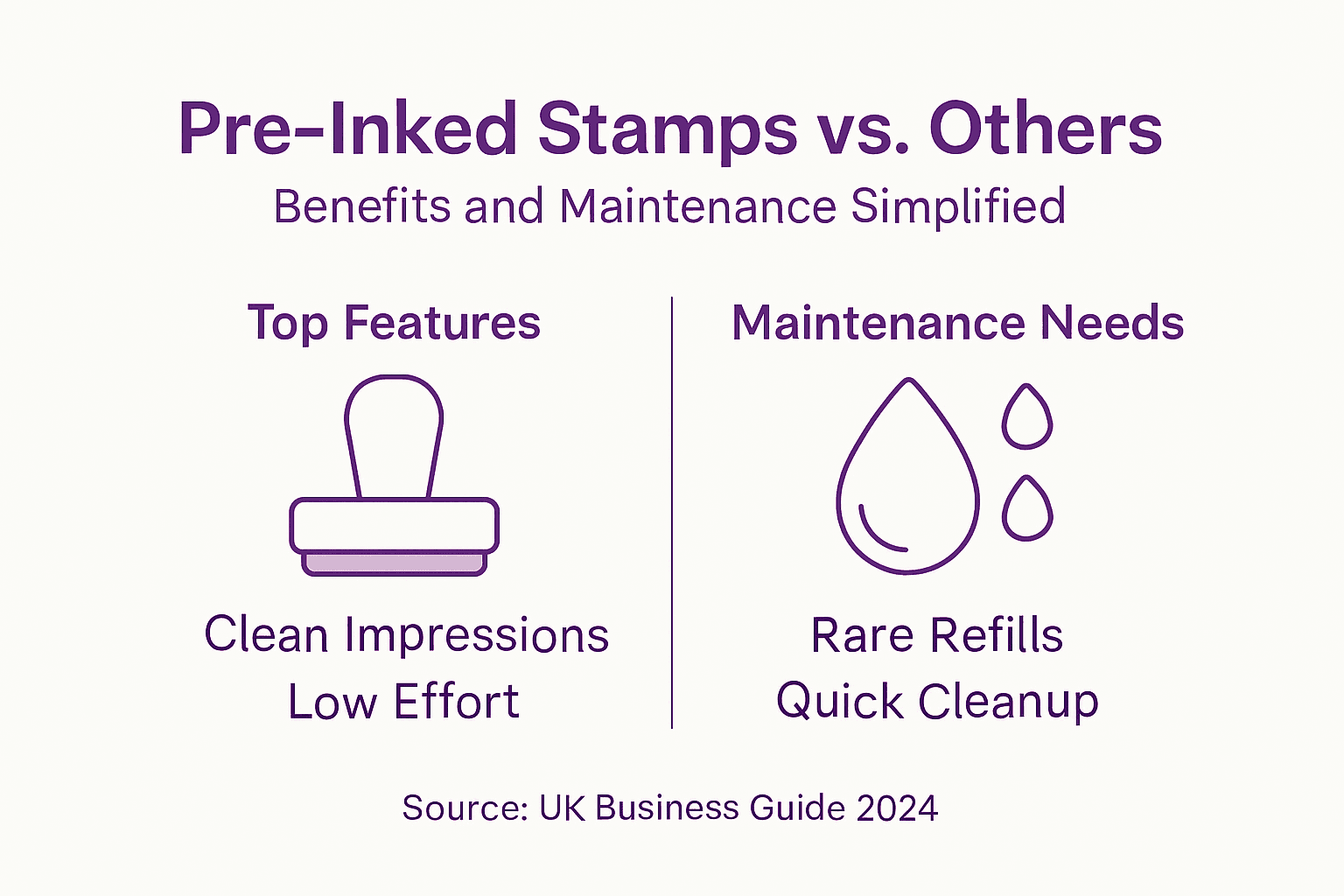
For home-based entrepreneurs operating on limited budgets and time, the hidden cost of maintenance matters significantly. Every hour spent managing ink supplies, refilling stamps, or cleaning up spills is an hour not spent on actual business work. The convenience factor becomes genuinely valuable. Purchasing a quality pre-inked stamp eliminates entire categories of future hassle and expense. You buy once, use regularly, and move on with your business. When the time eventually comes to replace the stamp, you’ve had months or years of reliable service. At that point, you’re simply repeating the process with a new stamp, having learned exactly what specifications work best for your business. The investment cost, spread across the lifespan of use, becomes genuinely economical. Most business owners discover that pre-inked stamps pay for themselves within the first month through time savings alone, then provide months of essentially free stamping service afterwards.
One practical consideration involves scaling your business. If your stamping needs grow significantly, you might invest in multiple pre-inked stamps simultaneously. This sounds expensive but actually makes financial sense. Rather than maintaining one stamp and worrying about depleting it during high-volume periods, you distribute use across several stamps. Each individual stamp gets lighter use, lasting even longer. Your business never runs out of stamping capacity. This flexibility matters when you’re growing and your document volume increases unexpectedly.
Pro tip: Calculate your annual stamping budget by adding up all ink pad replacements, refill bottles, and maintenance time costs, then compare this to a single quality pre-inked stamp purchase; most business owners discover the pre-inked option saves money within the first year.
Discover the Power of Pre-Inked Stamps for Your UK Business
If you seek a stamping solution that offers consistent, professional impressions without the hassle of frequent maintenance you have come to the right place. The challenges faced by UK businesses like yours include managing time-consuming ink pads, inconsistent stamp quality and ongoing upkeep costs. Pre-inked stamps provide clarity, longevity and ease, allowing you to elevate your brand’s appearance effortlessly. With terms like “impression consistency”, “operational efficiency” and “custom pre-inked stamps” now part of your vocabulary, it’s time to put these insights into action.
Explore our bespoke range of custom pre-inked stamps designed to meet the exacting standards highlighted in the article. At StampDesign4U, you can create personalised stamps that combine superior ink technology with your unique branding elements. Don’t let myths or maintenance concerns hold you back from maximising your business efficiency and professionalism. Start your journey now by visiting our landing page and discover how easy it is to order high-quality stamps tailored to your needs. Learn more about our full spectrum of rubber stamp options to find the perfect fit for your workflow and branding goals.
Frequently Asked Questions
What are pre-inked stamps?
Pre-inked stamps are self-contained printing tools that come with ink already built into the stamp mechanism, eliminating the need for separate ink pads. They provide consistent impressions and are ideal for high-volume stamping tasks.
How do pre-inked stamps work?
Pre-inked stamps use a porous polymer core that holds ink and gradually releases it to the printing surface during stamping. When you press the stamp down, the internal mechanism ensures proper ink distribution for a clear impression.
What are the benefits of using pre-inked stamps for businesses?
Pre-inked stamps offer several benefits, including high-quality, consistent impressions, minimal maintenance, and the ability to deliver thousands of impressions before needing re-inking. This makes them efficient and convenient for businesses handling large volumes of documents.
How do pre-inked stamps compare to self-inking and traditional rubber stamps?
Pre-inked stamps provide sharper and more consistent impressions than traditional rubber stamps, which can vary due to ink pad saturation. While self-inking stamps improve speed, pre-inked stamps excel in impression quality and require less maintenance over time.