

Over 80 percent of organisations rely on custom stamps for daily operations, making them far more than simple office supplies. In busy offices, schools, or creative studios, these small tools speed up workflow and bring a polished edge to paperwork and branding. By exploring the different types, design choices, and practical uses, you can find smarter ways to enhance communication, strengthen your image, and avoid common mistakes with custom stamps.
Table of Contents
- Definition And Fundamental Role Of Custom Stamps
- Popular Types Of Custom Stamps Explained
- Design Process And Personalisation Options
- Key Uses Across Business And Personal Needs
- Legal, Compliance, And Branding Considerations
- Common Mistakes And Best Practices For Buyers
Key Takeaways
| Point | Details |
|---|---|
| Custom Stamps Enhance Branding | Custom stamps streamline branding and communication, serving as tools for professional impression management and standardisation. |
| Variety of Custom Stamp Types | There are numerous custom stamp types available, including self-inking and digital options, each suited for specific functionalities and user requirements. |
| Importance of Thoughtful Design | The design process is crucial, involving careful consideration of purpose, materials, and customization features to create effective communication tools. |
| Legal and Compliance Considerations | Custom stamps must meet legal and compliance standards for authenticity and document validation, serving as a critical element in professional documentation integrity. |
Definition and Fundamental Role of Custom Stamps
A custom stamp is a personalised rubber printing tool designed to reproduce a specific image, text, or logo consistently and efficiently across various documents and surfaces. Flying Imp highlights that these versatile tools play a critical role in facilitating communication and branding across diverse professional environments, from offices and classrooms to workshops and administrative spaces.
Custom stamps serve multiple fundamental purposes that extend beyond mere document marking. They function as powerful tools for standardisation, enabling organisations to maintain consistent visual communication, reduce manual writing time, and create professional impressions. Businesses, educational institutions, and professional services frequently utilise these stamps for tasks such as marking attendance, authenticating documents, adding return addresses, or reinforcing brand identity.
The core components of a custom stamp typically include a rubber die (the raised surface with the design), a mounting plate, and a handle or mechanism for applying consistent pressure. These elements work together to produce clear, crisp impressions that can be replicated hundreds or even thousands of times. When carefully designed, a custom stamp becomes more than just a tool—it transforms into a precise communication instrument that represents an organisation’s professionalism and attention to detail.
Key applications of custom stamps span multiple sectors:
- Legal documentation verification
- Official correspondence marking
- Inventory and asset tracking
- Classroom administrative tasks
- Branding and marketing materials
- Personal stationery and correspondence
Popular Types of Custom Stamps Explained
Custom stamps come in a diverse range of designs and functionalities, each tailored to meet specific professional and personal needs. We highlight the importance of understanding different stamp types, particularly noting the popularity of Imprint self-inkers which offer convenient and eco-friendly stamping solutions.
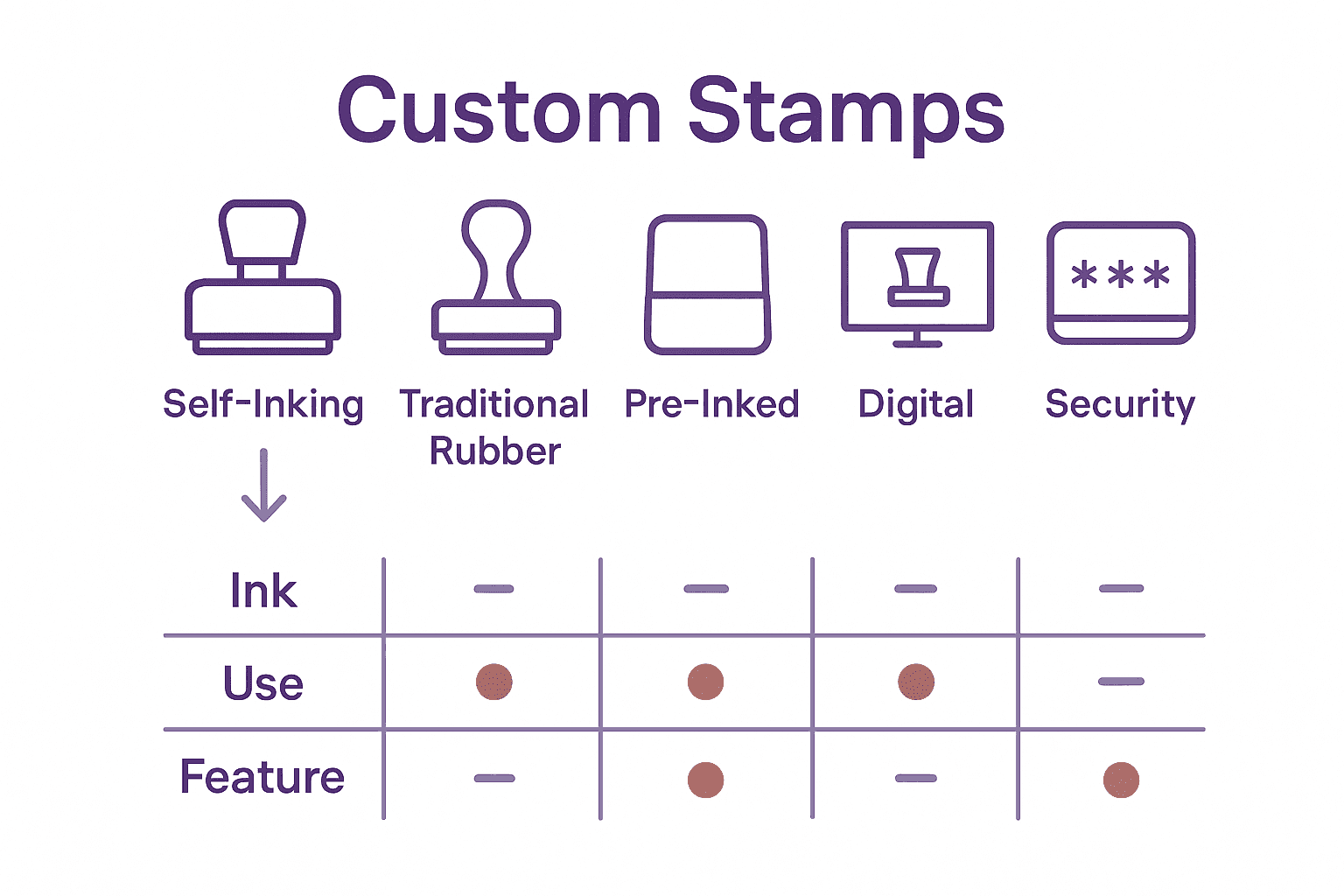
The most common types of custom stamps include:
- Self-Inking Stamps: Integrated ink pad that automatically re-inks after each impression
- Traditional Rubber Stamps: Require separate ink pads and offer maximum design flexibility
- Pre-Inked Stamps: Produce high-quality impressions with minimal maintenance
- Digital Stamps: Computer-generated designs for digital documentation
- Security and Fraud Prevention Stamps: Designed to protect sensitive information
Specialised stamps serve unique purposes across different sectors. Explore the essential types of custom stamps that can streamline professional workflows. For instance, security stamps are critical for organisations handling confidential documents, featuring unique patterns that make document reproduction difficult. Legal firms, financial institutions, and government offices frequently use these to prevent potential fraud.
The selection of a custom stamp depends on specific requirements such as frequency of use, impression quality, design complexity, and budget.
 MaxStamp self-inkers, as noted by Office 5 Star, are particularly useful for businesses seeking efficient, clean, and sustainable stamping solutions. Whether you need stamps for administrative tasks, branding, or personal correspondence, understanding these variations ensures you select the most appropriate tool for your precise needs.
Design Process and Personalisation Options
Custom stamp design is a meticulous process that transforms your unique vision into a functional and professional tool. Flying Imp emphasises that customisation options range from simple text configurations to intricate logo implementations, ensuring that every client’s specific requirements can be brought to life with precision and creativity.
The personalisation journey typically involves several key steps:
- Conceptualisation: Determining the stamp’s purpose and core design elements
- Digital Drafting: Creating precise digital mockups of the proposed stamp
- Material Selection: Choosing appropriate rubber and mounting materials
- Size and Format Determination: Selecting optimal dimensions for intended use
- Colour and Ink Preference: Deciding on ink colour and stamp pad type
Professional stamp designers offer extensive customisation possibilities. Explore creative stamp design techniques that can elevate your branding and communication strategies. From corporate logos and return addresses to artistic personal signatures, the design possibilities are virtually limitless. The key is working closely with experienced designers who can translate your vision into a high-quality, functional stamp.
Advanced personalisation options now include features like multi-colour impressions, custom shape cutting, and ergonomic handle designs. Flying Imp’s approach demonstrates that modern stamp creation is a collaborative process, where client input meets professional expertise to produce a truly unique communication tool. Whether you need a stamp for business documentation, personal correspondence, or creative projects, understanding the design process helps you make informed decisions and achieve the exact result you desire.
Key Uses Across Business and Personal Needs
Custom stamps have become indispensable tools across numerous sectors, bridging professional efficiency with personal creativity. Office 5 Star highlights their versatility, particularly in educational and administrative contexts, demonstrating how these compact tools can streamline communication and documentation processes.
In professional environments, custom stamps serve critical functions:
- Legal Documentation: Authenticating contracts and official papers
- Financial Tracking: Marking invoices, receipts, and payment records
- Human Resources: Processing employee documents and correspondence
- Quality Control: Marking approved or inspected items in manufacturing
- Inventory Management: Tracking stock movements and asset records
Educational settings provide fascinating examples of stamp utilisation. Discover practical personalised stamp uses that extend beyond traditional applications. Office 5 Star specifically notes teachers using personalised stamps for providing feedback, creating an efficient method of student assessment and motivation. These stamps can include encouraging messages, grading symbols, or specific learning milestone markers.
Personal applications are equally diverse, ranging from crafting and scrapbooking to creating unique correspondence and home organisation systems. Small businesses and hobbyists appreciate custom stamps for branding, adding a professional touch to packaging, creating personalised stationery, and developing a consistent visual identity. Whether used for professional documentation, creative expression, or administrative efficiency, custom stamps offer a versatile solution that combines practicality with personal style.

Common Mistakes and Best Practices for Buyers
Purchasing custom stamps requires careful consideration to ensure you receive a product that meets your specific needs and expectations. Flying Imp emphasises the critical importance of selecting the right stamp size, type, and material to avoid common purchasing pitfalls that can compromise functionality and professional appearance.
Common mistakes buyers frequently encounter include:
- Incorrect Size Selection: Choosing stamps too large or small for intended use
- Poor Material Quality: Selecting low-grade rubber or mounting materials
- Inappropriate Ink Selection: Using ink incompatible with surface or application
- Overlooking Design Precision: Neglecting detailed design specifications
- Ignoring Intended Usage Context: Failing to match stamp to specific professional requirements
Discover expert stamp selection strategies that can help you avoid potential purchasing errors. Professional buyers should prioritise comprehensive consultation with stamp designers, carefully reviewing design proofs and requesting sample impressions. Flying Imp recommends a methodical approach that considers not just the immediate visual appeal, but the long-term durability and practical application of the custom stamp.
Best practices for stamp procurement involve thorough preparation and strategic decision-making. This includes conducting a detailed assessment of your specific requirements, understanding the environmental conditions where the stamp will be used, and considering factors like frequency of use, required impression quality, and potential future adaptability. By approaching custom stamp selection as a deliberate, informed process, buyers can transform a simple purchasing decision into a strategic investment in professional communication and branding efficiency.
Transform Your Professional Image with Custom Stamps Tailored to Your Needs
Custom stamps are more than just tools for marking documents. They are a vital solution to challenges like maintaining consistency, speeding up workflow, and enhancing your brand’s professionalism. If you want to avoid common pitfalls such as incorrect size, poor design, or inappropriate ink type, understanding the right options is essential. With terms like MaxStamp self-inkers and security stamps becoming common in effective document handling, you need a trusted partner to bring your vision to life.
Ready to create a custom stamp that truly represents your organisation or personal style? Visit our custom stamp design service to explore a wide variety of personalised rubber stamps made specifically for UK users and beyond. Discover how to streamline your document processes and elevate your branding today. Don’t wait — make your mark with precision and professionalism now at https://stampdesign4u.co.uk.
Frequently Asked Questions
What are custom stamps used for?
Custom stamps are versatile tools used for various purposes such as marking attendance, authenticating documents, adding return addresses, and reinforcing brand identity. They help in maintaining consistent visual communication across different professional and personal applications.
What are the main types of custom stamps?
The main types of custom stamps include self-inking stamps, traditional rubber stamps, pre-inked stamps, digital stamps, and security stamps. Each type serves unique functions and is tailored to meet specific needs in different sectors.
How is a custom stamp designed?
The design process for a custom stamp involves conceptualisation, digital drafting of mockups, material selection, determining size and format, and deciding on colour and ink preferences. Working closely with experienced designers ensures that your vision is accurately translated into a functional tool.
What common mistakes should I avoid when purchasing custom stamps?
Common mistakes include selecting the incorrect stamp size, using poor material quality, choosing inappropriate ink, overlooking design precision, and failing to match the stamp to specific professional requirements. A thorough assessment of your needs can help you avoid these pitfalls.