

TL;DR:
- A lined stamp imprints parallel lines to guide handwriting, crafting, or document layout.
- Choosing the right type ensures professional results, with proper technique being essential.
A lined stamp is a tool that imprints one or more parallel lines onto paper or another surface to guide handwriting, crafting, or document layout. The term covers a broad family of products, from simple single-line rubber stamps to multi-line self-inking rollers like the LegiLiner Worm Line Handwriting Lines roller stamp. Lined stamps extend the principle of ruled paper to a portable, reusable tool that creates consistent guidelines wherever you need them. Whether you are personalising stationery, marking pupil work, or branding business documents, a lined stamp gives you repeatable results without printing or ruling by hand.
What is a lined stamp and how does it differ from a regular stamp?
A lined stamp produces parallel lines rather than a solid image or text block. A regular stamp transfers a fixed design, logo, or word in a single impression. The lined stamp definition centres on function: it creates structure on a surface rather than decorating it.
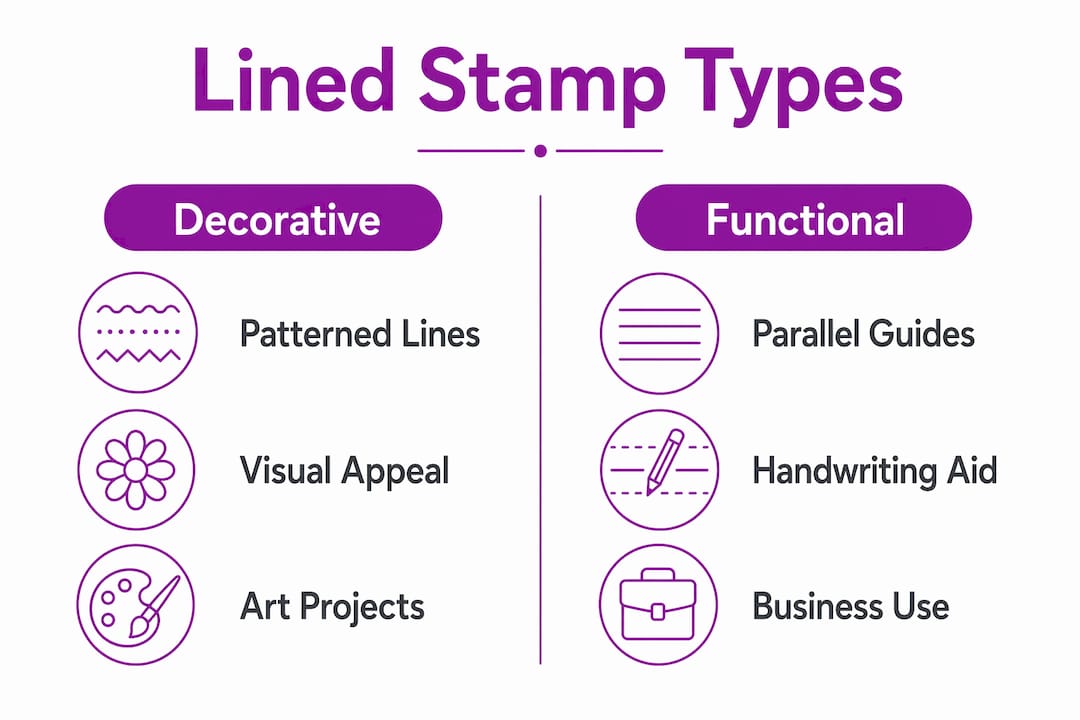
The key distinction matters when buying. Decorative vs functional stamps fall into two separate categories. A decorative lined stamp, such as the Simon Says Stamp Lined Heart clear stamp, uses parallel lines as a visual pattern within an image. A functional lined stamp, such as a handwriting guidance roller, creates blank writing lines for a user to write on. Buyers who confuse the two end up with a product that does not match their needs.
The practical rule: check the product image and specification before purchasing. If the lines are part of a picture, the stamp is decorative. If the lines are the entire point of the stamp, it is functional.
What types of lined stamps are available?
Lined stamps come in four main formats. Each suits a different level of use and a different type of project.
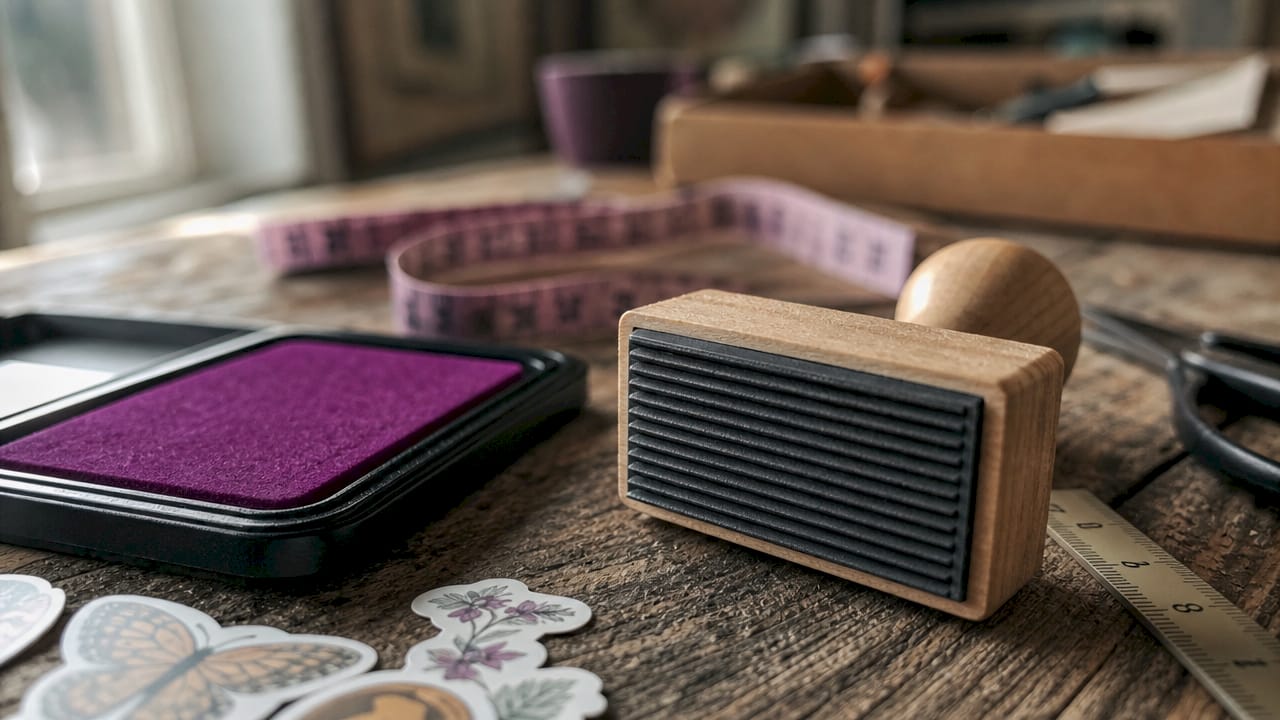
- Wood-mounted rubber stamps. These are the most durable option. The rubber die is fixed to a wooden block, which gives a firm, consistent base for applying pressure. They suit crafters who stamp repeatedly on flat surfaces.
- Clear photopolymer sets. The stamp is transparent, which means you can see exactly where the lines will land before you press down. Photopolymer stamps pair with a clear acrylic block and are the preferred choice for crafters who need precise alignment of parallel lines.
- Self-inking roller stamps. Products like the LegiLiner range roll across the page in a single pass, laying down multiple lines at once. The LegiLiner Worm Line stamp creates three 5/8 inch lines plus an extra baseline for letter descenders, making it a practical tool for teachers and handwriting coaches.
- Multi-line text stamps. These are pre-inked or self-inking stamps with 5, 9, or more lines for printing blocks of text. Stamps with 9 or more lines serve businesses that need to imprint large amounts of information consistently on documents or packaging.
The table below summarises the key differences.
| Type | Best for | Line count | Ink method |
|---|---|---|---|
| Wood-mounted rubber | Crafting, durability | 1–3 | Separate ink pad |
| Clear photopolymer | Precision placement | 1–5 | Separate ink pad |
| Self-inking roller | Handwriting guidance | 3–5 | Built-in roller ink |
| Multi-line text stamp | Business documents | 5–9+ | Built-in pad |
Pro Tip: If you are buying a lined stamp for the first time, start with a clear photopolymer set. The transparency removes most alignment errors before you even press down.
How to use a lined stamp for clean, consistent results
Good stamping technique produces crisp lines every time. Stampin’ Up! identifies three fundamentals that matter more than the stamp itself: test on scrap paper first, apply firm and even pressure, and never rock the stamp. Rocking causes image doubling, which ruins the clean parallel effect that makes lined stamps useful.
Follow these steps for reliable results.
- Test on scrap paper. Press the stamp onto your ink pad, then stamp once on scrap paper. This removes excess ink and shows you the impression quality before you commit to your final surface.
- Mark placement guides. Use a light pencil mark or a grid paper guide to position the stamp correctly. With parallel lines, even a slight skew is immediately visible.
- Use a stamping platform for photopolymer stamps. A clear acrylic block or dedicated stamping platform holds the stamp steady and lets you see the placement. Stamping platforms are the single most effective tool for eliminating skew caused by uneven pressure.
- Apply firm, even pressure. Press straight down with your palm. Do not press harder on one side. Lift straight up without sliding.
- Roll roller stamps in a single steady pass. For self-inking rollers like the LegiLiner, one consistent pass produces even spacing. Multiple passes or hesitant rolling creates uneven lines that defeat the purpose.
Skew is almost always caused by uneven pressure, not a fault in the stamp design. A flat, stable surface fixes most problems before they start.
Lined stamp features: what to look for
Line spacing is the most important specification to check. The LegiLiner Worm Line stamp uses 5/8 inch spacing, which matches standard handwriting paper for children and adults learning to write. Tighter spacing suits smaller text or decorative work. Wider spacing suits large handwriting or bold calligraphy practice.
Line count determines how much of a page you cover per impression. A single-line stamp requires multiple impressions to fill a page. A 9-line stamp covers a large area in one press, which suits business document branding where consistency across many pages matters. For crafting, a lower line count gives more control over placement and spacing.
Line style also varies. Solid lines, dashed lines, and dotted lines each serve a different purpose. Solid lines guide formal writing. Dashed lines indicate where to cut or fold. Dotted lines are common in educational stamps where children trace the dots to practise letter formation.
Stamp size and mounting style affect usability directly. A larger stamp covers more area but requires more even pressure to avoid partial impressions. A smaller stamp is easier to control but takes longer to fill a page. For stamp-related crafts, a compact photopolymer stamp on a clear block gives the most flexibility.
Practical applications and creative uses for lined stamps
Lined stamps serve a wider range of purposes than most buyers initially expect. The applications split broadly into three groups: education, crafting, and business.
Education and handwriting practice. Teachers use lined stamps to add writing guidelines directly onto worksheets, exercise books, or feedback slips. The SD4U 4933 Tick 2 Lines Personalised Teacher Stamp is one example of a lined stamp designed specifically for classroom feedback. Roller stamps like the LegiLiner range let teachers add handwriting lines to any blank page in seconds.
Crafting and scrapbooking. Lined stamps create textured backgrounds in card making and scrapbooking. A parallel line pattern stamped in a pale ink gives a notebook or journal page a structured, handmade look. Crafters also use lined stamps as a base layer before adding text or decorative stamps on top.
Business branding and document personalisation. Multi-line stamps let small businesses print their address, contact details, or return information on envelopes, invoices, and packaging. A custom stamp design with 5 or 9 lines can replace printed letterheads for low-volume correspondence. This is a practical, cost-effective option for sole traders and small teams.
Pro Tip: Combine a lined stamp with a logo or text stamp to create a two-layer impression. Stamp the lines first, let the ink dry for 30 seconds, then stamp your text or logo on top for a polished, layered result.
Lined stamps also work well for educational stamp collections, where teachers need consistent, reusable tools that produce clear results across many uses.
Key takeaways
A lined stamp is the most direct tool for adding consistent parallel lines to any surface, and choosing the right type determines whether you get professional results or wasted impressions.
| Point | Details |
|---|---|
| Definition is functional | A lined stamp creates parallel lines to guide writing, crafting, or document layout. |
| Type determines use | Roller stamps suit handwriting guidance; multi-line text stamps suit business documents. |
| Technique matters most | Firm even pressure, no rocking, and a flat surface produce clean impressions every time. |
| Decorative vs functional | Always check product images and specs to confirm whether lines are a pattern or a guide. |
| Line count and spacing | Match line count and spacing to your application: 5/8 inch for handwriting, 9+ lines for business. |
My honest view on lined stamps after years of working with them
The biggest mistake I see is buying a lined stamp without confirming whether it is decorative or functional. The product names do not always make this clear. A stamp called “lined” might be a heart with stripes through it, or it might be a handwriting guidance tool. Always look at the image, read the dimensions, and check the line spacing before you order.
The second mistake is skipping the stamping platform. Crafters who stamp freehand with photopolymer lined stamps almost always get skewed results. Parallel lines are unforgiving. A single degree of tilt is immediately visible across a full row of lines. A clear acrylic block costs very little and removes this problem entirely.
I also think buyers underestimate how useful multi-line text stamps are for small businesses. A 9-line stamp from a supplier like Stampdesign4u can replace a printed address label on packaging, add return details to envelopes, and keep your branding consistent without a printer nearby. For sole traders and market sellers, this is a genuinely practical tool.
Maintenance is simple but often ignored. Clean rubber and photopolymer stamps with a damp cloth after each use. Store them flat, away from direct sunlight. A well-maintained stamp lasts years. A neglected one degrades within months.
— Steven
Lined stamps available from Stampdesign4u
Stampdesign4u stocks a range of multi-line stamps suited to both personal and business use.
The Trodat 4927 9-line stamp is a high-capacity rubber stamp measuring 60 x 40mm, designed for businesses that need to imprint logos, addresses, or contact details consistently across documents. For crafters and small businesses wanting branded packaging, the personalised packaging stamps range offers custom options at a range of sizes. Both ranges are available to order with custom text and design through the Stampdesign4u website, with options for UK and international delivery.
FAQ
What is a lined stamp used for?
A lined stamp creates parallel lines on paper or other surfaces to guide handwriting, support crafting layouts, or imprint structured text blocks on business documents. Functional lined stamps are used in education, scrapbooking, and office administration.
What is the difference between a decorative and a functional lined stamp?
A decorative lined stamp uses parallel lines as part of an image or pattern. A functional lined stamp creates blank writing lines for a user to write on. Always check the product image and line spacing specification before buying.
How do I get clean lines with a lined stamp?
Apply firm, even pressure straight down and lift straight up without rocking. Use a pencil placement guide or a clear stamping platform to keep the stamp aligned. Test on scrap paper before stamping your final surface.
What line spacing should I choose for handwriting practice?
Standard handwriting guidance stamps use 5/8 inch line spacing, which matches ruled school paper. The LegiLiner Worm Line roller stamp uses this spacing and adds a baseline for letter descenders, making it suitable for both children and adults.
Can small businesses use lined stamps for branding?
Multi-line stamps with 9 or more lines let businesses imprint addresses, contact details, and logos on envelopes, invoices, and packaging. This is a cost-effective alternative to printed labels for low-volume correspondence and sole traders.