

TL;DR:
- Stamp-related crafts explore versatile techniques that transfer ink, paint, or wax onto various surfaces like paper, fabric, and clay.
- Effective methods include simple paper stamping, handmade card arrangements, scrapbooking, fabric block printing, wax resist, and clay stamping, each requiring different tools and skills.
Stamp-related crafts are artistic techniques that use rubber, silicone, foam, or carved stamps to transfer ink, paint, or wax onto paper, fabric, clay, and other surfaces. The full list of stamp-related crafts spans everything from simple cardstock stamping to block-printed textiles and air-dry clay jewellery, making stamps one of the most versatile tools in any crafter’s kit. Whether you work with ink pads and cardstock or fabric paint and wooden blocks, the same core principle applies: a shaped surface transfers a repeatable design. This guide covers the most rewarding stamp art techniques across materials, tools, and skill levels.
1. Simple paper stamping for cards and backgrounds
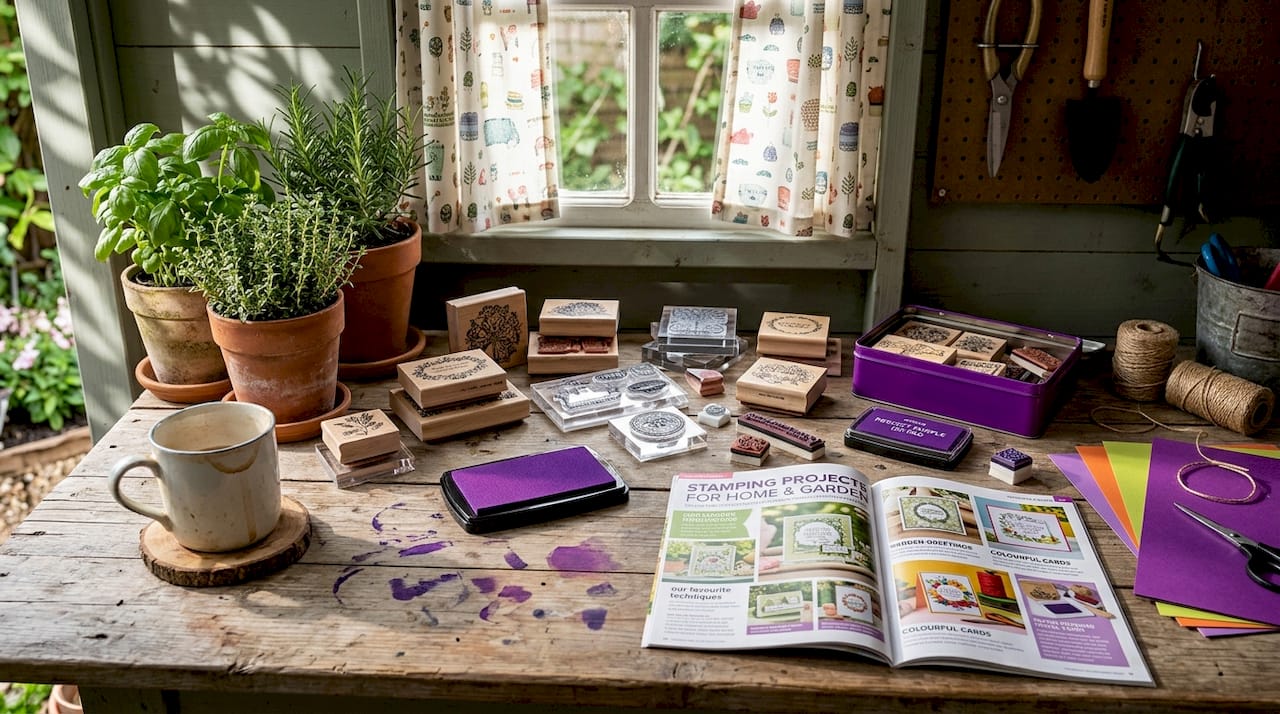
Simple stamping uses stamp sets, ink pads, and cardstock as its only requirements, making it the fastest and most budget-friendly entry point in any list of stamp-related crafts. The technique relies on repetition and colour variation to build striking backgrounds, with the stamped image remaining the visual focal point rather than elaborate layering. A single floral or geometric stamp, rotated and re-inked in two or three coordinating colours, produces a professional-looking pattern in minutes.
Stamp sets are categorised by function: message stamps suit greeting cards, while headline and title stamps serve scrapbook layouts and journaling spreads. Recognising which category fits your project saves time and prevents mismatched results. Stampdesign4u offers a range of personalised rubber stamps that work equally well for paper crafting and business use.
Pro Tip: Ink the same stamp in two colours simultaneously by applying each colour to opposite halves of the stamp surface. The blended print creates a gradient effect without any extra equipment.
2. Handmade card making with small stamped images
Small stamped images become polished design elements when arranged as frames, grids, or geometric shapes rather than placed at random. Planning the layout before you press a single stamp is the difference between a card that looks considered and one that looks cluttered. A row of small leaf stamps along a card’s border, for example, creates a clean frame for a central sentiment.
Layering ink colours adds depth to these arrangements. Stamping the same image in a lighter shade first, then overprinting in a darker tone slightly offset, produces a shadow effect that elevates simple designs. Pre-planning stamp roles as border or shape elements avoids the beginner mistake of random placement that lacks design coherence.
3. Scrapbooking and journaling with stamp sets
Scrapbooking uses stamps to anchor layouts, date entries, and add decorative texture around photographs. Headline stamps and title stamps are the workhorses here, providing consistent lettering that hand-writing cannot reliably replicate. Combining a bold title stamp with a background texture stamp creates visual hierarchy on a page without requiring digital tools.
Faux postage stamps add a particularly distinctive touch to travel scrapbooks and junk journals. DIY faux postage stamps are made using printable designs cut with thinning shears or manicure scissors to mimic perforated edges. Thinning shears produce a soft, irregular cut, while manicure scissors allow tighter, more precise perforations. Both effects read as authentically vintage when mounted on kraft paper or aged cardstock.
Pro Tip: Cut a test strip of your chosen scissors along plain paper before committing to your printed design. Different scissors produce noticeably different edge profiles, and testing first prevents wasted prints.
4. Block printing on fabric and textiles
Block printing on fabric is the oldest stamp art technique still in active use, and it produces results that no digital print can replicate. Fabric stamping requires fabric paint applied with a brayer for even coverage, test swatches on scrap fabric, and prewashing the base fabric before printing. Prewashing removes sizing and prevents pattern distortion after the finished piece is laundered.
Wooden or hand-carved stamps work best for this application. The process suits tea towels, tote bags, cushion covers, and napkins. Larger projects such as curtains present a real challenge because maintaining consistent pressure and alignment across a wide surface requires a dedicated flat table and a methodical grid approach.
- Prewash and press the fabric flat.
- Apply fabric paint to the stamp surface using a brayer for even coverage.
- Press a test print on scrap fabric and adjust paint quantity.
- Stamp the main fabric using a grid or measured spacing.
- Heat-set the finished print with an iron or tumble dryer according to the paint manufacturer’s instructions.
Pro Tip: Place a folded towel beneath the fabric while stamping. The slight give in the surface helps the stamp make full contact, producing a crisper print than a hard table alone.
5. Wax resist stamping on textiles
Wax resist stamping, also known as batik, uses wooden blocks dipped in hot wax rather than paint. The wax acts as a resist: areas covered by the stamp repel dye, leaving the original fabric colour beneath. Wooden blocks used for wax resist must be dedicated exclusively to wax stamping. Using the same block for fabric paint or acrylic ink contaminates the wood grain and produces uneven wax coverage on subsequent prints.
This technique suits natural fibres such as cotton and silk, which absorb dye evenly. The finished pieces have a characteristic crackled texture where the wax fractured during dyeing, which is part of the aesthetic appeal. For inspiration on applying stamp-based decoration to home furnishings, the BOHO decor guide from Canadian Savers shows how stamped textiles integrate into rustic interior schemes.
6. Stamping on air-dry clay for jewellery and ornaments
Stamping on air-dry clay with rubber or silicone stamps and ink pads creates textured, coloured pieces without the need for painting. The stamp acts as both an embossing plate and a colour applicator simultaneously, pressing a design into the soft clay while depositing ink into the recessed areas. This replaces painting entirely, offering built-in colour and embossed texture on lightweight art pieces.
The materials list is straightforward:
- Air-dry clay (white or natural)
- Rubber or silicone stamps
- Ink pads in chosen colours
- Rolling pin and smooth work surface
- Shape cutters (circle, oval, teardrop)
- Sealer (Mod Podge or a dedicated clay sealer)
- Jewellery findings for earrings or brooches
Popular finished pieces include earrings, small decorative bowls, fridge magnets, gift tags, and Christmas ornaments. Once dry and sealed, the pieces are surprisingly durable. The unique stamp imprint ideas guide from Stampdesign4u offers further inspiration for applying this technique to personalised gifts.
7. Stamp-based home décor projects
Stamp-based home décor covers a broad category of DIY stamp projects that transform plain household items into personalised pieces. Plain ceramic plant pots stamped with geometric patterns using acrylic paint, wooden picture frames decorated with repeated leaf motifs, and plain glass vases stamped with metallic ink all fall within this category. The key advantage over stencilling is speed: a stamp deposits a complete design in a single press, whereas a stencil requires careful tape placement and multiple paint passes.
Foam stamps cut from craft foam sheets are the most practical tool for large, flat surfaces. They hold paint evenly, clean quickly, and can be cut into any shape with scissors or a craft knife. For wall art projects, a grid of stamped squares in two or three tones creates a geometric feature panel that rivals commercially produced prints.
8. Making DIY foam stamps with a die-cutting machine
Custom foam stamps made with a die-cutting machine require layering multiple foam sheets, taping them securely, and running multiple passes through the machine for clean cuts. The Sizzix Big Shot paired with Bigz dies simplifies thick foam cutting and produces stamps with crisp, consistent edges that hand-cutting rarely achieves.
- Stack two or three layers of craft foam and tape the edges to prevent shifting.
- Place the foam stack on the Sizzix cutting plate with the chosen Bigz die on top.
- Run through the Big Shot, applying firm, even pressure.
- Repeat the pass once or twice more without moving the foam.
- Peel the cut foam shape away and mount it on a wooden block or thick cardboard backing.
- Ink and test on scrap paper before using on a final project.
The result is a reusable, custom stamp that transfers designs onto paper, fabric, or clay with equal reliability. Designing your own stamp artwork beforehand, as covered in Stampdesign4u’s design guide, gives you full control over the final shape and detail level.
Pro Tip: Mount the finished foam stamp on a piece of acrylic or clear perspex rather than wood. The transparency lets you see exactly where the stamp will land before pressing, which is particularly useful for repeat patterns.
9. Faux vintage postage stamp crafts
Faux postage stamps are a niche but highly popular craft within paper-based stamping. The technique combines printable vintage imagery with scissor-cut perforated edges to produce convincing stamp replicas for use in mail art, journaling, and mixed-media collage. Thinning shears, pinking shears, and manicure scissors each produce a different edge profile. Pinking shears give a zigzag cut, thinning shears produce a soft irregular wave, and manicure scissors allow the tightest, most stamp-like perforations.
Mail art is a natural home for this craft. Decorating envelopes with faux stamps, wax seals, and hand-stamped postmarks creates a tactile, personal correspondence experience that standard post cannot match. The mail art stamp ideas guide from Stampdesign4u covers ten techniques for combining these elements into finished pieces.
Comparing stamp crafts by material and complexity
Stamp-related crafts vary significantly in the tools, time, and skill they require. The table below compares the four main categories to help you choose the right starting point.
| Craft type | Typical tools | Skill level | Best for |
|---|---|---|---|
| Paper stamping | Stamp set, ink pad, cardstock | Beginner | Cards, scrapbooks, journals |
| Fabric block printing | Wooden stamp, fabric paint, brayer | Intermediate | Tote bags, tea towels, cushions |
| Air-dry clay stamping | Rubber stamp, ink pad, clay, sealer | Beginner to intermediate | Jewellery, ornaments, magnets |
| DIY foam stamp making | Die-cutting machine, foam, backing | Intermediate | Custom repeat patterns, décor |
Key takeaways
The most versatile stamp-related crafts combine a single tool type with multiple surfaces, giving crafters maximum creative range from a minimal investment in equipment.
| Point | Details |
|---|---|
| Paper stamping is the fastest entry point | Simple stamping with ink pads and cardstock requires no specialist equipment and produces results immediately. |
| Pre-planning layouts prevents wasted effort | Arranging stamps as frames or grids before pressing produces coherent, professional designs rather than random marks. |
| Tool dedication protects quality | Wooden blocks used for wax resist should never be used for paint, as cross-contamination ruins both the block and the print. |
| Air-dry clay removes the need for painting | Stamping ink directly onto soft clay deposits colour and texture in a single step, simplifying the finishing process. |
| Custom foam stamps expand creative freedom | Die-cut foam stamps transfer designs onto paper, fabric, and clay with consistent results across all three surfaces. |
Why experimenting across materials is worth the effort
I have worked with stamps across paper, fabric, and clay for years, and the single most useful thing I have done is resist the urge to stay in one medium. Most crafters start with paper and never leave it, which is understandable because the feedback loop is immediate and the materials are cheap. But the moment you press a rubber stamp into soft air-dry clay and see the ink settle into the embossed lines, you realise the technique has a completely different character on a three-dimensional surface.
Fabric is where I see the most hesitation, usually because of the prewashing step and the commitment of working on something wearable or functional. The honest advice is to start with a plain cotton tote bag rather than a garment. The stakes are low, the surface is flat, and the result is immediately usable. Once you have one successful fabric print, the process stops feeling difficult.
The tool dedication rule for wax resist is one I learned the hard way. A wooden block contaminated with fabric paint produces patchy wax coverage that ruins the resist effect entirely. Keep separate blocks for each medium and label them clearly. That single habit saves more frustration than any technique refinement.
My current favourite project is stamped air-dry clay gift tags. They take under an hour from rolling to sealing, they use stamps I already own, and the recipients consistently assume they were professionally made. That ratio of effort to perceived quality is hard to beat anywhere in the list of stamp-related crafts.
— Steven
Bring your stamping projects to life with Stampdesign4u
Whether you are working through a list of stamp-related crafts for the first time or looking to add a professional custom stamp to your toolkit, Stampdesign4u has the products to match your project.
The Trodat 4927 rubber stamp from Stampdesign4u accommodates up to nine lines of text and logo artwork, making it ideal for personalised craft projects, mail art, and branded packaging. For crafters who want to make their own stamps from scratch, the Shiny S200 DIY Stamp Kit provides everything needed to produce a custom rubber stamp at home. Browse the full range at Stampdesign4u to find ink pads, stamp sets, and accessories suited to every skill level and project type.
FAQ
What materials can you stamp on besides paper?
Stamps work on fabric, air-dry clay, ceramic surfaces, wood, and glass using the appropriate ink or paint type. Fabric paint suits textiles, while acrylic ink or chalk ink works on clay and porous surfaces.
Do you need a special ink for fabric stamping?
Fabric-specific paint or ink is required for textile stamping because standard dye-based ink washes out after laundering. Heat-setting the finished print with an iron locks the colour permanently into the fabric fibres.
How do you make a DIY foam stamp at home?
Foam stamps are made by layering craft foam sheets, cutting the desired shape with scissors or a die-cutting machine such as the Sizzix Big Shot, and mounting the cut foam on a wooden or cardboard backing for stability.
What scissors create the best faux postage stamp edges?
Manicure and thinning scissors produce the most convincing perforated edges for faux postage stamps, with manicure scissors giving tighter perforations and thinning shears offering a softer, more irregular cut.
Can you use the same wooden stamp for wax resist and fabric paint?
Wooden blocks used for wax resist batik must remain dedicated to wax only. Cross-contamination with fabric paint causes uneven wax coverage and damages the block surface over repeated use.