

TL;DR:
- An embossing stamp creates a permanent, raised impression on materials by physically reshaping fibers without using ink. It involves precision dies that produce durable, tactile designs suitable for personal and business applications, with various styles like blind, foil, and debossing. Proper selection, calibration, and testing ensure high-quality impressions, making embossing a valuable choice for conveying quality and authority.
An embossing stamp does something no ink stamp can replicate. It physically reshapes the surface of paper or card to produce a permanent, raised impression with no ink at all. Many people confuse embossing with ordinary rubber stamping or even printing, but the process is fundamentally different. Understanding what is an embossing stamp, how it works, and where it adds real value helps you make better decisions whether you are personalising stationery at home or adding a professional finish to business documents and packaging.
Table of Contents
- Key takeaways
- What is an embossing stamp and how does it work?
- Materials, designs, and costs
- Applications for personal and business use
- Benefits and limitations of embossing stamps
- How to choose and use an embossing stamp effectively
- My perspective on embossing stamps in real-world use
- Get your custom embossing stamp from Stampdesign4u
- FAQ
Key takeaways
| Point | Details |
|---|---|
| No ink required | Embossing stamps create raised impressions by reshaping material fibres, not by depositing ink. |
| Precision matters | Correct die orientation and calibrated pressure produce clean, lasting impressions every time. |
| Wide range of uses | Applications cover personal stationery, corporate branding, packaging, and live event personalisation. |
| Cost is predictable | Custom embossing stamps typically cost between £30 and £80 depending on size and design complexity. |
| Material compatibility counts | Not all substrates respond equally; test samples before committing to a final production run. |
What is an embossing stamp and how does it work?
The embossing stamp definition starts with two precision components. A male die and a female die sit on opposite sides of the material, and when pressure is applied, the paper or card fibres are physically compressed and reshaped into a raised three-dimensional form. No ink, no heat, no colour. The result is a clean, tactile impression that sits above the surface of the material.
This is what separates embossing from ink stamping entirely. An ink stamp deposits a pigment layer onto a surface. An embossing stamp alters the surface itself. The impression is permanent because the fibres have been structurally reorganised, not just coated. That distinction matters for quality, durability, and perceived value.
There are several variations worth knowing about:
- Blind embossing produces a raised impression with no ink or foil, relying entirely on the three-dimensional form for visual effect
- Foil embossing adds a metallic or coloured foil layer to the raised area, bonded through heat and pressure for a finish that will not fade unlike standard ink printing
- Debossing is the inverse process, pressing the design below the material surface rather than raising it above, creating a recessed impression with an equally distinctive character
What an embossing stamp does, at its core, is transform flat material into something with physical presence. That tactile quality is precisely why it is so widely used in contexts where quality needs to be communicated instantly.
Pro Tip: If you are ordering a custom embossing stamp for the first time, request a test impression on the same paper weight you intend to use before approving the final die. Lightweight papers respond differently from heavy card stock.
Materials, designs, and costs
When you explore what is custom embossing further, the practical details become just as relevant as the theory. Custom embossing stamps are typically produced using precision CNC-engraved dies in brass or steel for the male and female components, mounted in a handled press mechanism. Brass is the most common choice for its durability and ability to hold fine detail at small scales.
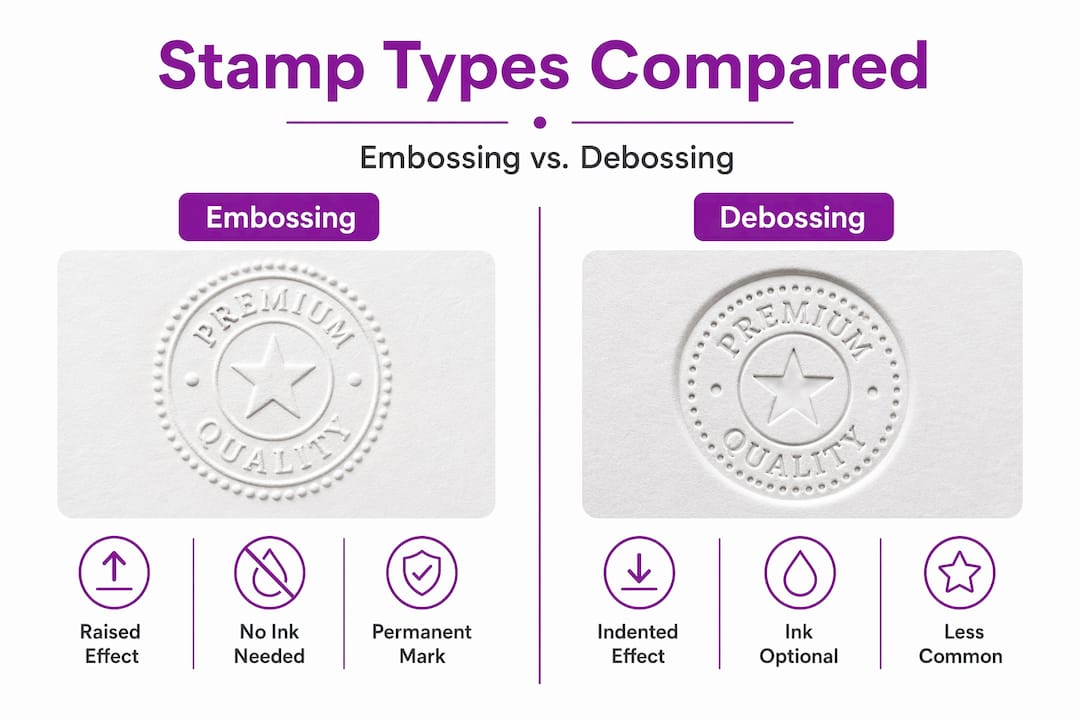
Design complexity directly affects both price and impression quality. A simple monogram or circular text seal sits at the lower end of the cost range. A detailed logo with fine lines, multiple text rings, or mixed graphic elements requires a more complex die and will cost more to produce. Custom embossing stamps typically cost between £30 and £80 for most personal and small business applications, though bespoke or larger formats can exceed that.
Common ordering mistakes to avoid:
- Submitting low-resolution artwork that cannot be accurately reproduced in the die
- Choosing designs with very thin lines or intricate detail that will not survive repeated use
- Forgetting to specify the correct die orientation, which is critical to ensure the impression appears the right way up on your documents
- Selecting a stamp size too small for the level of detail in the design
If you want a smooth ordering process, review the custom stamp design workflow before submitting artwork, particularly if you are working with a logo rather than simple text.
Pro Tip: Always specify the orientation of your die explicitly when ordering. Top, bottom, left, and right must be confirmed in writing with your supplier to prevent the impression appearing sideways or inverted on your final documents.
Applications for personal and business use
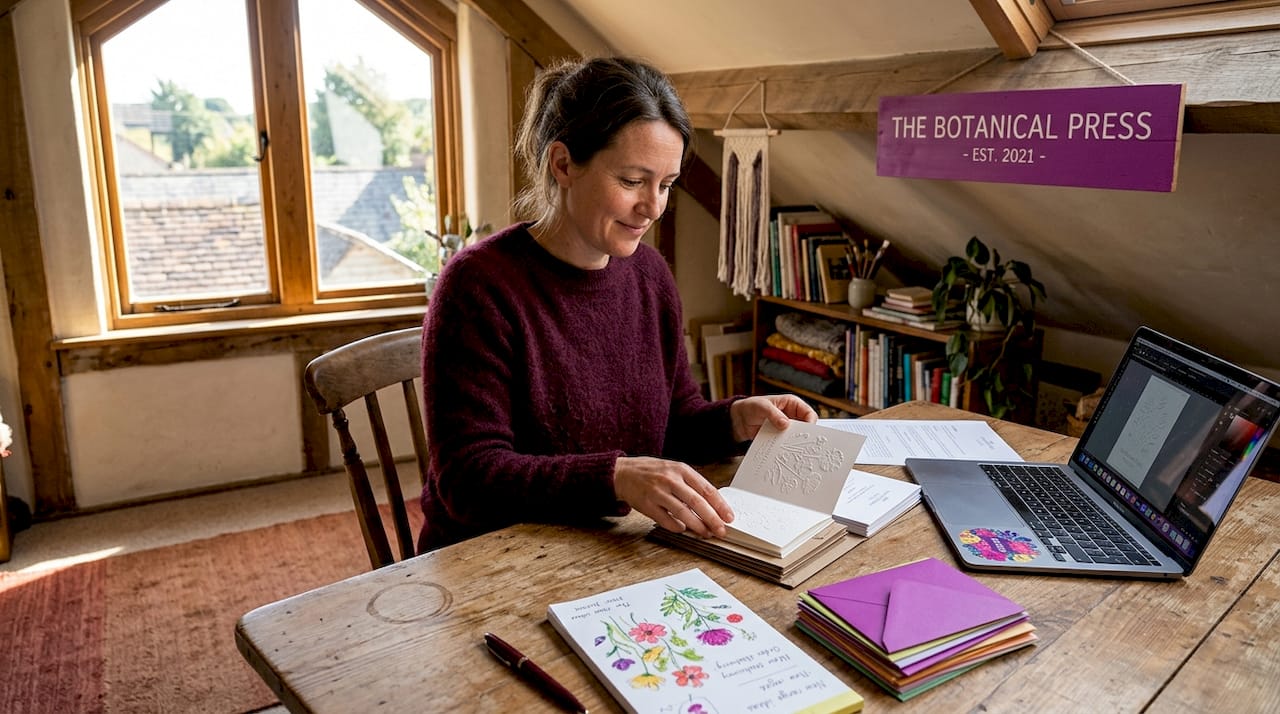
Embossing stamps are used across a surprisingly broad range of contexts. On the personal side, they appear most often on wedding stationery, greeting cards, gift wrapping, handmade books, and personal correspondence. The raised impression on a thick cream envelope adds a quality signal before the recipient has even opened it.
For businesses, the applications extend further. Corporate documents, contracts, certificates, and official letterheads all benefit from an embossed seal that signals authenticity and care. Packaging is another significant area. The embossing powders market is forecast to grow at 3.8% annually through 2035, driven largely by rising demand for premium customised packaging and branded stationery. That growth reflects a real shift toward tactile, physical branding in a market saturated with digital-first communication.
Live event personalisation is another growing area. Professional onsite embossing services allow brands to personalise leather goods, notebooks, and card items at product launches, corporate events, and retail activations in real time.
The table below clarifies how embossing compares to related techniques:
| Technique | Surface effect | Uses ink or foil? | Durability |
|---|---|---|---|
| Embossing | Raised above surface | No (blind) or optional foil | Very high, permanent |
| Debossing | Recessed below surface | No | Very high, permanent |
| Ink stamping | Flat, surface deposit | Yes | Moderate, may fade |
| Foil embossing | Raised with metallic layer | Yes (foil) | Very high, non-fading |
For practical stamp ideas across both personal and business contexts, the guide on personalised stamp uses covers a wide range of scenarios worth exploring. If your focus is specifically on branding with stamps, there is targeted guidance available for that too.
Benefits and limitations of embossing stamps
The benefits of embossing stamps go well beyond aesthetics, though the visual impact is undeniable. The primary advantage is tactile quality. A raised impression communicates permanence, authority, and care in a way that printed or ink-stamped text simply cannot.
Durability is the second major benefit. Because the impression is structural rather than surface-applied, it does not fade, smear, or peel over time. This makes embossing the right choice for documents, certificates, and any material that needs to retain its quality over years rather than months.
There is also a functional benefit that many people overlook. Embossing increases structural integrity and tactile bulk in materials, which is why manufacturers use it deliberately to increase the perceived thickness of lighter substrates. A thin card with an embossed pattern feels substantially more substantial than the same card without it.
That said, embossing has real limitations:
- It requires a minimum material thickness to avoid tearing or collapsing under pressure
- Very thin papers, smooth foils without backing, and some synthetic materials do not respond well to pressure embossing
- Excessive pressure damages materials and can tear fibres; correct calibration is not optional
- The upfront cost of producing a custom die is higher than ordering an ink stamp of equivalent size
- You cannot change the design without commissioning a new die set
Pro Tip: Always test your embossing stamp on scrap material of the exact same weight and finish before applying it to final pieces. Even small differences in paper density affect the depth and clarity of the impression.
How to choose and use an embossing stamp effectively
Choosing the right embossing stamp means being clear about three things before you order: the intended substrate, the design complexity, and the expected volume of use. A stamp used dozens of times a week needs a more robust die than one used occasionally for personal correspondence.
Once you have your stamp, follow these steps for consistent, clean impressions:
- Prepare the material. Use card or paper at the correct weight for your die, ideally between 120gsm and 300gsm. Thinner stock risks tearing; anything heavier may not accept a clean impression without specialised equipment.
- Position the stamp correctly. Align the die precisely on the material. For documents with a fixed position, use a guide or registration mark to keep placement consistent across multiple pieces.
- Apply firm, even pressure. Press straight down without rocking. Uneven pressure produces an impression that is deeper on one side than the other. If you are using a handheld press, apply force through the centre of the handle, not the edge.
- Test before the final run. Substrate testing is mandatory for professional results, particularly if you are working across different paper stocks or embossing leather, fabric, or mixed materials.
- Store the die correctly. Keep the stamp away from direct heat and humidity. Brass dies hold their precision for years when stored properly, but exposure to moisture can corrode fine detail over time.
Choosing stamp size matters too. A die that is too small for the design will produce a crowded, indistinct impression. A die that is disproportionately large for the document looks out of place. Match the stamp footprint to the application, not just the design.
My perspective on embossing stamps in real-world use
I have worked with embossing across both small business branding and personal craft projects, and the single biggest misconception I encounter is that embossing is purely decorative. People treat it as a finishing touch, something to add when the budget allows. That misses what embossing actually does.
In my experience, an embossed impression on a business document or product package changes how the recipient perceives the sender before they read a single word. It is not about looking expensive. It is about communicating that someone took the time to do something that could not be faked or rushed. That signal is surprisingly powerful, even in professional contexts where people think they are immune to it.
What I have found most useful in practice is starting with the simplest possible design. Many people over-engineer their first custom embossing stamp with fine lines and tight detail, then are disappointed when the impression looks cluttered on paper. A clean monogram, a simple circular seal, or a minimal logo produces far stronger results than a complex design that loses definition under pressure.
Precision matters far more than force. Every time I have seen a damaged impression, it came from too much pressure, not too little. The die does the work. Your job is to apply consistent, centred pressure and let the mechanics do the rest.
— Steven
Get your custom embossing stamp from Stampdesign4u
Stampdesign4u offers a clear, practical route to ordering custom embossing stamps for both personal and business use. Whether you need a simple monogram seal for personal stationery or a corporate logo stamp for branded documents and packaging, the ordering process is straightforward.
You can browse options including the Trodat 4927 logo stamp for multi-line logo and text designs, or explore the full range to find the right format for your application. Stampdesign4u ships internationally, supports a wide range of design formats, and provides customer support to help you get orientation, sizing, and artwork right before production. For businesses looking at embossing as part of a wider branding approach, the guidance on business branding with stamps covers practical implementation steps worth reviewing alongside your order.
FAQ
What does an embossing stamp do?
An embossing stamp physically reshapes the fibres of paper, card, or leather to create a permanent raised impression with no ink required. The result is a tactile, three-dimensional design that does not fade or smear over time.
What is the difference between embossing and debossing?
Embossing raises the design above the material surface, while debossing presses it below. Both use matched male and female die sets and produce permanent, ink-free impressions.
How much does a custom embossing stamp cost?
Custom embossing stamps typically cost between £30 and £80 for standard personal and business applications, depending on size and design complexity. More intricate or larger-format dies may cost more.
What materials can an embossing stamp be used on?
Embossing stamps work best on paper and card between 120gsm and 300gsm, as well as leather, some fabrics, and thicker synthetic materials. Very thin or highly coated papers may not produce clean impressions without careful pressure calibration.
What is the embossing stamp definition in a professional context?
An embossing stamp is a tool comprising matched male and female dies that, when pressed together around a substrate, permanently reshape the material to produce a raised three-dimensional impression. It is used in personal stationery, corporate documentation, packaging, and live event personalisation.