

TL;DR:
- Metallic ink stamps use reflective metallic flakes to produce a shimmering, light-catching finish. They differ from standard inks in pigment composition, light behavior, and application, offering a soft shimmer instead of a flat color. Proper surface testing, shaking the pad, and careful application ensure consistent, professional results.
A metallic ink stamp is defined as a stamping tool that uses ink containing fine metallic particles, such as aluminium or bronze pigments, to produce a reflective, shimmering finish when applied to a surface. Unlike standard inks, which dry to a flat colour, metallic stamp inks create a light-catching sheen that reads as genuinely metallic to the eye. Products like Tsukineko StāzOn METALLIC and the Ultimate Metallic Ink Refill have made this effect accessible to both hobbyists and businesses. Whether you are embellishing handmade cards or stamping branded packaging, understanding how metallic ink stamps work is the first step to getting consistent, professional results.
How does a metallic ink stamp differ from standard ink stamps?
The core difference lies in the pigment. Metallic inks contain fine metallic flakes, typically aluminium for silver tones or bronze and brass alloys for gold tones, suspended in a carrier varnish. Standard CMYK inks use dye or pigment particles that absorb light. Metallic pigments reflect it. That physical difference in how light interacts with the ink is what produces the sheen.
Standard inks cannot replicate a metallic finish by mixing colours. Metallic inks are printed as spot colours separate from CMYK layers, because their optical behaviour depends on real metallic particles reflecting light rather than absorbing it. This is why a gold colour mixed from yellow and orange CMYK values looks flat next to a true metallic gold stamp impression.
The shimmer you see in a dried metallic stamp impression is also a result of particle alignment. Metallic pigment flakes align during drying, orienting themselves parallel to the surface to maximise reflectivity. Disturb that alignment through uneven application or a rough substrate, and the effect dulls noticeably.
Metallic ink also differs from foil stamping. Foil stamping uses heat and pressure to transfer a continuous metallic film, producing a mirror-like finish. Metallic ink deposits discrete metal flakes, giving a softer, more diffused shimmer. For large stamped areas or high-volume workflows, metallic ink is the more practical choice.
| Feature | Metallic ink stamp | Standard ink stamp |
|---|---|---|
| Pigment type | Metallic flakes (aluminium, bronze) | Dye or conventional pigment |
| Light behaviour | Reflects light | Absorbs light |
| Finish | Reflective, shimmering | Flat, opaque |
| Colour mixing | Cannot be replicated with CMYK | Fully mixable |
| Foil alternative | Softer shimmer, larger areas | Not applicable |
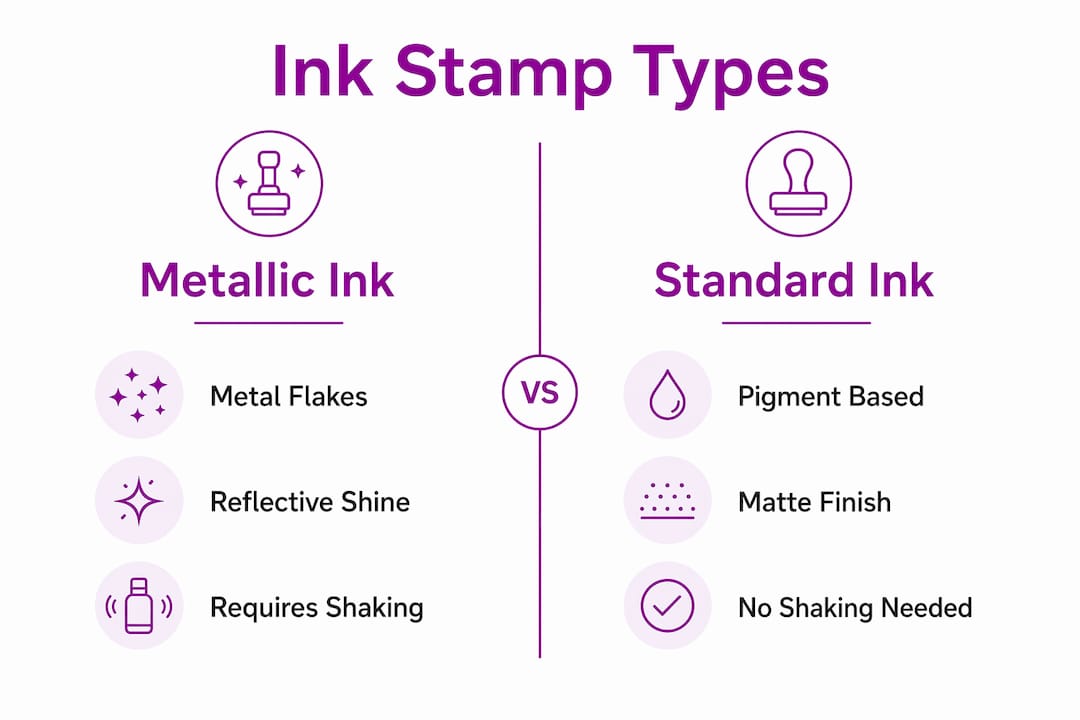
Pro Tip: Test a metallic stamp impression on white cardstock first. If the sheen looks dull, the ink pad needs shaking to redistribute settled pigment flakes before you stamp on your final material.
What types of metallic ink are used in stamp pads?
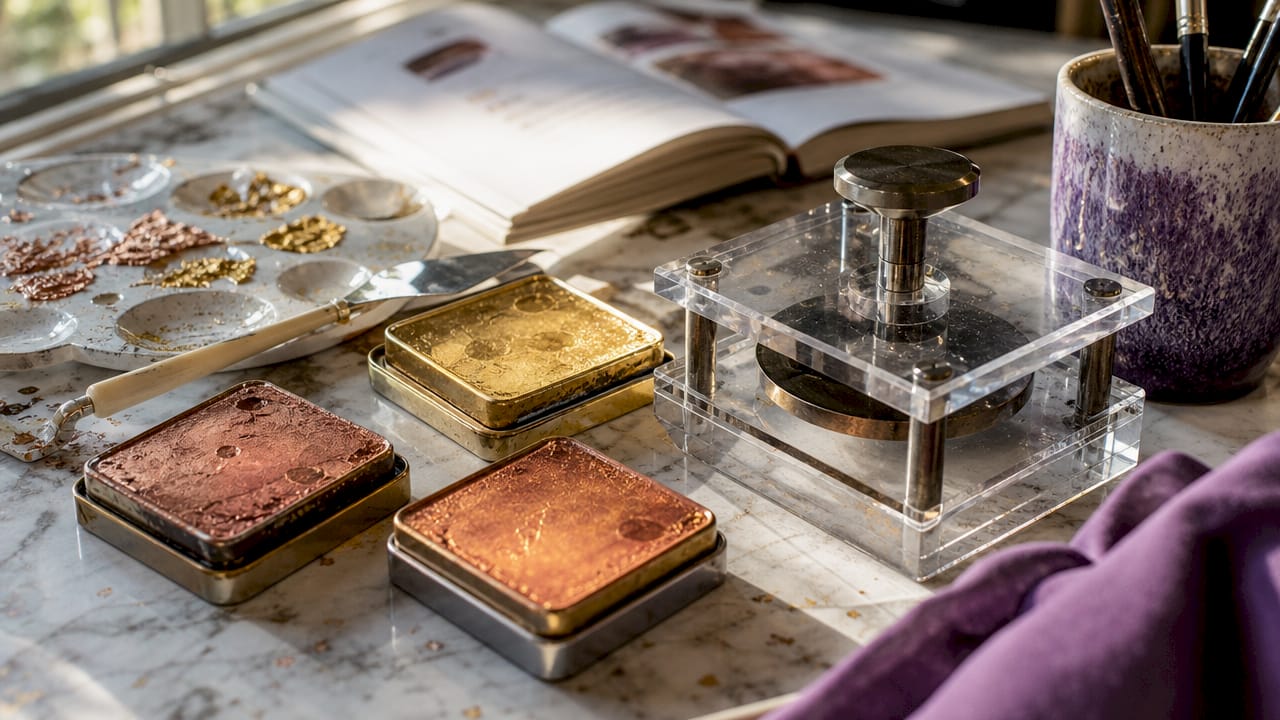
Metallic stamp inks are formulated in three main carrier types: oil-based, water-based, and solvent-based. Each behaves differently on surfaces and dries at a different rate.
-
Solvent-based metallic inks are the most versatile for non-porous surfaces. Tsukineko StāzOn METALLIC is an oil-based solvent pigment ink designed to work on almost all surfaces, including metal, glass, plastic, ceramics, and fabric. Drying times range from 3 seconds to 5 minutes depending on the material and ambient conditions. That range matters: glass may feel dry in seconds but still smear if handled too soon.
-
Water-based metallic inks suit porous surfaces like paper and cardstock. They dry more slowly on non-absorbent materials and may not adhere reliably to glass or plastic without a heat-set step. They are easier to clean from stamps and pads.
-
Oil-based metallic inks offer strong adhesion and a rich metallic deposit. They require dedicated solvents for cleanup and take longer to dry fully. The Tsukineko Ultimate Metallic Ink Refill falls within this category and is widely used for elegant accents on cards, tags, and retail packaging.
-
Pigment-based metallic inks in pad form, such as Delicata by Tsukineko, are formulated specifically for paper and cardstock. They produce a dense, opaque metallic layer with a pronounced shimmer on light and dark papers alike.
-
Hybrid formulations combine properties of solvent and pigment inks to extend substrate compatibility. These are less common but are gaining ground in commercial stamping applications where a single ink must perform across multiple materials.
Regardless of formulation, metallic ink pads require regular shaking before use. Pigment flakes settle to the bottom of the pad reservoir over time, and an unshaken pad delivers uneven, patchy results.
What surfaces work best with metallic ink stamps?
Metallic ink stamps perform across a wide range of substrates, but surface absorbency determines both the quality of the finish and the drying time.
- Paper and cardstock deliver the best results. Absorbency pulls the ink in quickly, the metallic flakes align well, and drying is fast. Dark cardstock is particularly effective because the metallic sheen contrasts sharply against a dark background.
- Metal and glass accept solvent-based metallic inks like StāzOn METALLIC reliably. The surface must be clean and grease-free. Drying takes longer, and the impression can smear if touched before it is fully set.
- Plastic and ceramics work with solvent-based formulations. Results vary by plastic type; some plastics resist adhesion even with solvent inks, so testing is non-negotiable.
- Fabric accepts metallic inks, though the finish is less reflective than on hard surfaces because fibres scatter the metallic flakes. Heat-setting after stamping improves durability on fabric.
- Slick or coated papers behave like non-porous surfaces. Solvent-based inks are the correct choice here; water-based inks bead up and smear.
Substrate performance varies significantly with ambient temperature and humidity. In cold or damp conditions, drying times extend considerably. Always test on a scrap piece of your intended material before committing to a full run.
Pro Tip: When stamping on dark cardstock, apply a slightly heavier ink load to the stamp to compensate for the dark background absorbing some of the metallic sheen. A second light impression over the first, while still wet, can intensify the effect.
How to use metallic ink stamps effectively
Consistent, sharp metallic impressions depend on preparation, application, and prompt cleanup. Skipping any of these steps produces dull or patchy results.
- Shake the ink pad before use. Metallic pigment flakes settle during storage. Shake the pad firmly for 10–15 seconds to redistribute the particles evenly through the carrier.
- Apply ink in measured drops. Tsukineko recommends adding 5–8 drops of refill ink to the pad surface, then spreading evenly with the included squeegee. Flooding the pad causes bleeding and obscures fine stamp detail.
- Match ink load to stamp size. Larger stamps need a fuller ink load. Smaller, detailed stamps need less. Press the stamp onto the pad with even, firm pressure rather than rocking it, which smears the metallic particles.
- Stamp with a single, firm press. Do not rock or slide the stamp on the surface. Lift cleanly and vertically. Any lateral movement drags the metallic flakes and breaks the reflective alignment.
- Clean the stamp immediately after use. Prompt cleanup prevents residue from drying on the stamp face. Use StāzOn Cleaner for solvent-based inks. Rinse thoroughly after cleaning, particularly if the stamp has been used on glass, metal, or plastic.
- Store pads horizontally and sealed. Leaving a metallic ink pad open or stored vertically accelerates drying and causes uneven pigment distribution.
Uneven mixing or improper application causes dull or patchy metallic shine because pigment flakes settle and fail to distribute evenly across the pad surface. This is the single most common cause of disappointing results, and it is entirely preventable with a good shake before each session.
You can find further guidance on choosing stamp materials for different surfaces and applications.
What are the main uses of metallic ink stamps in design and branding?
Metallic ink stamps serve both creative and commercial purposes. The reflective finish elevates the perceived quality of any printed piece, which makes them particularly effective in branding contexts.
- Card making and paper crafts. Metallic impressions on handmade cards, gift tags, and invitations add a premium finish that embossing powder cannot always match for speed and ease. Gold and silver metallic stamps on dark kraft paper are a staple of the craft market.
- Product packaging. Businesses use metallic logo stamps on boxes, tissue paper, and bags to create a distinctive, high-end appearance without the cost of foil-blocked packaging. Metallic inks add premium accents to cards and retail packaging, enhancing perceived brand value.
- Logo and brand stamping. A custom rubber stamp paired with a metallic ink pad lets small businesses apply a consistent, professional logo impression to correspondence, packaging, and promotional materials. The metallic finish signals quality in a way that standard black ink cannot.
- Art and mixed media projects. Artists use metallic stamp inks on canvas, wood, and fabric to add texture and light-catching detail. The ink works particularly well in layered compositions where the shimmer reads differently under varying light conditions.
For businesses considering custom logo stamps as part of their branding toolkit, metallic ink compatibility is a key factor in stamp selection. You can also read more about marketing with custom stamps to see how metallic effects fit into broader brand strategies.
Key takeaways
Metallic ink stamps produce their distinctive sheen through the physical alignment of metallic pigment flakes during drying, a property that standard CMYK inks cannot replicate and that makes them a reliable tool for premium branding and craft applications.
| Point | Details |
|---|---|
| Pigment composition | Metallic inks use aluminium or bronze flakes that reflect light, unlike dye-based inks that absorb it. |
| Formulation choice | Match the ink formulation to the substrate: solvent-based for non-porous surfaces, water-based for paper. |
| Surface preparation | Test on scrap material first, as drying times and adhesion vary significantly by substrate and climate. |
| Application technique | Shake the pad before use and stamp with a single firm press to preserve metallic flake alignment. |
| Prompt cleanup | Clean stamps immediately after use with the correct cleaner to prevent residue and extend stamp life. |
Why substrate testing changed everything for me
The first time I used a metallic ink stamp on a coated card, the result was a smeared, dull mess. I had assumed that metallic ink would behave like any other pigment ink. It does not. The metallic flakes need a moment to align after the impression, and any contact before they set ruins the finish entirely.
What I have found, working with metallic stamping across paper, glass, and packaging materials, is that the single most underrated step is the test impression. Not a quick dab on a scrap. A proper test on the exact material, in the same room temperature, with the same ink load. Environmental conditions genuinely shift results. A pad that performs beautifully in a warm studio can deliver a patchy impression in a cold warehouse.
For small businesses, the value of metallic ink stamping is real and measurable. A custom branding stamp used with a gold or silver metallic ink pad transforms plain kraft packaging into something that looks considered and premium. Customers notice. The investment in a quality stamp and the right ink formulation pays back quickly in perceived brand quality.
My advice: do not buy a metallic ink pad and assume it works on everything. Read the formulation, test the substrate, and clean the stamp immediately after every session. Those three habits separate consistent, professional results from frustrating ones.
— Steven
Custom stamps for metallic ink applications from Stampdesign4u
Stampdesign4u offers a range of custom rubber stamps built to work with metallic ink pads across paper, cardstock, and packaging materials.
The Trodat 4927 logo stamp provides a 60 x 40mm impression area, giving businesses enough space to apply a clear, detailed logo in metallic ink on packaging and correspondence. For retail and product branding, the personalised packaging stamps range covers a variety of sizes and formats suited to metallic ink application. Stampdesign4u ships to customers across the UK and internationally, with options to upload custom artwork directly through the site.
FAQ
What is a metallic ink stamp used for?
Metallic ink stamps are used to apply a reflective, shimmering impression to paper, cardstock, packaging, glass, metal, and fabric. Common applications include card making, product branding, logo stamping, and decorative art projects.
Can metallic ink stamps work on dark paper?
Yes. Metallic ink stamps perform particularly well on dark paper and cardstock because the reflective metallic finish contrasts sharply against a dark background, producing a visually striking result.
What is the best metallic ink for stamping on non-porous surfaces?
Tsukineko StāzOn METALLIC is widely regarded as the most reliable option for non-porous surfaces including glass, metal, plastic, and ceramics. Drying times vary from 3 seconds to 5 minutes depending on the material and ambient conditions.
How do I prevent a patchy metallic finish when stamping?
Shake the ink pad firmly before use to redistribute settled metallic pigment flakes. Apply a measured ink load, stamp with a single firm press, and avoid rocking or sliding the stamp on the surface.
Is metallic ink stamping the same as foil stamping?
No. Foil stamping transfers a continuous metallic film using heat and pressure, producing a mirror-like finish. Metallic ink deposits discrete metallic flakes, creating a softer shimmer that suits larger areas and simpler workflows.