

TL;DR:
- A flash stamp is a pre-inked, high-precision tool that uses a microporous resin pad embedded with oil-based ink, producing photographic-quality impressions without external ink pads. Its manufacturing involves high-intensity light exposure to create a porous membrane, allowing consistent, detailed prints ideal for signatures, logos, and detailed crafts. Proper maintenance requires using oil-based ink, careful re-inking, and respecting design line thickness to achieve optimal results.
A flash stamp is a pre-inked stamp that holds oil-based ink inside a microporous synthetic resin pad, delivering crisp, photographic-quality impressions without an external ink pad. The term “flash stamp” refers specifically to the manufacturing method: high-intensity light exposure that creates the porous membrane and embeds ink directly into the stamp body. Brands such as Modico and Isazeni have built their reputations on this technology, and it is now widely used across professional branding, executive correspondence, and creative crafting. If you have ever wondered why some stamps produce sharper, cleaner results than others, the answer almost always comes down to this process.
What is a flash stamp and how does it differ from other stamps?
A flash stamp is defined as a self-contained, pre-inked stamp whose ink reservoir is built into the stamp pad itself rather than supplied by a separate ink pad or mechanical re-inking arm. The flash-exposure manufacturing method exposes the stamp material to high-intensity light, which creates a microporous membrane capable of holding and releasing oil-based ink through capillary action when pressure is applied. This is fundamentally different from a traditional rubber stamp, which requires a separate ink pad, and from a self-inking stamp, which uses a rotating mechanical arm to re-ink the die after each impression.
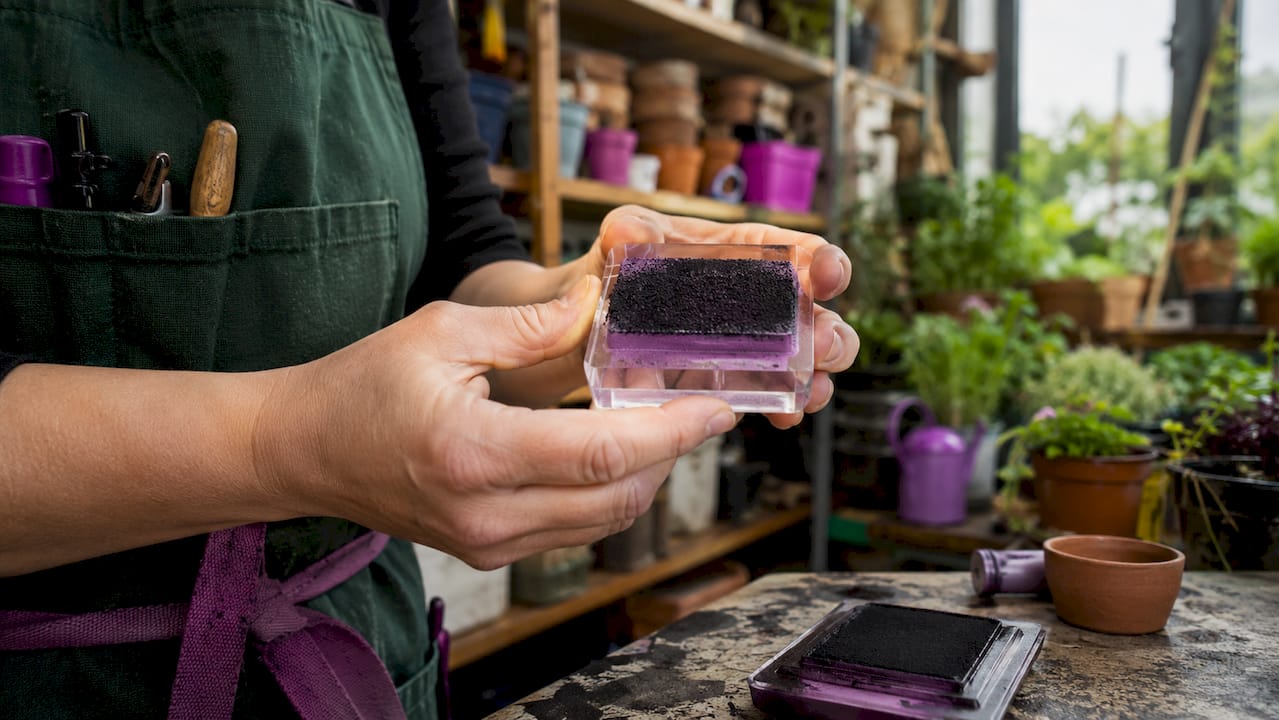
The practical result is a stamp that is quieter, smoother, and more precise than either alternative. Because there is no mechanical flip or external pad involved, the die meets the paper with consistent, even pressure every time. For crafters working on detailed cardmaking or scrapbooking, and for small business owners who need a logo or signature reproduced accurately on packaging or correspondence, that consistency matters considerably.
How does the flash stamp manufacturing process work?
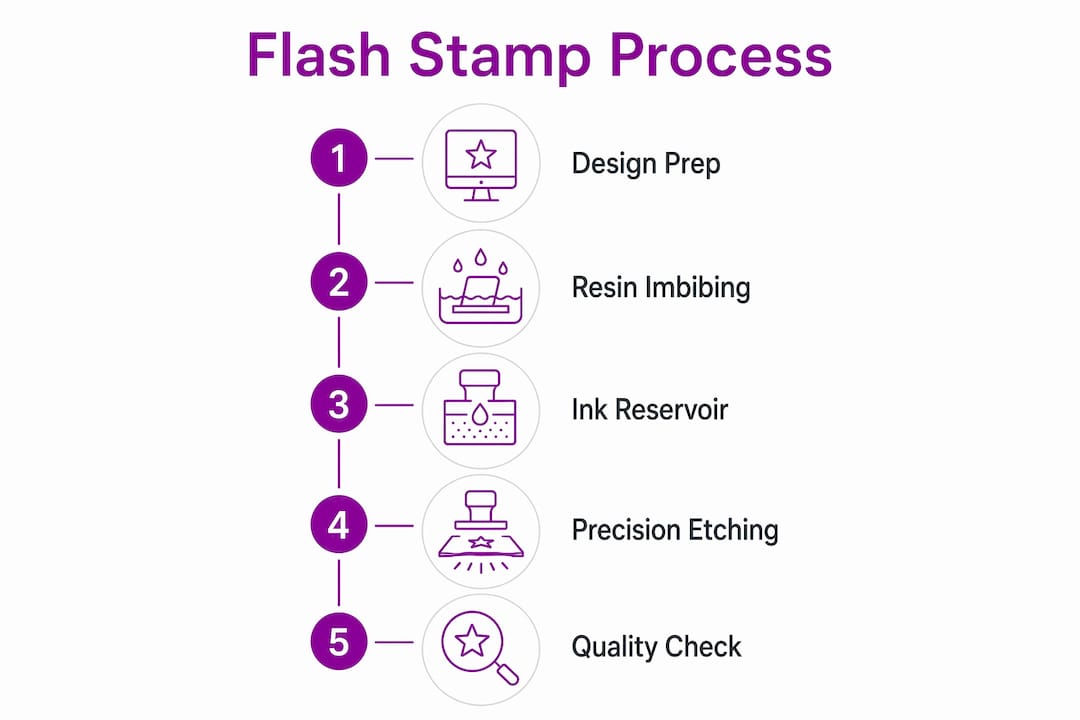
The production of a flash stamp follows a specific sequence that sets it apart from conventional stamp-making.
- Flash exposure: The stamp material, a synthetic resin sheet, is exposed to high-intensity light through a film negative of the design. The light hardens the exposed areas and leaves the unexposed areas porous, forming the ink reservoir.
- Laser engraving or photopolymer techniques: Many manufacturers use laser engraving to refine design detail, particularly for fine text or complex logos, after the initial flash exposure.
- Ink integration: Oil-based ink is then absorbed into the microporous membrane during production. The ink sits within the structure of the pad itself, not on top of it.
- Sealing and housing: The inked pad is sealed inside a casing that prevents drying and protects the membrane until use.
The result is a stamp that offers the highest DPI in the industry compared to standard mechanical stamps, producing smoother, near-photographic impressions. That level of detail is simply not achievable with a rubber stamp pressed onto a foam ink pad.
Pro Tip: When ordering a custom flash stamp, supply your artwork as a high-resolution vector file. Raster images lose definition during the flash-exposure stage, which reduces the sharpness of the final impression.
The absence of mechanical components also means fewer parts to wear out. A well-maintained flash stamp will outlast most self-inking alternatives in terms of impression quality, even if the total impression count is comparable.
What ink do flash stamps use and how should you maintain them?
Flash stamps require oil-based, permanent, archival ink. This is not a preference. Using water-based ink with a flash stamp damages the microporous membrane irreparably, blocking the capillary channels and destroying the stamp’s ability to release ink evenly. Always check the label before purchasing refill ink.
Re-inking a flash stamp correctly follows a straightforward process:
- Apply ink sparingly. Place a few drops of specialist oil-based flash ink directly onto the stamp surface. Do not flood the pad.
- Wait for absorption. Allow approximately 15 minutes for the ink to transfer fully into the microporous membrane before testing the stamp.
- Wipe away excess. Use a clean cloth or tissue to remove any ink sitting on the surface rather than absorbed into the pad.
- Test on scrap paper. Make several test impressions to confirm even ink distribution before using the stamp on final materials.
- Store correctly. Keep the stamp face-down or capped when not in use to prevent the ink from drying out at the surface.
Over-inking a flash stamp causes ink pooling that blocks the microporous lines, leading to blurred or blotchy impressions. The fix is patience and restraint, not more ink. Refill bottles typically range from 10ml to 2oz in size and cost between approximately £5 and £15, making ongoing maintenance genuinely cost-effective over the life of the stamp.
Pro Tip: If your flash stamp starts producing uneven impressions, the most common cause is over-inking rather than a worn pad. Wait 24 hours without adding more ink, then test again. The membrane often self-corrects once excess ink disperses.
How do flash stamps compare to other stamp types?
Understanding the differences between flash stamps, self-inking stamps, and traditional rubber stamps helps you choose the right tool for each task.
| Feature | Flash stamp | Self-inking stamp | Traditional rubber stamp |
|---|---|---|---|
| Ink supply | Internal microporous reservoir | Mechanical re-inking arm | External ink pad required |
| Impression quality | Highest DPI, photographic detail | Good, but affected by mechanism vibration | Variable, depends on pad quality |
| Noise | Near-silent | Audible click/snap | Silent |
| Maintenance | Re-ink with oil-based flash ink | Replace ink pad cartridge | Replace or re-ink pad separately |
| Best use | Signatures, logos, fine detail | High-volume office stamping | Occasional, simple designs |
| Typical cost | Higher upfront | Mid-range | Lowest upfront |
The comparison reveals a clear pattern. Flash stamps produce higher fidelity impressions and avoid the impact vibrations present in mechanical self-inking stamps, which makes them the preferred choice for complex, flourish-heavy signatures and detailed logo work. Self-inking stamps are better suited to repetitive, high-volume tasks such as date stamping or address marking, where absolute precision is less critical.
For crafters, the difference in impression quality is visible to the naked eye. A flash stamp reproduces fine lines, delicate textures, and gradient-like shading in a way that a foam-padded rubber stamp simply cannot match. If you are producing personalised gifts, branded packaging, or professional correspondence, that quality difference justifies the higher upfront cost.
You can explore how different types of business stamps compare across workplace applications to identify which format suits your specific volume and quality requirements.
What are the best uses for flash stamps in crafting and small businesses?
Flash stamps serve a specific set of applications particularly well, and knowing where they excel helps you get the most from the investment.
- Signature reproduction: Executives and professionals use flash stamps to reproduce their signatures accurately on correspondence, contracts, and official documents. The high-fidelity reproduction of complex signatures is one of the primary reasons flash stamps are preferred in formal settings.
- Logo stamping on packaging: Small business owners use flash stamps to apply brand logos to kraft paper bags, tissue paper, cardboard boxes, and product tags. The oil-based ink is smudge-resistant once dry, which matters when items are handled during packing and dispatch.
- Cardmaking and scrapbooking: Crafters working with detailed stamp designs benefit from the sharp, clean impressions that flash stamps produce. Intricate floral patterns, fine script, and layered designs all reproduce more accurately than with traditional rubber stamps.
- Personalised gifts: Custom flash stamps allow individuals to add monograms, names, or small illustrations to gift wrap, notebooks, fabric, and stationery. The consistency of impression means every item in a batch looks identical.
- Loyalty and branding programmes: Businesses running loyalty card schemes or promotional campaigns use smaller flash stamps to apply consistent, professional marks to cards and materials.
One design constraint worth noting: minimum line thickness for a custom flash stamp is approximately 0.8mm. Lines thinner than this risk disappearing or merging during the flash-exposure process, which affects the clarity of fine signatures or detailed logos. When commissioning a custom design, ask your supplier to check line weights before production begins.
For more ideas on how personalised stamps serve both creative and commercial purposes, the guide on practical personalised stamp uses covers a broad range of applications across industries and hobbies. Crafters looking to extend their techniques can also find useful context in digital stamping methods that complement physical flash stamp work.
Key takeaways
A flash stamp delivers photographic-quality impressions through an oil-based ink reservoir built into a microporous resin pad, making it the most precise stamp type available for professional and creative use.
| Point | Details |
|---|---|
| Flash stamp definition | A pre-inked stamp using a microporous resin pad with integrated oil-based ink, produced via flash-exposure. |
| Ink compatibility | Only oil-based flash ink is compatible; water-based ink permanently damages the microporous membrane. |
| Re-inking best practice | Apply a few drops, wait 15 minutes for absorption, and wipe excess to avoid blurred impressions. |
| Design specification | Minimum line thickness of 0.8mm is required for clear impressions in custom flash stamp designs. |
| Best applications | Signature reproduction, logo branding, detailed cardmaking, and personalised packaging all suit flash stamps well. |
Why most people choose the wrong stamp for the job
People consistently underestimate how much the stamp type affects the final result. I have seen small business owners spend time and money on branded packaging, then apply a logo with a foam-padded rubber stamp and wonder why it looks amateurish. The stamp is doing most of the work, and a flash stamp does it better for anything requiring genuine detail.
The single most common mistake I observe is ink incompatibility. Someone re-inks their flash stamp with whatever ink is to hand, often a water-based dye ink left over from a craft project, and the membrane is damaged within a few uses. The stamp does not fail dramatically. It just gradually produces worse and worse impressions until the owner assumes the stamp has worn out. It has not worn out. It has been damaged by the wrong ink. Oil-based flash ink only, every time.
The second mistake is impatience during re-inking. Fifteen minutes feels like a long time when you want to get on with a project. Skipping that wait and stamping immediately leads to pooled ink on the surface, blotchy impressions, and wasted materials. The absorption time is not optional.
For crafters considering whether a flash stamp is worth the investment, my honest view is that it depends entirely on the detail level of your designs. Simple geometric shapes or bold text work fine with a self-inking stamp. Anything with fine lines, script, or photographic-style detail warrants a flash stamp. The quality difference is not subtle.
— Steven
Explore flash stamps and custom designs at Stampdesign4u
Stampdesign4u stocks a range of pre-inked and flash-style stamps suited to both professional branding and creative projects. Whether you need a logo and text stamp for business correspondence or a compact option for loyalty programmes, the range covers both requirements with quality-assured products.
For businesses and individuals who want something entirely their own, Stampdesign4u offers personalised custom stamp design services that let you upload your artwork and receive a finished stamp ready to use. The ordering process is straightforward, and the team can advise on line thickness and design specifications to make sure your custom flash stamp produces the sharpest possible impression from the first use.
FAQ
What does a flash stamp do?
A flash stamp applies oil-based ink to a surface through a microporous resin pad, producing sharp, smudge-resistant impressions without requiring an external ink pad. It is particularly suited to detailed designs such as signatures and logos.
Can I use any ink to re-ink a flash stamp?
No. Flash stamps are compatible only with oil-based flash ink. Water-based inks permanently damage the microporous membrane, degrading impression quality irreversibly.
How long does re-inking a flash stamp take?
After applying a few drops of oil-based flash ink, you should wait approximately 15 minutes for the ink to absorb fully into the pad before making impressions.
What is the minimum line thickness for a custom flash stamp design?
Custom flash stamp designs require a minimum line thickness of approximately 0.8mm. Lines thinner than this may disappear or merge during the flash-exposure manufacturing process.
Are flash stamps suitable for high-volume use?
Flash stamps are best suited to moderate-volume use where impression quality is the priority. For very high-volume repetitive tasks such as date stamping, a self-inking mechanical stamp is more practical and cost-effective.