

TL;DR:
- Inspection stamps certify that products have passed specified quality or regulatory checks within manufacturing workflows. They are essential for maintaining compliance, traceability, and audit integrity across various inspection stages and environments.
Inspection stamps are defined as physical or digital marks that certify a product or process has passed specific quality or regulatory checks within a manufacturing or inspection workflow. They are not decorative. Each stamp represents a verified checkpoint, linking an inspector’s identity to a documented outcome. Across industries governed by standards such as HSE guidelines, UKCA, and CE marking requirements, the types of inspection stamps you select directly affect the validity of your compliance records and the integrity of your audit trail.
1. What are the main types of inspection stamps?
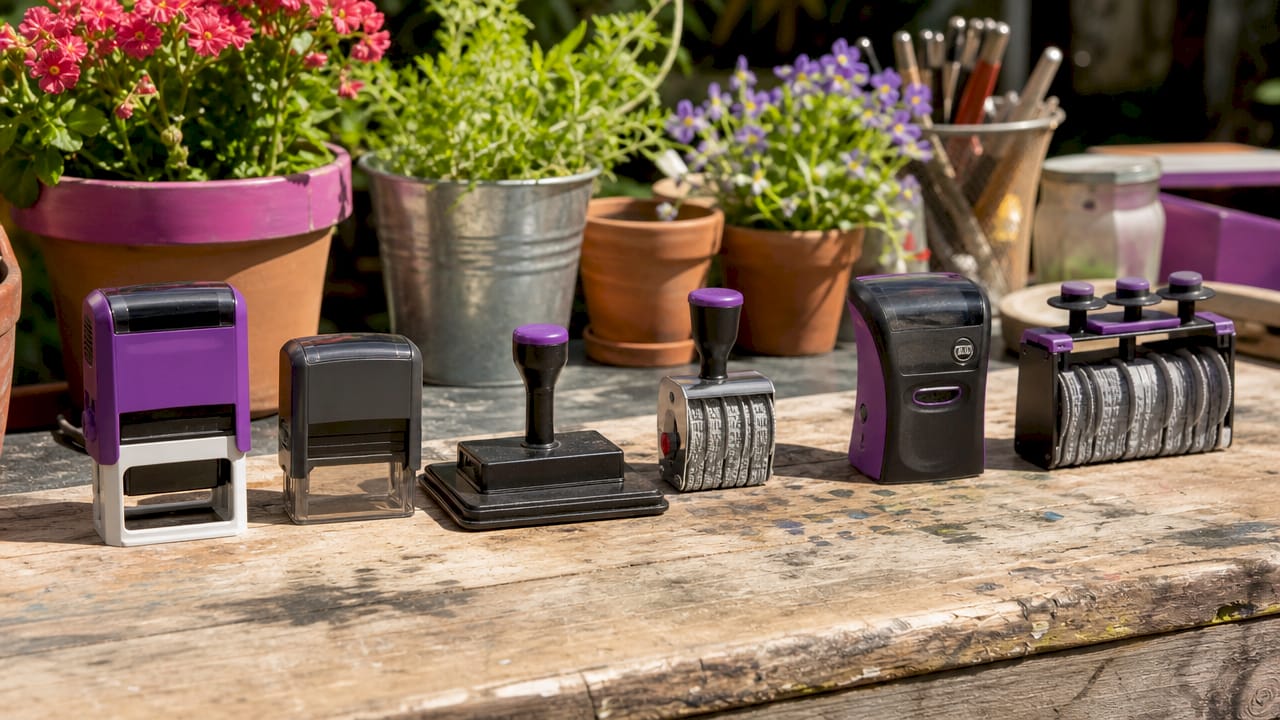
Six core categories cover the majority of professional inspection stamp applications. Each serves a distinct function, and choosing the wrong type creates gaps in your documentation.
Self-inking stamps are the most widely used in production environments. They contain a built-in ink pad that re-inks automatically after each impression, making them practical for high-volume inspection lines where speed matters. The impression is consistent, and the mechanism reduces hand fatigue during repetitive marking tasks.
Pre-inked stamps deliver sharper, finer impressions than self-inking alternatives. Pre-inked materials vary in durability and suit different inspection environments, particularly where legibility of small text or logos is critical. They require more careful handling and periodic re-inking, but the clarity they provide is unmatched for detailed certification marks.
Traditional rubber stamps require a separate ink pad and manual application. They are the lowest-cost option and remain common in low-volume or field inspection settings. Their simplicity is an advantage when replacement parts are unavailable or when inspectors work in remote locations.
Dater and numberer stamps add chronological or sequential data to each impression automatically. Electronic and dater stamps reduce errors and improve chronological tracking, which is critical when inspection records must demonstrate a clear timeline for regulatory review.
Electronic stamps generate digital impressions recorded within quality management software. They suit paperless environments and integrate directly with audit databases, removing the need for manual transcription of inspection outcomes.
Custom assembly stamps combine text, logos, inspector codes, and date fields into a single impression. These are particularly valuable when a stamp must convey multiple data points simultaneously, such as inspector ID, batch number, and pass or fail status.
Pro Tip: When selecting between self-inking and pre-inked options, test both on the actual surface material you stamp in production. Porous surfaces absorb ink differently from coated packaging, and a stamp that performs well on paper may produce a faint mark on cardboard or plastic film.
2. How inspection stamps align with inspection stages and compliance
Manufacturing inspection processes fall into five core types: Pre-Production, During Production (DUPRO), Pre-Shipment Inspection, Container Loading Inspection, and Lab Testing. Each stage has distinct documentation requirements, and the stamp used at each point must match those requirements.
Pre-Production stamps typically confirm that raw materials or components meet specification before production begins. A simple approved or rejected stamp with an inspector code suffices here. During Production stamps, applied at DUPRO checks, often include a date field to confirm the timing of the inspection relative to the production run.
Pre-Shipment Inspections occur when at least 80% of goods are packed. That threshold matters because it means the stamp applied at this stage represents a near-final product assessment. A dater stamp or custom assembly stamp is most appropriate here, as it captures both the inspector’s identity and the date of sign-off in a single impression.
For products placed on the GB market, UKCA and CE marking requires technical documentation retained for a minimum of 10 years for machinery products. The inspection stamp applied at the point of conformity assessment must therefore be traceable back to a specific inspector and procedure. A generic “passed” stamp without an inspector identifier fails this requirement.
Statutory inspections under LOLER, PUWER, PSSR, and COSHH regulations require specific inspection frequencies and documented validation. LEV systems, for example, must be tested at least every 14 months under COSHH unless a risk assessment adjusts that interval. Stamps used in these contexts must carry enough information to confirm the inspection was conducted within the required timeframe.
| Inspection stage | Recommended stamp type | Key data required |
|---|---|---|
| Pre-Production | Simple rubber or self-inking | Inspector code, approved/rejected |
| During Production (DUPRO) | Self-inking with date band | Date, inspector code |
| Pre-Shipment | Custom assembly or dater | Date, batch reference, inspector ID |
| Statutory (LOLER/PUWER) | Pre-inked or custom | Date, examiner reference, next due date |
| Container Loading | Self-inking or electronic | Date, load reference, inspector ID |
Pro Tip: For statutory inspections, include the next inspection due date within the stamp impression. This single addition prevents scheduling oversights and gives auditors immediate confirmation that the inspection cycle is being maintained.
3. What to consider when choosing inspection stamps
The right stamp for a quality assurance role depends on four practical criteria: durability, ink type, customisation, and regulatory fit.
Durability is determined by the stamp mechanism and the environment in which it operates. Self-inking stamps with polymer dies outlast traditional rubber in high-humidity or high-temperature settings. Pre-inked stamps perform well in clean environments but degrade faster when exposed to solvents or abrasive surfaces.
Ink type affects both visibility and permanence. Fast-drying inks suit non-porous surfaces such as metal or coated packaging. Water-based inks work well on paper and card but smear on plastic. For inspection records that must remain legible for 10 years or more, archival-quality ink is the correct choice, not standard office ink.
Customisation is where many QA professionals underinvest. A stamp that carries only “Inspected” provides no traceability. A stamp that carries an inspector code, a date field, and a batch reference creates a direct link between the physical product and the inspection record. The custom stamp approval process at a reputable supplier will confirm that the design meets your specific compliance requirements before production.
Regulatory fit means the stamp must produce an impression that satisfies the documentation standard for your sector. UKCA and CE marking requirements specify that technical files must demonstrate conformity. An inspection stamp that cannot be traced to a named or coded examiner does not satisfy that requirement, regardless of how clearly it prints.
4. How inspection stamps support accountability and traceability
Inspection stamps are a checkpoint of accountability. QC experts define stamps as validation points, not mere completion marks. That distinction matters because it shifts the stamp from a procedural formality to a legally significant record.
“Unique stamps assigned to individual inspectors or stations enhance traceability and create clear audit trails in quality control systems. Traceability allows an organisation to track a product back to specific inspection points if failures occur.” QCADVISOR, Quality Inspection: Process, Types, Techniques and Methods
The validity of an inspection stamp depends on the competency of the inspector and adherence to a certified Written Scheme of Examination (WSE). HSE standards are explicit on this point: the mark itself carries no authority unless the person applying it is a qualified examiner following an approved procedure. This means your stamp selection process must run alongside your inspector qualification process, not independently of it.
Assigning unique identifiers to individual inspectors or stations is the most direct way to build a traceable system. When a defect is identified post-production, a unique inspector stamp allows the quality team to identify exactly which unit was inspected, by whom, and when. Without that specificity, a product recall or audit becomes significantly more difficult to manage.
Reusable stamps for UK businesses that carry inspector-specific codes are the practical implementation of this principle. The stamp itself is the physical record. Its design must reflect that responsibility.
Key takeaways
Inspection stamps are only as valid as the qualified inspector applying them within an approved procedure. Stamp design, ink type, and inspector traceability are not secondary concerns. They are the foundation of a compliant quality control system.
| Point | Details |
|---|---|
| Match stamp type to inspection stage | Pre-Shipment and statutory inspections require dater or custom assembly stamps with inspector IDs. |
| Retain technical files for 10 years | UKCA and CE marking compliance requires documentation linked to traceable inspection marks. |
| Assign unique inspector identifiers | Individual stamp codes allow defects to be traced to a specific examiner and inspection event. |
| Choose ink for surface and longevity | Archival-quality ink is required for records that must remain legible over a decade. |
| Validate stamp design before ordering | A formal approval process confirms the stamp meets sector-specific compliance requirements. |
Why inspection stamps are more than a rubber mark
Inspectors often treat stamp selection as an afterthought. I have seen QA teams spend weeks defining inspection criteria and then order a generic “Passed” stamp from the nearest office supplier. That approach undermines everything the inspection process is designed to achieve.
The shift I have observed over the past several years is the integration of physical stamps with digital record-keeping. Electronic stamps that feed directly into quality management systems are no longer a specialist tool. They are becoming standard in sectors where audit frequency and regulatory scrutiny are increasing. The physical stamp still has a role, particularly in field inspections and statutory checks, but it works best when it is part of a documented system rather than a standalone action.
The uncomfortable reality is that a stamp applied by an unqualified inspector, or one that carries no unique identifier, is not a valid inspection record. It is a mark on a surface. The difference between those two things is the difference between a compliant audit trail and a liability.
My advice to QA professionals is straightforward. Define what your stamp must communicate before you design it. Work through the custom stamp approval process with a supplier who understands compliance requirements. And treat the stamp as part of your quality system documentation, not as a piece of stationery.
— Steven
Stampdesign4u: custom stamps built for professional inspection use
Quality assurance professionals need stamps that carry more than a word. They need a mark that communicates inspector identity, date, and approval status in a single clear impression.
Stampdesign4u supplies custom inspection stamps including the Trodat 4927 9 Line Logo and Text Rubber Stamp, a 60 x 40mm multi-line stamp that accommodates inspector codes, logos, date fields, and approval text within one impression. For packaging and batch traceability, the personalised packaging stamps range provides durable, customisable options suited to production environments. Every order goes through a design approval process to confirm the stamp meets your specific marking requirements before it is produced. Ready-made options are also available through the stock stamps collection for teams that need a fast, compliant solution.
FAQ
What is an inspection stamp?
An inspection stamp is a physical or digital mark applied to a product, component, or document to certify that it has passed a specific quality or regulatory check. It links the inspection outcome to a named or coded examiner and a point in time.
What are the main types of inspection stamps?
The main types are self-inking, pre-inked, traditional rubber, dater and numberer, electronic, and custom assembly stamps. Each suits different inspection volumes, surface types, and compliance documentation requirements.
Why do inspection stamps need unique inspector identifiers?
Unique identifiers allow a quality team to trace any defect or non-conformance back to the specific inspector and inspection event. Without them, audit trails are incomplete and product recalls become significantly harder to manage.
How long must inspection records linked to stamps be retained?
For machinery products on the GB market under UKCA or CE marking requirements, technical files must be retained for a minimum of 10 years. Inspection stamps must therefore produce impressions that remain legible and traceable for that full period.
What makes an inspection stamp legally valid?
An inspection stamp is valid when it is applied by a qualified examiner following a certified Written Scheme of Examination, as specified by HSE standards. The physical mark alone carries no authority without the competence and procedure behind it.