

Running a small business in the UK means every branded impression counts, whether you are stamping packaging, invoices, or promotional materials. The challenge is finding tools that give you both high quality and long-term value without constant replacements. With reusable stamps crafted to meet professional standards, you can create bold, consistent marks that reinforce your brand across hundreds or even thousands of applications, all while supporting efficient and sustainable business practices.
Table of Contents
- Defining Reusable Stamps For Business Use
- Types Of Reusable Stamps And Their Uses
- Custom Features And How They Work
- Legal Rules And Responsible Stamp Use
- Costs, Risks, And Stamp Alternatives
Key Takeaways
| Point | Details |
|---|---|
| Understanding Reusable Stamps | Reusable stamps provide a consistent branding solution for UK businesses by withstanding multiple applications without losing quality. |
| Legal Compliance | Custom business stamps are legal and distinct from fraudulent postage stamps; proper usage avoids legal complications. |
| Types and Flexibility | Various types of reusable stamps cater to different business needs, with refillable and modular options offering significant flexibility. |
| Cost and Investment | Although upfront costs for custom stamps may be considerable, they often lead to long-term savings through reduced consumable needs compared to alternatives. |
Defining Reusable Stamps for Business Use
When you hear “reusable stamps” in a business context, you’re looking at tools designed to deliver consistent branding across multiple applications without losing quality or impact. Unlike single-use items, reusable stamps are crafted to withstand repeated applications whilst maintaining sharp impressions, vibrant colours, and professional appearance. For UK businesses, understanding this distinction matters because it affects both your investment and your long-term branding strategy.
The foundation of reusable stamps lies in their construction and durability standards. These stamps are built from high-quality rubber or polymer compounds that resist wear from constant use, meaning they won’t degrade after a handful of applications. They’re designed to be refilled, cleaned, and reused indefinitely, much like how reusable packaging adheres to recyclability standards to remain functional across multiple uses. This approach makes them particularly valuable for businesses that apply branding regularly, whether you’re stamping invoices, packaging, promotional materials, or correspondence. The cost per impression drops significantly over time compared to replacing single-use alternatives.
It’s crucial to understand the legal distinction between genuinely reusable stamps and what postal authorities consider fraudulent. Using or selling reused postage stamps with removed cancellation marks is criminal according to UK law, but this doesn’t apply to custom branding stamps designed specifically for business use. When we discuss reusable stamps for your company, we’re talking about stamps you create for your own branding purposes, not postal stamps. These custom business stamps allow you to display your company logo, address, approval marks, or promotional messages repeatedly without legal concern or quality loss.
What truly separates reusable business stamps from disposable alternatives is the quality of materials and precision of the design. A properly manufactured reusable stamp will produce crisp, consistent impressions thousands of times over. They’ll handle different paper types, materials, and ink colours without deteriorating. For UK businesses looking to build brand consistency and reduce waste, investing in high-quality custom stamps delivers both practical efficiency and environmental benefits.
Pro tip: Select stamps with replaceable ink pads rather than pre-inked versions if you want flexibility to change colours or swap between different branding messages without purchasing entirely new tools.
Types of Reusable Stamps and Their Uses
Reusable stamps come in several distinct categories, each serving different business purposes and operational contexts. Understanding these types helps you select the right tool for your specific branding needs. The variation exists not just in design, but in how they function within your business processes and which scenarios they work best for.
Business-owned reusable stamps represent the most common type for UK companies. These are stamps your organisation purchases and controls entirely, used for internal operations like approving documents, marking invoices, stamping correspondence, or branding packaging materials. Think of approval stamps, date stamps, address stamps, and company logo stamps falling into this category. The key advantage is complete ownership and control over the stamp’s use, design, and maintenance. Many businesses maintain several business-owned stamps simultaneously, each serving a specific function whether that’s “Approved”, “Received”, “Confidential”, or your company logo. The seven essential types of rubber stamps for business and hobbies cover variations like self-inking stamps, traditional hand-stamps, and specialised formats designed for different material surfaces. Business-owned stamps typically feature replaceable ink pads, meaning you can refresh them when ink fades without replacing the entire tool.

Refillable and modular stamp systems represent an increasingly popular approach for businesses wanting flexibility and cost efficiency. Rather than replacing entire stamps when you need a design change, refillable systems allow you to swap components or switch between different ink colours and designs. This approach aligns with refillable systems designed for environmental and economic efficiency, reducing waste whilst keeping your costs manageable. These systems work particularly well for companies that evolve their branding, run multiple product lines, or need seasonal variations in their messaging. You might use one base stamp with interchangeable plates showing different product codes, batch numbers, or promotional messages.
Specialised stamps serve particular business functions beyond general branding. Numbering stamps automatically increment digits for sequential tracking, whilst date stamps mark when documents were processed. Security stamps help protect against counterfeiting, and inspection stamps verify quality control steps. For companies with complex operational needs, investing in a small collection of these specialised stamps pays dividends in efficiency and professionalism. What matters is matching the stamp type to your actual workflow rather than purchasing stamps you’ll rarely use.
Here is a summary comparing popular types of reusable stamps for UK businesses:
| Stamp Type | Typical Use Cases | Key Advantage | Flexibility Level |
|---|---|---|---|
| Business-owned | Invoices, documents, packaging | Full control over branding | Moderate |
| Refillable/modular | Multi-product, seasonal changes | Easy design and ink swaps | High |
| Specialised (e.g. date) | Tracking, security, inspection | Automates key processes | Low to moderate |
Pro tip: Start with two or three essential stamps that address your most frequent branding tasks, then expand your collection based on actual usage patterns rather than purchasing a full set upfront.
Custom Features and How They Work
Custom stamps aren’t simply blank tools you fill with ink. Modern reusable stamps come packed with thoughtfully designed features that make them practical, efficient, and flexible for your business operations. These features transform a basic stamp from a one-trick tool into a versatile branding asset that adapts to your changing needs.
Self-inking mechanisms stand out as one of the most popular innovations in stamp design. Rather than requiring you to manually dip the stamp into an ink pad before each use, self-inking stamps have built-in ink reservoirs that automatically re-ink the stamp pad with every impression. This means faster stamping with minimal effort and consistent colour intensity across thousands of impressions. You simply press, lift, and repeat without fussing with separate ink pads. The beauty of this system is that self-inking mechanisms enable rapid stamping with high consistency, saving time especially when you’re processing large batches of documents or packaging. When the ink runs low, you simply refill the reservoir, making the stamp sustainable and cost-effective over years of use.
Adjustable text plates and modular components give you genuine flexibility without needing to purchase multiple stamps. Perhaps you need your address stamped on some materials but your logo on others, or you want to swap between different product codes for various batches. With adjustable plates, you can update the text, change the layout, or swap components in seconds. This modularity also supports easy maintenance and cleaning. Stamps with modular components designed for easy cleaning can be disassembled quickly, allowing you to remove dried ink and keep everything functioning perfectly. Ergonomic handles matter too, especially if your team stamps materials regularly. A well-designed handle reduces hand fatigue and ensures consistent pressure, producing sharp impressions every single time.
Personalised logos and custom designs form the heart of what makes stamps effective branding tools. You can incorporate your company logo, specific messaging, colour preferences, and unique design elements directly into the stamp itself. This level of customisation means every impression reinforces your brand identity consistently across all materials, from invoices to packaging to promotional items. The combination of these features creates a stamp that’s genuinely tailored to your business rather than a generic off-the-shelf tool.
Pro tip: When designing your custom stamp, opt for larger logo sizing and bold text choices that remain sharp and visible even after thousands of uses, as fine details can gradually fade with repeated impressions.
Legal Rules and Responsible Stamp Use
When it comes to using stamps in your UK business, understanding the legal landscape protects you from costly mistakes and keeps your operations above board. Stamp regulations exist for good reasons: they prevent fraud, protect postal systems, and maintain fair commercial practices. Getting these rules right from the start means you can focus on branding without worrying about legal complications down the line.
The distinction between custom business stamps and postage stamps matters critically for compliance. Using or selling reused postage stamps with removed cancellation marks is classified as fraud, which can result in criminal prosecution or civil claims by Royal Mail. However, this applies strictly to postal stamps, not your custom branding stamps. Your company logo stamp, approval stamp, or date stamp exists entirely outside this legal restriction. You own these stamps outright and control their use completely. The confusion often arises because the word “stamp” covers both categories. To be absolutely clear: reusable custom stamps for branding purposes are completely legal and encouraged. Reusing cancelled postage stamps to avoid paying postal fees is what constitutes fraud.
Beyond postal regulations, your stamp usage must also align with broader business compliance frameworks. UK law includes Extended Producer Responsibility and Packaging Regulations requiring accountability in how businesses handle materials and packaging. When you use stamps on packaging or promotional materials, you’re participating in the broader packaging lifecycle. This means ensuring that stamped packaging remains recyclable and doesn’t interfere with recycling processes. Stamps shouldn’t use materials that compromise environmental responsibility or deceive customers about product authenticity. Many businesses overlook this, but responsible stamp use means considering whether your stamped materials can still be properly recycled or disposed of.
Responsible stamp use also encompasses honest business practices. Never use stamps to create counterfeit documents, forge approvals you haven’t genuinely given, or misrepresent your company’s authorization or credentials. If you use approval stamps on invoices, ensure they genuinely reflect approval steps your business performs. If you use security stamps, use them authentically to protect against fraud rather than to deceive. Your stamps should enhance transparency and professionalism, not compromise either. This approach protects your business reputation, maintains customer trust, and keeps you well within legal boundaries.
Organisations handling sensitive documents or requiring compliance with specific regulations should familiarise themselves with sector-specific requirements. Professional services, healthcare providers, and regulated industries often have additional stamp usage guidelines they must follow.
Pro tip: Document your stamp usage policies in writing and ensure your team understands when and how each stamp should be used, creating an internal audit trail that demonstrates responsible practices if questions ever arise.
Costs, Risks, and Stamp Alternatives
Investing in reusable stamps requires understanding the genuine costs involved and weighing them against potential risks. Unlike one-time purchases, stamp investments deliver value over extended periods, but you need to think strategically about whether they suit your business model. This section helps you evaluate the financial reality and explore what options exist if stamps don’t fit your needs.
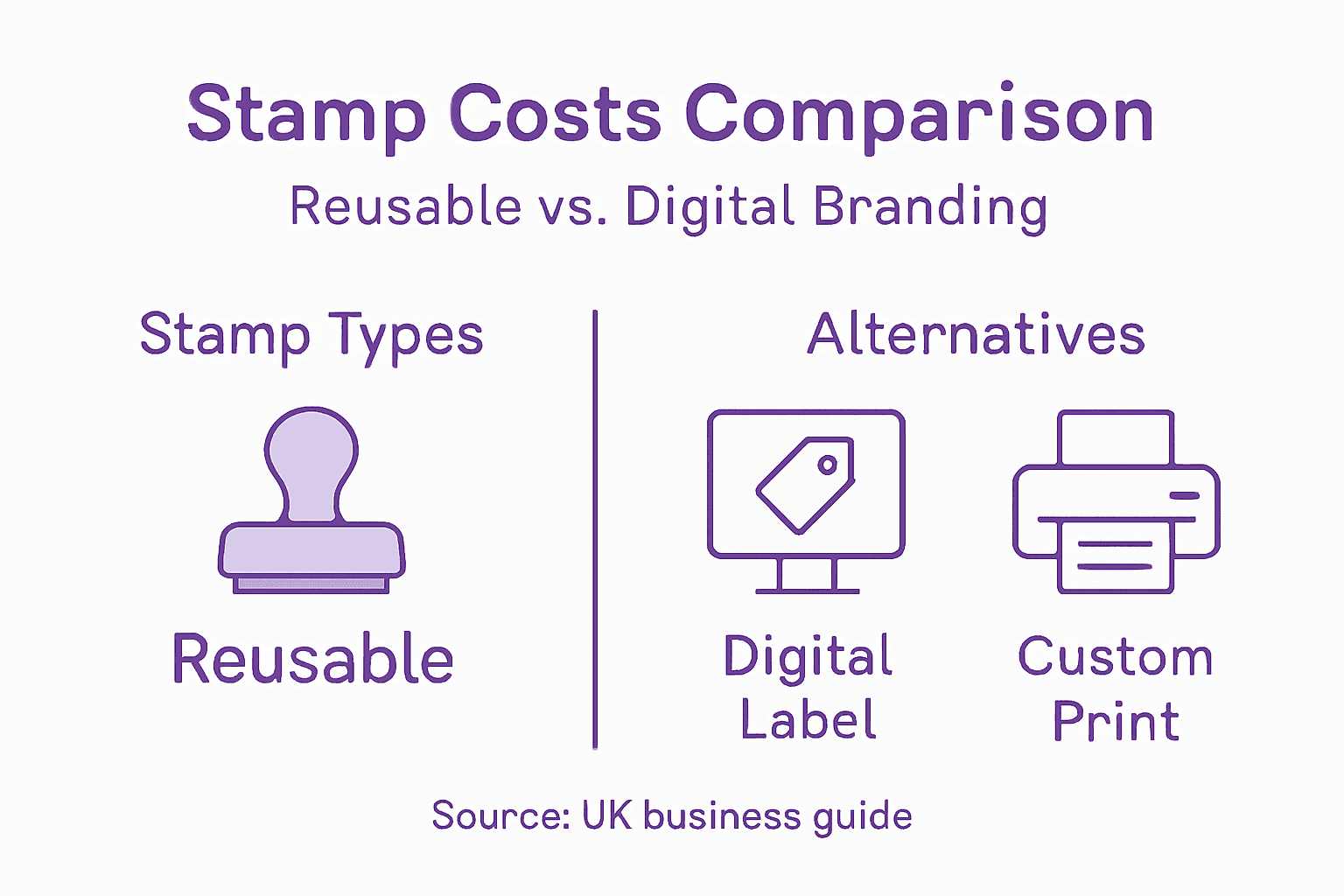
Initial costs for custom reusable stamps depend heavily on customisation level, material quality, and order volume. A basic self-inking stamp with your company name might cost between £20 and £50, whilst more elaborate designs with full colour logos or complex artwork could reach £100 or more. These upfront costs can seem steep if you’re stamping just a handful of items annually. However, initial investments in quality stamp products are often offset by long-term savings through reduced consumables, making them genuinely cost-effective over years of use. Once purchased, stamps require minimal ongoing investment beyond occasional ink pad replacements, costing just a few pounds. Compare this to digital alternatives like custom printed labels or bespoke packaging, which incur recurring costs every time you order.
The risks associated with stamp use fall into several categories that deserve your attention. Operational risks emerge when stamps are poorly maintained, producing faded or inconsistent impressions that damage your brand’s professional appearance. A smudged company logo stamped on customer invoices sends the wrong message. Legal risks, as covered in the previous section, arise from misusing stamps or failing to comply with regulations. Reputational risks occur if you stamp materials inconsistently or apply approval stamps to items that haven’t genuinely been approved, eroding customer trust. These risks are entirely manageable through proper training and documented procedures, but they demand consideration.
If stamps don’t align with your operations, alternatives exist. Digital branding solutions like custom printing, digital watermarks, or bespoke labels eliminate physical stamp maintenance but require higher volume to justify costs. Automated stamping systems work well for large-scale operations processing thousands of items daily, though they represent significant capital investment. Pre-printed materials let you incorporate branding at manufacturing stage rather than adding it afterwards. Hybrid approaches combine stamps for routine approvals with digital solutions for customer-facing materials. The best choice depends on your volume, budget, and operational complexity.
To help you decide, here is a table comparing reusable stamps with alternatives for business branding:
| Method | Upfront Cost | Ongoing Costs | Maintenance Required |
|---|---|---|---|
| Reusable stamps | Moderate (£20-£100+) | Very low (occasional ink) | Regular cleaning/refilling |
| Digital printing/labels | Low per batch | High (recurring orders) | None |
| Automated stamping | Very high | Low (after purchase) | System upkeep/service |
| Pre-printed packaging | High (bulk orders) | High (per print run) | None |
Pro tip: Calculate your true cost per impression by dividing the stamp’s purchase price by estimated lifetime uses, then compare this to alternative branding methods before deciding whether stamps make financial sense for your specific operation.
Elevate Your Brand with Custom Reusable Stamps Tailored for UK Businesses
If you are striving for consistent branding and efficient document processing, investing in high-quality reusable stamps is essential. The article highlights how reusable stamps offer durability, flexibility with refillable ink pads, and a professional edge that disposable options cannot match. By choosing reusable business stamps, you empower your company to save costs and reduce waste while maintaining sharp impressions across files, packaging, and correspondence.
Take control of your business identity today with expertly crafted custom stamps. At StampDesign4U, we provide a broad range of personalised stamp solutions including self-inking and modular designs to suit your evolving needs. Discover how easy it is to create, order, and receive stamps that reflect your company’s professionalism. Don’t delay your brand’s consistency and efficiency—explore our offerings now and bring your reusable branding vision to life.
Frequently Asked Questions
What are reusable stamps and how are they used in business?
Reusable stamps are tools designed for consistent branding across various applications. They are made from durable materials that can withstand repeated use without losing quality. Businesses use them to stamp invoices, packaging, promotional materials, and correspondence.
What types of reusable stamps are available for business use?
Common types include business-owned stamps for internal operations, refillable and modular system stamps for flexibility and cost-efficiency, and specialised stamps for functions like numbering, dating, or security purposes. Each type serves different operational needs.
How can I ensure the quality of impressions from reusable stamps?
Quality impressions from reusable stamps depend on using high-quality materials and maintaining the stamps. Choosing stamps with replaceable ink pads, ensuring proper cleaning, and selecting larger, bold designs can help maintain clarity and consistency over time.
What should I consider regarding the legal use of stamps in my business?
It’s essential to distinguish between custom business stamps and postal stamps. Custom branding stamps are legal to use, whereas reusing cancelled postal stamps is considered fraud. Additionally, ensure your stamp usage complies with relevant business regulations and promotes transparency in operations.