

TL;DR:
- Rubber stamping often means automatic approval without proper review, risking errors and accountability issues.
- There is no official standard called ‘rubber stamp compliance’; requirements depend on specific industry and regional rules.
- Properly specified and maintained stamps are low-cost but essential to avoid legal penalties, delays, and reputational damage.
Most small business owners assume ‘rubber stamp compliance’ is a formal regulatory standard they need to meet. It is not. The phrase has two very different meanings in practice, and confusing them can expose your business to real risk. Whether you run a sole trader operation or manage a growing marketing team, understanding what stamp compliance actually involves, and what it does not, helps you make smarter decisions about how you use custom stamps every day. This guide cuts through the confusion and gives you clear, practical steps to follow.
Table of Contents
- What rubber stamp compliance really means
- Common compliance rules for custom rubber stamps
- The costs and risks of neglecting due diligence
- Real-world applications: making rubber stamps work for your business
- Perspective: why real compliance beats the shortcut
- Compliant custom stamps made easy with Stamp Design 4U
- Frequently asked questions
Key Takeaways
| Point | Details |
|---|---|
| No universal stamp compliance law | Compliance requirements vary by industry, region, and intended stamp use. |
| True oversight prevents risk | Proper review and documentation safeguard your business from regulatory issues. |
| Stamp compliance is affordable | Most compliant custom stamps cost under £40, a small investment for peace of mind. |
| Custom stamps boost credibility | Compliant branding stamps can enhance your business image and trust. |
What rubber stamp compliance really means
The term ‘rubber stamping’ is widely used in law, governance, and business, but it rarely means what people expect. In its most common usage, rubber stamping means automatic approval without scrutiny, where decisions pass through a process with no genuine review or challenge. Think of a board that approves every proposal without reading it, or a manager who signs off paperwork without checking its contents. The physical stamp becomes a symbol of a flawed process.
This is a problem because oversight exists for a reason. When decisions are approved without proper review, errors slip through, risks go unnoticed, and accountability disappears. For small businesses in particular, this kind of mindless approval can create regulatory exposure and erode trust with clients or partners.
Now here is the important distinction. There is no established term called ‘rubber stamp compliance’ in any official regulatory framework. No government body, professional association, or legal standard uses this phrase as a defined requirement. So if someone tells you that you need to achieve ‘rubber stamp compliance’, ask them exactly what they mean.
What does exist are specific, practical requirements that govern how custom stamps are used in various professional and commercial contexts. These vary by country, industry, and intended purpose. Understanding the role of stamps in business helps clarify when a stamp is decorative, when it is functional, and when it carries legal weight.
“Compliance for custom stamps is not about a single standard. It is about matching your stamp’s design and use to the specific rules that apply to your profession, region, or industry.”
Here is what the concept breaks down into for most businesses:
- Authentication stamps: Used to verify documents, often required in legal, financial, or professional engineering contexts
- Company seals: Historically required for contracts in some jurisdictions, though many countries have relaxed these rules
- Postal and address stamps: Subject to postal authority standards in certain territories
- Marketing and branding stamps: Generally unregulated, though still subject to general trading standards
- Professional licence stamps: Required for engineers, surveyors, and other regulated professions in many countries
The key point is that the rules depend entirely on what you are doing with the stamp and where you are operating.
Common compliance rules for custom rubber stamps
Since there is no single ‘rubber stamp compliance’ standard, the question becomes: which rules actually apply to your stamp? The answer depends on your use case. Custom stamp compliance methods include meeting rules for professional seals, postal standards, or specific industry requirements, each with its own governing body and documentation expectations.
Here is a practical breakdown of the main compliance categories:
- Professional seals: Engineers, architects, and surveyors in many countries must use stamps that meet state or national board specifications, including exact wording, size, and layout
- Company authentication stamps: Some jurisdictions still require a company seal for certain legal documents, though this is becoming less common
- Postal standards: Stamps used for franking or address marking must meet postal authority guidelines to ensure delivery reliability
- Financial document stamps: Banks and accountancy firms sometimes require specific stamp formats for cheques, invoices, or audit documents
- Industry-specific stamps: Healthcare, food safety, and logistics sectors often have their own stamp requirements tied to traceability and record-keeping
| Type of stamp use | Regulated? | Governing body |
|---|---|---|
| Professional engineering seal | Yes, typically | State or national board |
| Company seal for contracts | Sometimes | Company law / jurisdiction |
| Address and postal stamps | Partially | Postal authority |
| Marketing and branding stamps | Generally no | Trading standards |
| Healthcare traceability stamps | Yes | Industry regulator |
One question that comes up often is whether a stamp is legally required for your company. For most small businesses in the UK, there is no mandatory requirement to use a physical stamp. However, choosing the right rubber stamp for your specific context can still help you meet documentation expectations and present a professional image.
Pro Tip: Before ordering any stamp that will be used in a professional or regulated context, contact your relevant industry body or local authority to confirm the exact specifications. Rules change, and what was acceptable last year may not be compliant today. See best practices for custom stamps for a fuller guide.
The costs and risks of neglecting due diligence
Ignoring compliance when it applies to your stamp use is not a minor oversight. The consequences range from operational inconvenience to significant financial and reputational damage.

Rubber stamping risks superficial oversight and missing due diligence. When stamp-based processes are treated as automatic rather than deliberate, businesses stop asking critical questions. Who approved this? Does this document meet the required standard? Is this stamp format still valid?
Here are the main risks when stamp compliance is neglected:
- Regulatory fines if professional stamps do not meet board specifications
- Rejected documents, causing delays in contracts, planning applications, or financial processes
- Loss of client trust if authentication stamps are questioned
- Operational confusion when staff use inconsistent or incorrect stamp formats
- Audit failures if stamp-based records cannot verify the authenticity of decisions
To put costs in perspective, general small business compliance costs range from $2,000 to $5,000 in the first year. Stamp-related compliance, by contrast, is low-cost. A compliant professional seal or a correctly specified business stamp typically costs well under £40. The risk-to-cost ratio makes proper stamp compliance one of the most straightforward compliance tasks a business can manage.
| Compliance type | Typical first-year cost | Consequences of non-compliance |
|---|---|---|
| Business registration | £100-£500 | Legal penalties |
| Data protection (GDPR) | £500-£2,000 | Regulatory fines |
| Professional seal stamp | Under £40 | Document rejection, fines |
| Address or branding stamp | Under £30 | Minimal, unless misrepresented |
Review examples of custom stamps to see what correctly specified stamps look like across different business contexts. And explore the full range of types of business stamps before deciding what your operation needs.
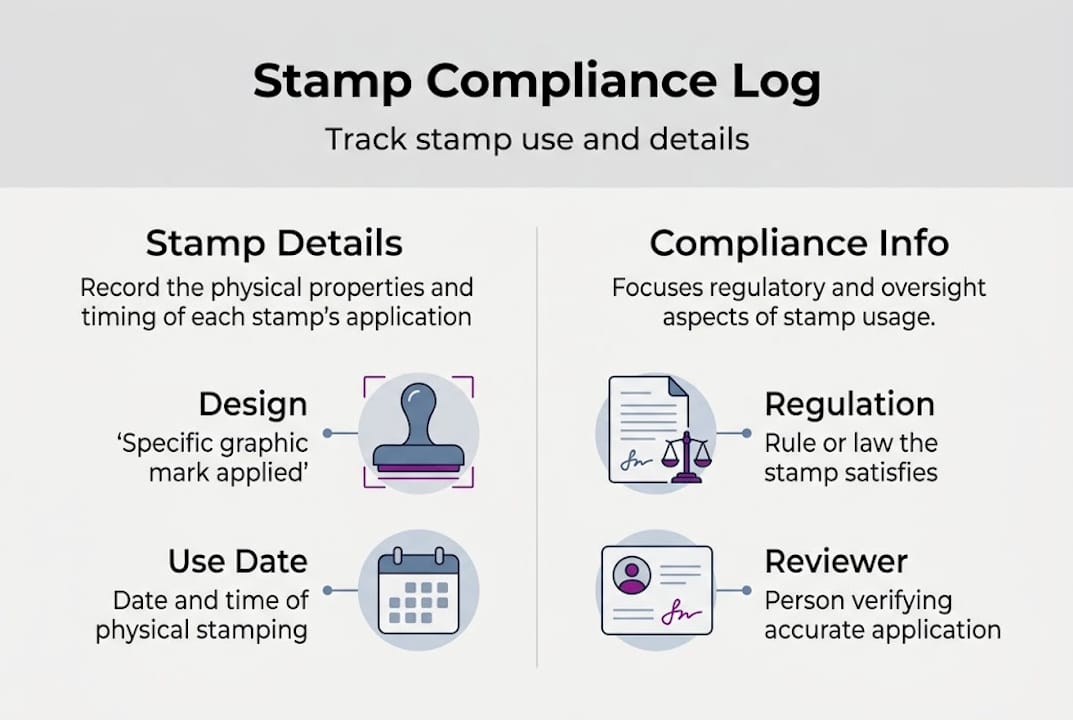
Pro Tip: Keep a simple log of every stamp you use in regulated or formal contexts. Record the stamp design, the date of purchase, the relevant standard it was designed to meet, and who approved its use. This documentation takes minutes to maintain and can save hours during an audit.
Real-world applications: making rubber stamps work for your business
With the risks and rules understood, here is how to make custom stamps actively useful for your business while avoiding the ‘rubber stamping’ mindset.
Custom rubber stamps offer branding and efficiency benefits but require regulatory checks to ensure each application is appropriate. The businesses that get the most value from stamps are those that treat them as deliberate tools, not reflexive shortcuts.
Here are the most effective compliant uses for small businesses and marketing teams:
- Invoice and payment stamps: Mark invoices as paid, approved, or pending with clear date fields. Keeps records consistent and supports bookkeeping audits.
- Loyalty card stamps: A low-cost, tactile way to reward repeat customers. Entirely unregulated, but your design still benefits from a polished, professional approach.
- Document authentication: Use a company or signature stamp to confirm that copies of official documents are true representations of originals.
- Address and dispatch stamps: Speed up packing and postage processes with a pre-inked address stamp. Reliable, legible, and consistent.
- Marketing and promotional stamps: Brand packaging, leaflets, or event materials with a custom logo stamp. No compliance barriers here, just an opportunity to reinforce your identity.
To avoid the ‘rubber stamping’ mindset within your team, follow these steps:
- Assign one person responsibility for reviewing stamp specifications when regulations change
- Train staff on when a stamp is required versus when it is optional
- Review your stamp inventory once per year to confirm that designs still meet current standards
For practical inspiration, explore personalised stamp uses across a range of business and hobby contexts.
Pro Tip: Self-inking stamps combine speed with consistency. For high-volume stamping tasks such as processing invoices or marking outgoing post, a self-inking stamp with a custom design reduces fatigue and keeps impressions clean and readable every time.
Perspective: why real compliance beats the shortcut
Most articles on this topic focus on whether you need a stamp and what it should look like. What they miss is the cultural dimension. The biggest risk is not using the wrong size stamp. It is building a team habit of approving things without thinking.
To avoid rubber stamping, implement thorough review, documentation, and transparency rather than automatic approval. This principle applies whether you are approving a financial document or deciding which stamp design to order.
In our experience, the businesses that use custom stamps most effectively treat each stamp as a deliberate decision. They ask: what does this stamp confirm? Who is accountable for that confirmation? Is the format still current? These are not bureaucratic questions. They are the foundation of trustworthy operations.
Custom logo and branding stamps add genuine value when they represent a considered, consistent brand identity rather than an afterthought. Compliance and branding are not in tension. Done well, they reinforce each other.
The shortcut mindset costs more than the effort it saves. Build the habit of review, and your stamps become an asset rather than a liability.
Compliant custom stamps made easy with Stamp Design 4U
Now that you understand what stamp compliance involves and where the risks lie, the practical next step is straightforward: order stamps that are correctly specified for your intended use.
At Stamp Design 4U, you can design and order custom stamps built to professional standards, whether you need a custom address stamp for efficient dispatch, a logo rubber stamp for consistent branding, or a stamp for authentication and document processing. The platform makes it simple to select the right format, size, and design for your specific context, helping you meet professional expectations without unnecessary cost or complexity.
Frequently asked questions
Is ‘rubber stamp compliance’ an official legal standard?
No. No established term called ‘rubber stamp compliance’ exists in official regulation. Compliance requirements for stamps depend entirely on the intended use and the relevant industry or regional rules.
Do all businesses need a compliance stamp?
Most businesses are not legally required to hold a compliance stamp, though certain professions such as engineering or surveying may need stamps that meet state board rules or authentication standards set by company law.
Are compliance rubber stamps expensive?
No. Compliant custom stamps are low-cost, with stamp compliance typically costing under £40, which is modest compared to broader business compliance expenditure in the first year of operation.
How can I ensure my business stamps meet compliance requirements?
Check the current regulations for your specific industry and region, and document each stamp’s intended use, specification, and approval date to support any future audits or verification requests.
What is the risk if compliance is rubber-stamped without review?
Automatic approval without proper review risks superficial oversight and can result in regulatory fines, rejected documents, and lasting damage to your business’s credibility.
Recommended
- Rubber Stamps for Organisations: Complete Guide – Stamp Design 4U
- 7 Must-Have Office Rubber Stamp Essentials for Better Workflow – Stamp Design 4U
- Role of Stamps in Business – Branding, Compliance, Trust – Stamp Design 4U
- Complete Guide to Rubber Stamp Design – Stamp Design 4U
- Golf cart legal requirements: stay compliant in 2026 — GOLFCARTSTUFF.COM™
- Έλεγχος λογιστικών διαδικασιών checklist για επιχειρήσεις - Χρήστος Καβαλλάρης - Λογιστής