

Over eighty percent of British businesses use advanced stamps to speed up daily paperwork and protect their brand image. In a marketplace where every detail matters, even simple tools like stamps carry surprising importance for consistency and professionalism. This overview demystifies how modern stamps impact British business operations, revealing practical ways they boost efficiency, safeguard compliance, and elevate your company’s reputation.
Table of Contents
- Stamp Usage In Modern Business Operations
- Types Of Business Stamps And Their Purposes
- Custom Design, Branding, And Security Functions
- Legal And Compliance Considerations For Stamps
- Cost, Procurement, And Common Mistakes
Key Takeaways
| Point | Details |
|---|---|
| Importance of Stamps | Stamps are essential tools for enhancing efficiency, consistency, and branding in modern business operations. |
| Types of Stamps | Various stamp types, such as date, signature, and custom logo stamps, streamline documentation and ensure effective communication. |
| Custom Design Benefits | Custom stamps not only reinforce brand identity but also incorporate security features, safeguarding sensitive documents. |
| Cost Considerations | Long-term procurement strategies for stamps should focus on durability, ink efficiency, and versatility to maximise value and reduce costs. |
Stamp Usage in Modern Business Operations
Stamps have transformed from simple administrative tools to strategic business assets that streamline operations and enhance professional communication. Modern business practices increasingly rely on self-inking stamps to maintain efficiency, consistency, and brand representation across various organisational functions.
Businesses leverage stamps for multiple critical purposes, including document authentication, record keeping, and rapid information processing. Standardised stamping allows organisations to quickly mark invoices, contracts, correspondence, and internal documents with essential metadata like dates, department codes, processing status, and approval signatures. This systematic approach reduces manual data entry, minimises human error, and creates a traceable audit trail for important business interactions.
Beyond administrative functions, stamps serve powerful branding and communication objectives. Personalised business stamp designs enable companies to integrate logos, contact details, and unique identifiers directly onto documents, reinforcing brand identity with every impression. From legal firms authenticating documents to retail businesses marking receipts, stamps provide a professional, consistent method of information dissemination that digital alternatives cannot match.
Pro Tip - Stamp Strategy: Select versatile, high-quality stamps that can be used across multiple departments and document types, ensuring maximum utility and maintaining a consistent professional appearance throughout your organisation’s documentation workflow.
Key Benefits of Business Stamps:
- Rapid document processing
- Consistent brand representation
- Reduced administrative time
- Enhanced professional image
- Clear communication of essential information
Types of Business Stamps and Their Purposes
Businesses rely on a diverse range of stamps to streamline operations and maintain professional documentation standards. Specialty stamps provide essential functionalities across various organisational contexts, enabling efficient communication and record management through targeted stamping solutions.

Four primary categories of business stamps dominate professional environments. Date stamps are critical for tracking document submission, processing, and archival timelines, allowing organisations to maintain precise chronological records. Signature stamps offer a time-saving alternative for repetitive document authorisations, replicating handwritten signatures with legal authenticity. Numbering stamps support systematic record-keeping by generating sequential identifiers that help track documents, invoices, and internal paperwork.
Custom logo and branding stamps represent a sophisticated approach to corporate communication. These personalised stamps enable businesses to integrate unique identifiers, contact information, and visual branding directly onto correspondence, invoices, and official documents. By embedding company logos and essential details, organisations create a consistent visual identity that reinforces professionalism and brand recognition across all printed materials.
Pro Tip - Stamp Selection: Invest in high-quality, versatile stamps that can serve multiple departmental functions, ensuring durability, clear impressions, and adaptability to various document types and organisational needs.
Key Stamp Types for Business:
Here’s a summary of major business stamp types and the primary functions they enable:
| Stamp Type | Primary Function | Example Use Case |
|---|---|---|
| Date Stamp | Tracks and records timelines | Logging invoice receipt dates |
| Signature Stamp | Authorises documents | Approving internal company forms |
| Numbering Stamp | Sequentially identifies items | Labelling financial records or contracts |
| Custom Logo Stamp | Reinforces brand identity | Adding logos to official correspondence |
| Authentication Stamp | Verifies authenticity | Certifying legal documents |
- Date stamps
- Signature stamps
- Numbering stamps
- Custom logo stamps
- Authentication stamps
Custom Design, Branding, and Security Functions
Custom stamps represent a sophisticated intersection of visual branding, operational efficiency, and document security for modern businesses. Businesses can elevate their professional identity through carefully designed custom stamp solutions that communicate brand essence while serving critical administrative functions.
Visual branding through custom stamps extends far beyond mere aesthetic considerations. These personalised tools enable organisations to embed their unique corporate identity directly onto documents, correspondence, and official paperwork. By incorporating company logos, colour schemes, and distinctive design elements, businesses create a consistent visual language that reinforces brand recognition and professionalism across all touchpoints. The strategic placement of company identifiers transforms routine administrative processes into opportunities for subtle yet powerful brand communication.
Security functions represent another crucial dimension of custom stamp design. Advanced stamp technologies now integrate sophisticated anti-counterfeiting features, including holographic elements, microtext, and unique serialisation techniques. These innovations help organisations protect sensitive documents, verify authenticity, and prevent fraudulent reproduction. Specialised stamps can include embedded security markers that are invisible to the naked eye but detectable through professional verification processes, providing an additional layer of document protection beyond traditional stamping methods.
Pro Tip - Design Strategy: Collaborate with professional stamp designers who understand both aesthetic and functional requirements, ensuring your custom stamps effectively balance visual appeal with practical security and branding objectives.
Key Considerations for Custom Stamp Design:
- Brand consistency
- Visual identity integration
- Security feature incorporation
- Functional versatility
- Professional aesthetic
Legal and Compliance Considerations for Stamps
Legal requirements for business stamps have evolved significantly in recent years, reflecting changing regulatory landscapes and business practices. While traditionally company seals were considered essential, modern legal frameworks have introduced more flexible approaches to document authentication and verification.
Stamp authentication continues to play a crucial role in legal and administrative contexts. Although private companies are no longer legally mandated to use a common seal, stamps remain valuable tools for documenting official transactions, verifying document origins, and maintaining clear administrative records. Many organisations still utilise stamps as supplementary evidence of authorisation, particularly in scenarios requiring precise record-keeping and formal documentation.
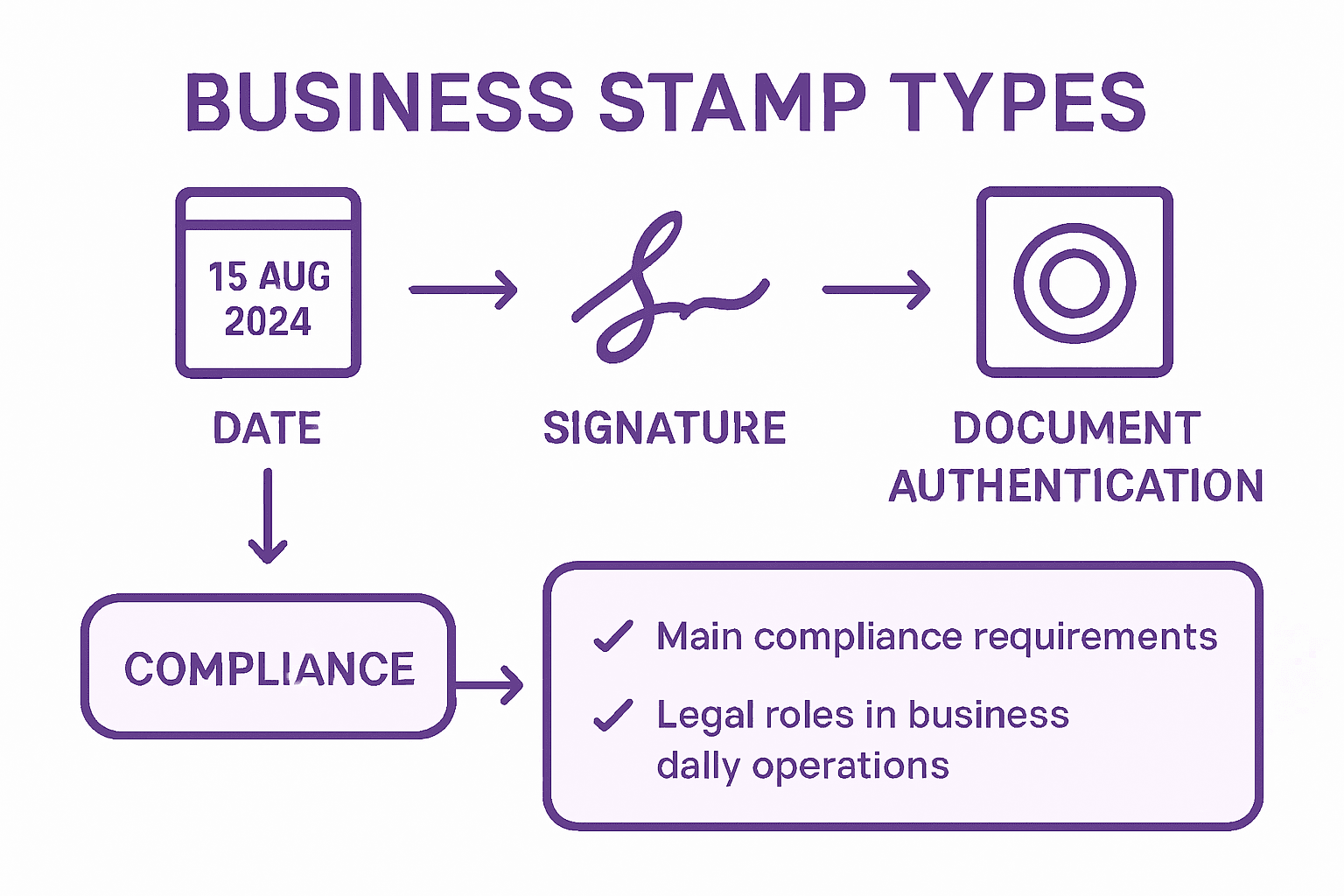
Historical stamp functions have deep roots in administrative and fiscal systems. Impressed duty stamps demonstrate the long-standing significance of document authentication methods, particularly in collecting taxes and verifying official transactions. These historical practices underscore the enduring importance of physical markers in establishing legal credibility and maintaining systematic administrative processes. Contemporary stamp usage continues this tradition, adapting traditional authentication methods to meet modern organisational requirements.
Pro Tip - Legal Verification: Consult with legal professionals to understand the specific stamp requirements relevant to your industry and organisational structure, ensuring compliance with current regulatory standards.
Key Legal Considerations for Business Stamps:
- Regulatory compliance
- Document authentication
- Record-keeping requirements
- Organisational verification
- Supplementary authorisation methods
Cost, Procurement, and Common Mistakes
Self-inking stamps represent a cost-effective solution for businesses seeking efficient document management tools, offering significant long-term financial advantages compared to traditional stamping methods. These innovative tools minimise ongoing expenses by integrating built-in ink mechanisms that dramatically reduce consumable costs and administrative overhead.
Procurement strategies for business stamps require careful consideration of multiple factors beyond initial purchase price. Quality, durability, customisation options, and long-term functionality must be balanced against budgetary constraints. Organisations should evaluate stamp designs that offer versatility, allowing multiple departmental uses and reducing the need for numerous specialised stamps. Bulk purchasing and standardised design approaches can generate substantial cost savings while maintaining professional document management standards.
Common procurement mistakes often emerge from insufficient planning and inadequate understanding of specific organisational requirements. Many businesses erroneously purchase generic stamps that lack precision or fail to meet specific departmental needs. Critical errors include selecting stamps with limited ink capacity, neglecting ergonomic design considerations, and overlooking potential customisation requirements. Comprehensive stamp selection demands thorough assessment of usage frequency, document types, and specific administrative protocols unique to each organisational context.
Pro Tip - Economic Stamp Selection: Conduct a comprehensive audit of your document processing requirements before purchasing stamps, comparing long-term utility and maintenance costs rather than focusing solely on immediate purchase price.
Key Cost and Procurement Considerations:
Compare critical considerations when selecting business stamps:
| Consideration | Importance | Business Impact |
|---|---|---|
| Ink Efficiency | Reduces running costs | Fewer replacements, lower expenses |
| Durability | Extends product lifespan | Minimises downtime, better investment |
| Customisation | Aligns with brand requirements | Supports professional visual consistency |
| Versatility | Covers multiple tasks | Reduces need for multiple stamps |
| Total Cost of Ownership | Long-term savings and reliability | Balances initial price and maintenance |
- Ink efficiency
- Durability of design
- Customisation potential
- Departmental versatility
- Total cost of ownership
Enhance Your Brand and Compliance with Custom Business Stamps
The article highlights key challenges businesses face when managing efficient document processing, ensuring legal compliance, and reinforcing professional branding. Issues such as maintaining consistent brand representation and integrating secure, versatile stamp solutions across departments are critical for success. Custom stamps, including logo and authentication designs, offer powerful ways to convey trust and streamline workflow without compromising on quality or visual identity.
Take control of your business communication today by exploring our specialised custom stamp design services at StampDesign4U. Our platform enables you to create personalised, high-quality stamps that align perfectly with your branding and compliance needs. Whether you require versatile date, signature, numbering or logo stamps, our easy-to-use interface makes it simple to order stamps tailored to your organisational requirements. Visit our main page now and start elevating your professional image with reliable stamping solutions designed to protect and promote your business effectively.
Frequently Asked Questions
What are the primary functions of business stamps?
Business stamps are used for various purposes, including document authentication, record keeping, rapid information processing, and branding. They help streamline operations by marking essential metadata on documents, reducing manual data entry and providing a clear audit trail.
How do custom logo stamps enhance a company’s branding?
Custom logo stamps integrate a company’s unique identifiers, such as logos and contact information, directly onto documents. This reinforces brand identity and professionalism in communication, ensuring every stamped document reflects the company’s visual language.
What are the benefits of using self-inking stamps in business operations?
Self-inking stamps offer a cost-effective solution for document management by minimising ink costs and administrative overhead. They provide efficiency and consistency, making document processing quicker and reducing the need for multiple specialised stamps.
Are there legal considerations when using business stamps?
Yes, businesses should be aware of legal requirements regarding stamp usage, such as document authentication and compliance with regulatory standards. While a common seal is not always required, stamps still serve as important tools for verifying transactions and maintaining clear records.