

Prioritise storytelling, user-generated content, micro-influencer partnerships, distinctive visual or IP-led assets, packaging-led tactile experiences, experiential activations, digital-first brand architecture, and purpose-led positioning. UGC now outperforms brand-made content on purchase influence, and tactile touches like a custom stamp on a package can push that effect further at almost no cost, as shown by Stampdesign4u’s own packaging work.
TL;DR:
- Micro-influencer partnerships and user-generated content are now more effective than traditional advertising for building trust and driving conversions.
- Tactile branding elements like stamped packaging or thank-you notes can significantly enhance unboxing experiences and foster customer loyalty at low cost.
- Combining tactile packaging touches with influencer-led campaigns allows brands to test trust and shareability within an eight-week measurement window.
- Visual consistency in branding assets and a clear digital-first content structure are key to establishing recognizable and accessible brand identities.
- Prioritizing tactics based on audience engagement, measurability, and budget feasibility improves the chances of successful, scalable brand activation.
Table of Contents
- Why creative branding still matters and how to pick the right tactics
- Creative branding strategies worth piloting now
- How to prioritise, pilot and measure the work
- Practical stamp-led branding tactics worth testing
- What actually moves the needle in 2026
- Where custom stamps fit into your next branding push
- Sources
- FAQ
Why creative branding still matters and how to pick the right tactics
Brand strength does more than sell products. It works as a legitimising signal, particularly in B2B, where buyer groups need collective confidence before a deal moves forward, according to Brand Finance’s research into B2B brand influence. That confidence tends to matter most in the early stages of consideration, before functional proof points take over.
On the consumer side, the shift is towards authenticity over polish. Most UK brands now favour micro-influencer partnerships over celebrity endorsements, and UGC often carries more persuasive weight than anything a brand produces in-house. That is not a minor preference shift. It changes where marketing budgets should go.
Not every tactic suits every brand, though. Before committing budget, weigh each idea against:
- Audience fit: does your buyer actually spend time where this tactic lives (TikTok, trade shows, packaging unboxing)?
- Scale: can you sustain it beyond one campaign, or is it a one-off stunt?
- Measurability: can you attach a KPI to it within 90 days?
- Budget realism: does the pilot cost match what you can commit for at least two cycles?
- Brand fit: does it reinforce your existing identity or dilute it?
The strategies below run from storytelling through to purpose-led positioning, each paired with a pilot you can start this quarter.
Creative branding strategies worth piloting now
1. Storytelling and narrative-driven campaigns
A brand that tells a coherent story, rather than listing features, gives people a reason to remember it. Patagonia’s “Don’t Buy This Jacket” campaign worked precisely because it contradicted the expected sales pitch, which made the underlying message about durability and repair stick.
Pilot in three steps: draft one origin or mission story in 150 words, run it as a landing page test against your current homepage copy, then track time-on-page and scroll depth for four weeks.
KPIs: engagement rate, brand recall (via survey), time-on-page.
2. User-generated content and community-led advocacy
UGC frequently beats brand-created content for purchase influence, per Aether’s brand strategy research. It reads as unpaid and unscripted, which is exactly why audiences trust it more.
Pilot in three steps: launch a branded hashtag tied to a specific product moment (unboxing, first use), incentivise the first 50 posts with a small reward, then repost the strongest five across your own channels.
KPIs: UGC volume, share rate, conversion lift on posts featuring customer content.
3. Micro-influencer partnerships and creator programmes
Creators with 10,000 to 100,000 followers now deliver stronger engagement for many UK brands than macro or celebrity names, largely because their audiences see them as peers rather than performers. Long-term relationships with the same handful of creators tend to outperform one-off paid posts, since repeated exposure builds trust that a single sponsored story cannot.
Pilot in three steps: shortlist five micro-influencers in your niche, offer a three-month retainer instead of single posts, then compare engagement and referral traffic against a one-off campaign benchmark.
KPIs: engagement rate, referral traffic, cost per acquisition versus paid social.
4. Distinctive visual identity and IP-led assets
A colour, shape, or sound that belongs to you alone (Tiffany blue, the Coca Cola bottle silhouette) becomes shorthand for the whole brand. Smaller brands can do this too, just at a narrower scale: one packaging colour, one consistent icon, one recurring motif.
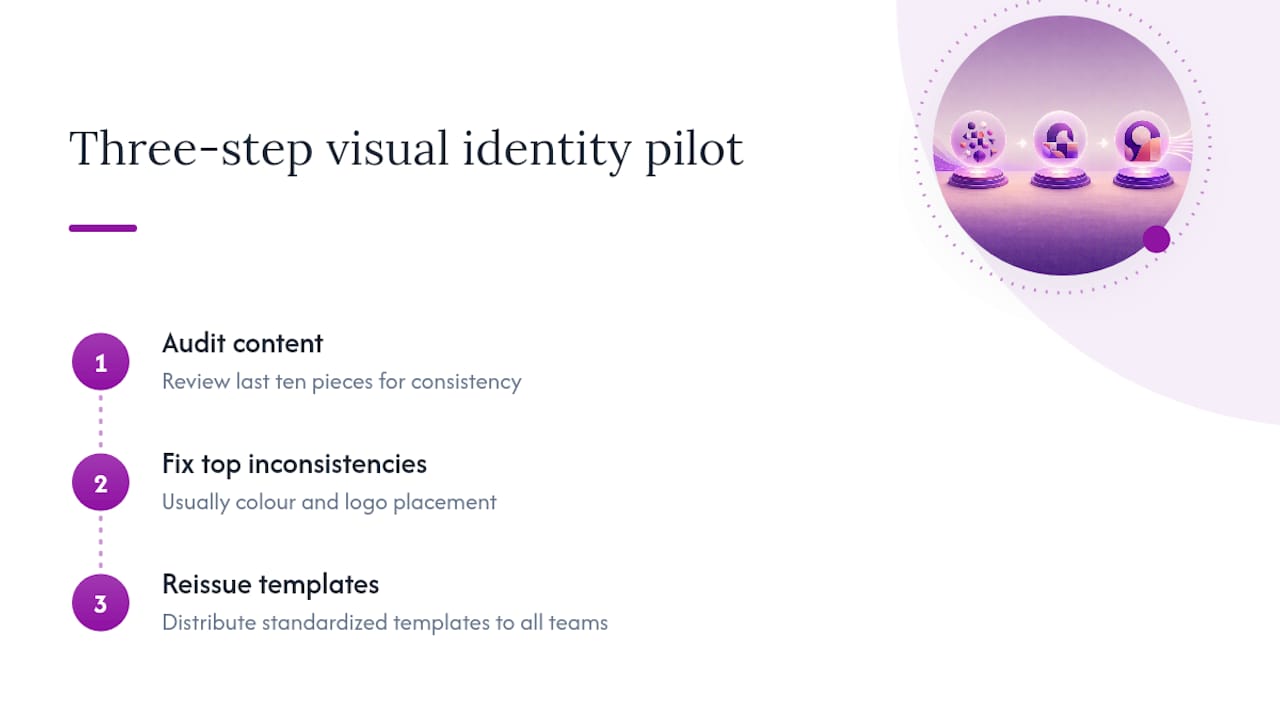
Pilot in three steps: audit your last ten pieces of content for visual consistency, fix the two biggest inconsistencies (usually colour and logo placement), then reissue templates to every team producing customer-facing material.
KPIs: brand recognition in surveys, consistency score across channels, time to produce new assets.
5. Packaging, unboxing and tactile brand experiences
Well-designed packaging and a consistent visual identity increase perceived quality and support repeat purchase, according to BigCommerce’s ecommerce branding guide. Tactile touches, including a stamped detail on a box or insert, can lift unboxing UGC and perceived value for smaller brands when applied consistently, as Stampdesign4u’s own branding examples demonstrate.
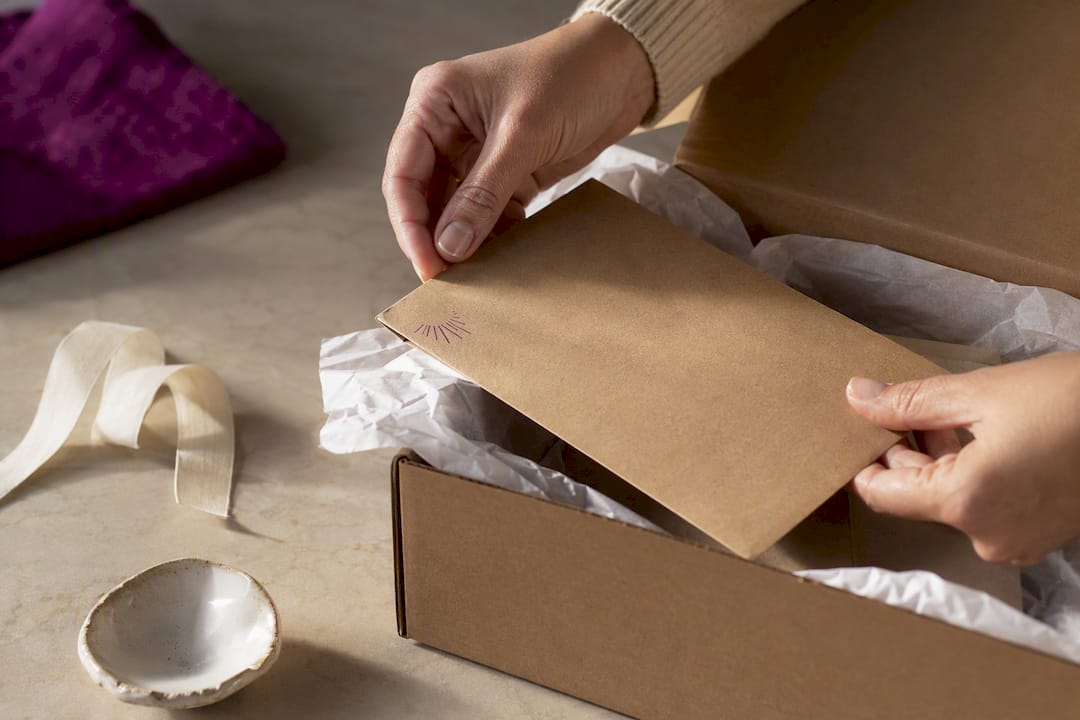
Pilot in three steps: add one tactile element (a stamped thank-you card or wax-style seal) to your next 100 orders, ask buyers to share unboxing photos, then compare UGC rates against the prior 100 orders without it.
KPIs: unboxing UGC volume, repeat purchase rate, unsolicited customer feedback mentioning packaging.
Statistic to watch: UGC’s outsized influence on purchase decisions, documented by Aether’s brand strategy research, makes packaging moments that trigger shareable content one of the highest-leverage low-cost tactics available to small brands.
6. Experiential and pop-up activations
Physical or virtual pop-ups give people a reason to interact with a brand in three dimensions rather than scroll past it. A weekend market stall, a branded AR filter, or a limited-run collaboration space all count.
Pilot in three steps: pick one local event or digital platform, run a single-day activation with a clear photo moment, then measure foot traffic or platform engagement against a normal trading day.
KPIs: footfall or session count, social mentions during the event, leads or email sign-ups captured.
7. Digital-first brand architecture and AI discovery
Structuring brand content so both search engines and AI assistants can parse and cite it is now a practical necessity rather than a future concern, per Aether’s 2026 brand strategy guide. That means clear headings, direct answers, and named entities that AI tools can lift cleanly.
Pilot in three steps: rewrite your top three product or service pages to lead with a direct answer, add structured FAQ sections, then track referral traffic from AI-driven search tools over eight weeks.
KPIs: organic and AI-referral traffic, featured snippet appearances, time to first meaningful interaction.
8. Purpose-led branding aligned to audience values
Purpose only works when it is specific and demonstrable, not a vague mission statement bolted onto a homepage. A sustainability claim needs a supply chain fact behind it; a community claim needs a named local partnership.
Pilot in three steps: pick one value your customers have raised unprompted (in reviews or support tickets), commit to one concrete action tied to it, then publicise the outcome rather than the intention.
KPIs: sentiment in reviews mentioning the value, press or backlink mentions, customer retention among the segment who engaged with the campaign.
Pro Tip: Don’t run all eight at once. Pick two that score highest on audience fit and measurability, pilot them for one quarter, then reinvest the winner’s budget into a third tactic rather than spreading resources thin across every idea on this list.
How to prioritise, pilot and measure the work
Score every candidate strategy against four criteria before committing budget:
- Audience fit — does your buyer actually engage with this format?
- Impact — what’s the realistic ceiling on reach or persuasion?
- Effort — how many people and how many weeks does it take to launch?
- Measurability — can you attach a number to it inside 90 days?
Rank each strategy from one to five on all four, then start with whichever scores highest on audience fit and measurability combined. Impact matters less at pilot stage than proof that you can measure it at all.
A simple 90-day pilot template works for almost any tactic on this list:
- Objective: one sentence, tied to a business outcome (repeat purchase, referral traffic, engagement).
- Hypothesis: what you expect to change and why.
- Minimum viable deliverable: the smallest version that still tests the hypothesis (one influencer, one stamped insert, one landing page).
- Budget range: fixed in advance, so scope creep doesn’t quietly inflate the test.
- Metrics: two, never more than three, agreed before launch.
Report the fast-moving numbers (engagement, UGC volume, click-through) weekly. Reserve monthly reporting for conversion and referral metrics, which need more volume to read reliably. Save retention, repeat purchase, and brand recall for quarterly review, since these move slowly and a weekly glance only creates noise.
Practical stamp-led branding tactics worth testing
Custom stamps solve a specific problem: adding a personal, tactile mark to packaging without redesigning your entire print run. Three use cases work particularly well for small and mid-sized brands.
- Packaging stamps: a logo stamped directly on kraft boxes or tissue paper, reinforcing identity without a full custom print run.
- Personalised thank-you inserts: a hand-stamped note card adds a moment of unexpected care that plain printed inserts rarely deliver.
- Event collateral: stamped name tags, order slips, or gift tags give pop-up stalls and markets a consistent look at low cost.
Before ordering, check four things: stamp size against your packaging surface, ink type against your material (fabric, card, kraft paper all behave differently), placement so the imprint doesn’t smudge on folds, and a sample imprint before committing to a full batch. A simple workflow, design file through to prototype stamp, sample imprint, then batch production, reduces common quality problems and speeds up time-to-market.
Track impact through UGC pickup on packaging posts, repeat purchase rate among customers who received the stamped touch, and direct feedback mentioning packaging quality. For more worked examples, Stampdesign4u’s small business branding case studies and its guide to building stamp branding consistency both walk through real applications.
Pro Tip: Order a small trial batch of 20 to 50 stamped inserts before committing to a bulk run. It costs little and tells you within a fortnight whether customers actually notice and share it.
What actually moves the needle in 2026
Most brands still chase the tactic with the loudest case study rather than the one that fits their actual audience and budget. That’s backwards. The B2B research is clear that brand influence is stage-contingent: it earns trust early, then gives way to functional proof at the point of final selection. Consumer brands face a version of the same problem, chasing awareness tactics when what converts is proof, usually in the form of someone else’s photo of your product.
If there’s one bold experiment worth running this quarter, it’s pairing a micro-influencer pilot with a tactile unboxing element, then measuring whether the influencer’s audience actually generates their own UGC once the product arrives. That combination tests trust-building and tactile differentiation in one pass, and the data will tell you within eight weeks whether either is worth scaling.
— Steven
Where custom stamps fit into your next branding push
There are lower-cost options to achieve tactile differentiation without the lead times or minimum order volumes that come with full custom print runs. A single stamp design can be reused across packaging, thank-you cards, and event collateral, which makes it one of the few branding assets that pays for itself across multiple touchpoints rather than a single campaign.
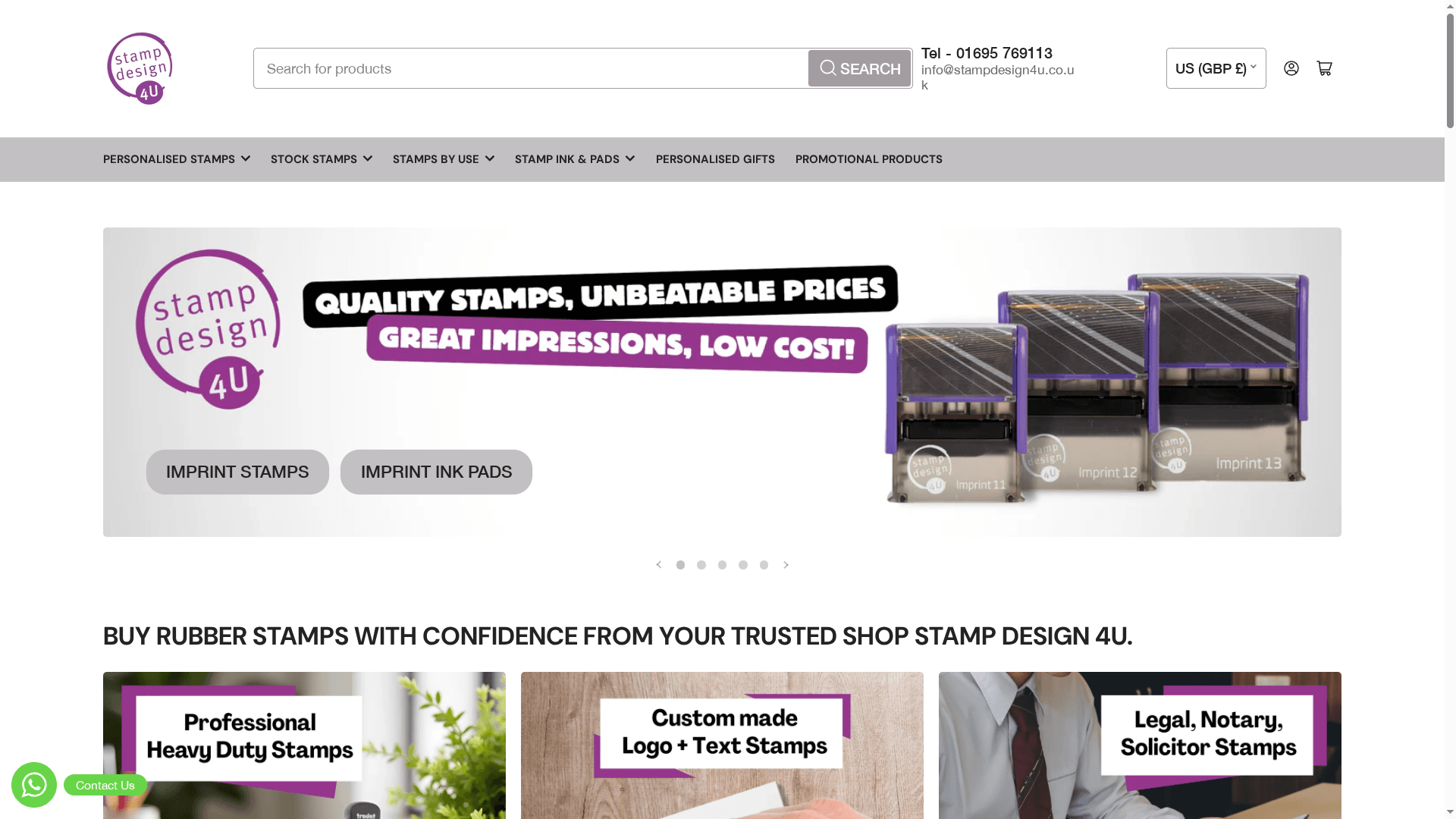
For packaging specifically, the personalised packaging stamps collection covers common box and tissue paper applications, while the Trodat Printy 4927 nine-line logo stamp suits brands wanting a compact, detailed imprint for cards and inserts. Anyone building a fuller identity kit, logo, address, and reorder details in one place, should look at the personalised logo stamps collection.
Order a sample imprint first, check it against your packaging material, then move to a full batch once the proof matches what you pictured.
Sources
- Brand Strategy UK 2026: Expert Guide for Business Growth
- Brand’s hidden hand in B2B success | Brand Finance
- Ecommerce branding guide | BigCommerce
FAQ
What are the most commonly used branding strategies?
The most widely used approaches include storytelling, UGC and community-led advocacy, micro-influencer partnerships, distinctive visual identity, packaging-led tactile experiences, experiential activations, digital-first brand architecture, and purpose-led positioning.
What are the 5 C’s of branding?
Definitions vary across agencies, but a common version covers Clarity, Consistency, Character, Connection, and Credibility, with brand strength acting as a legitimising signal that supports the last two, particularly in B2B buying groups.
What is a brand creative strategy?
It’s the plan connecting your brand’s positioning to the specific creative tactics (storytelling, visual identity, UGC, packaging) that bring that positioning to life across channels, each with its own measurable goal.
What is the 3-7-27 rule of branding?
This isn’t a standard, widely documented branding framework, and definitions circulating online vary considerably, so treat any specific claim about it with caution rather than as an established industry rule.
How do custom stamps support creative branding?
A stamped detail on packaging or thank-you inserts adds a tactile, personal touch that can increase unboxing UGC and repeat purchase, at a fraction of the cost of a full custom print run.