

TL;DR:
- Rubber stamps are affordable and versatile tools for personalising items and strengthening branding. They enhance art projects, home décor, and product packaging with consistent, professional impressions. Future developments like AR-enabled and 3D-printed stamps expand creative possibilities beyond traditional ink impressions.
Stamp usage ideas are creative and practical ways to personalise items, enhance branding, and add handcrafted detail using custom rubber stamps. Rubber stamps are one of the most affordable and versatile tools available to both individuals and small businesses. A single well-designed stamp can appear on packaging, greeting cards, scrapbook pages, and office stationery. Stampdesign4u offers personalised logo stamps that serve both artistic and commercial purposes, making them a practical starting point for anyone exploring what stamps can do.
1. Stamp usage ideas for greeting cards and invitations
Greeting cards are the most accessible entry point for creative stamping. A single floral or geometric rubber stamp, paired with a coordinating ink colour, produces a card that looks considered and personal. Layering two or three stamps of different sizes creates depth that printed cards cannot replicate.
Invitations benefit from stamping in a different way. A custom address or monogram stamp applied to envelopes saves time and adds a consistent, professional finish. Wedding stationery, birthday invitations, and event programmes all gain character from a well-placed impression.
Pro Tip: Test your stamp and ink combination on scrap paper before committing to the final card. Experimenting with ink colours and layering on scrap stock reveals how the finished piece will look without wasting materials.
2. Scrapbooking embellishments with rubber stamps
Scrapbooking is one of the richest areas for stamp project ideas. Stamps add borders, backgrounds, and focal images to pages without requiring specialist printing equipment. A background stamp applied in a light ink creates texture behind photographs, while a smaller accent stamp adds detail to journalling blocks.
Photopolymer stamps are particularly popular in scrapbooking because their transparency allows precise placement over existing elements. Cling stamps offer flexibility on curved surfaces, which matters when decorating album covers or three-dimensional embellishments. The combination of stamp type and ink finish, whether dye, pigment, or archival, determines how the impression interacts with other media such as watercolour or coloured pencil.
3. Home décor projects using stamps
Rubber stamps work on fabric, wood, ceramic, and glass when paired with the correct ink or paint. Cushion covers, tea towels, tote bags, and wooden crates are all practical surfaces for DIY stamp crafts. Fabric ink, heat-set after application, produces a washable result that holds its detail through repeated laundering.
Decorating terracotta plant pots with acrylic paint and a leaf or botanical stamp creates a cohesive set for a windowsill or garden shelf. Wooden crates stamped with a logo or pattern become branded storage. These projects require no specialist equipment beyond the stamp, an ink pad or paint, and the chosen surface.
4. Art journalling and mixed media applications
Art journalling uses stamps as a foundation layer or finishing detail within pages that combine drawing, painting, collage, and writing. A background stamp applied in a pale ink creates a subtle texture that anchors subsequent layers. Stamped text or script patterns add visual interest without competing with painted focal images.
Mixed media work benefits from the repeatability of stamps. A crafter can apply the same image multiple times at different angles and opacities to build a cohesive composition. Mastering stamping in this context involves embracing mistakes creatively, covering smudges with embellishments, and treating unexpected results as design decisions rather than failures.
5. Small business branding on packaging and product tags
Custom rubber stamps are a cost-effective branding tool that creates a consistent professional identity across packaging, product tags, and wrapping paper. That consistency matters because customers associate visual repetition with reliability. A logo stamp applied to kraft paper bags, tissue paper, and cardboard boxes ties a product range together without the cost of custom-printed packaging.
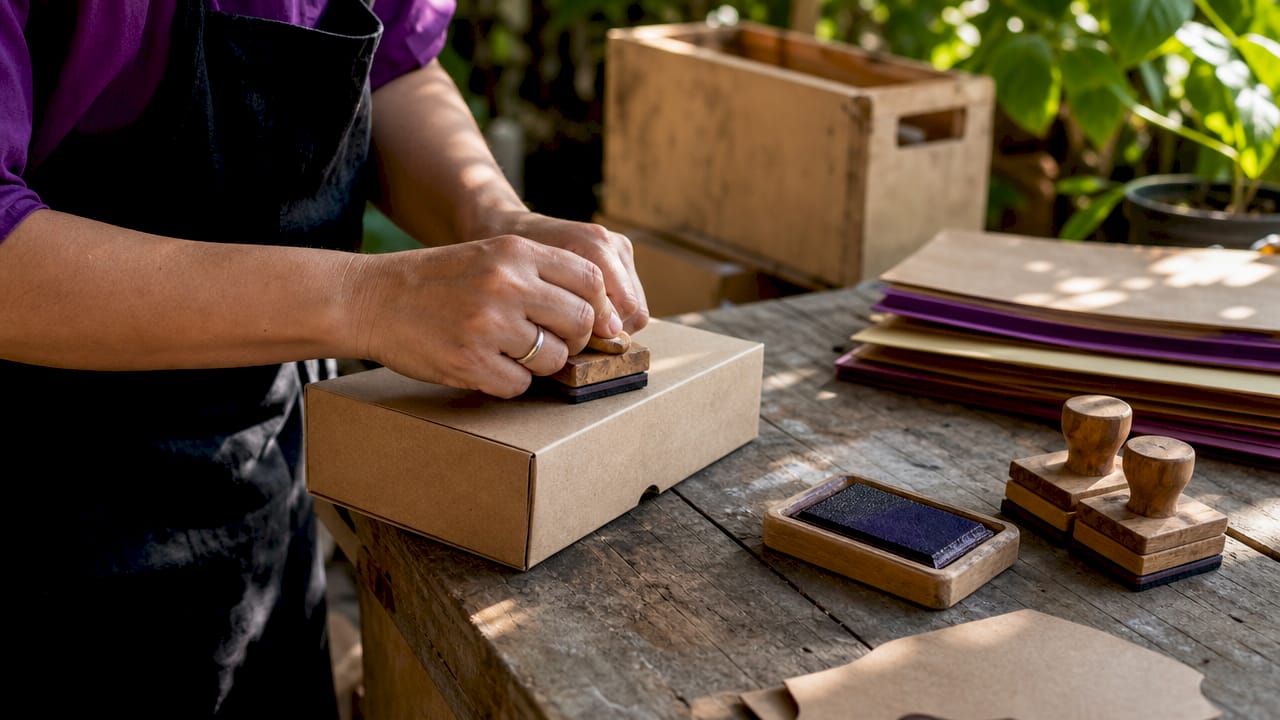
Product tags stamped with a logo, website address, or care instructions replace printed labels at a fraction of the cost. Small businesses in food, craft, and retail sectors use this approach to present handmade goods professionally. The versatility of custom stamps for branding means one stamp can serve multiple functions across a product line.
Pro Tip: Add a QR code or social media handle to your custom stamp design. Customers who scan the code or search the handle on packaging become followers or repeat buyers, turning every stamped parcel into a low-cost marketing touchpoint.
6. Office stationery and marketing materials
Stamps applied to letterheads, compliment slips, and envelopes give small business correspondence a polished finish without the minimum order quantities of commercial printing. A logo stamp on a plain white envelope signals professionalism before the recipient opens it.
Custom stamps act as subtle marketing tools that reinforce brand recognition at a fraction of the cost of digital advertising. That observation holds because every piece of stamped stationery that leaves an office reaches a recipient who may not otherwise encounter the brand. Rubber stamps applied to invoices, packaging slips, and thank-you cards create consistent touchpoints across the customer experience. Stampdesign4u’s business branding guidance covers how to apply this approach across different materials.
7. Event branding and customer engagement
Stamps work well at markets, pop-up shops, and trade events. A loyalty card stamped at each purchase encourages repeat visits without requiring a digital system. Event organisers use custom stamps to mark entry wristbands, authenticate tickets, or brand merchandise on the day.
Versatility in custom stamp use distinguishes small business branding by delivering consistent but varied touchpoints. A business that stamps its logo on paper bags, loyalty cards, and event signage creates multiple impressions from a single design investment. That repetition builds recognition faster than sporadic digital advertising.
8. Correct stamping technique for crisp impressions
The order of operations in stamping matters more than most beginners expect. Aligning the stamp correctly before pressing eliminates the crooked impressions that waste materials and frustrate new crafters. Using a grid-lined acrylic block as a guide keeps repeated impressions consistent across a project.
Pressure is the second critical variable. A gentle tap-tap-tap motion with even pressure produces a crisp impression. Pressing too hard causes ink to pool at the edges and smudge the fine detail. A cushioned stamping mat placed beneath the paper absorbs the pressure evenly and significantly increases the success rate of a clean first impression.
- Ink the stamp evenly by pressing it onto the pad rather than rubbing.
- Position the stamp over the paper using a grid block for alignment.
- Press down with steady, even pressure using the tap-tap-tap method.
- Lift the stamp straight up without rocking it to avoid smearing.
- Clean the stamp immediately after use with a damp cloth or specialist cleaner.
9. Caring for photopolymer and cling stamps
Handling photopolymer stamps by the edges preserves the adhesive quality that keeps them attached to their acrylic blocks. Natural oils from fingers degrade the adhesive over time, causing stamps to slip during use and produce misaligned impressions. Returning stamps to their backing sheets immediately after cleaning extends their working life considerably.
Photopolymer stamp longevity depends on careful handling and immediate cleaning after each use. Ink left to dry on the stamp surface degrades the fine detail of the design. Store cleaned stamps flat, away from direct sunlight, which causes photopolymer to yellow and harden.
10. Innovative applications: 3D-printed and AR-enabled stamps
Stamp technology in 2026 extends well beyond ink on paper. Austria Post’s 3D-printed edelweiss stamp features differentiated height structures and textured micro-surfaces, transforming a postage stamp into a tactile micro-sculpture. That approach demonstrates how physical stamps can carry sensory detail that digital images cannot replicate.
Philatelic stamps in 2026 now incorporate augmented reality features that trigger holographic animations when scanned with a mobile device. Australia Post’s cryptostamps function as non-tradeable novelty items authenticated through blockchain, linking a physical object to a digital record. These developments point toward a future where stamps serve as physical portals to digital content, a concept that creative businesses can apply to branded packaging and product presentation.
| Application | Technology | Effect |
|---|---|---|
| 3D-printed postage | Layered polymer printing | Tactile, sculptural surface detail |
| AR-enabled stamps | Mobile scan trigger | Holographic animation on screen |
| Cryptostamps | Blockchain authentication | Unique, verifiable physical token |
| Custom logo stamps | Photopolymer or rubber | Consistent brand impression on any surface |
For crafters, clear stamps for card making offer a practical entry point into precision stamping without specialist equipment.
Key takeaways
The most effective stamp usage ideas combine correct technique, appropriate materials, and a clear purpose, whether that purpose is artistic, personal, or commercial.
| Point | Details |
|---|---|
| Technique determines quality | Use a cushioned mat, grid alignment, and gentle even pressure for crisp impressions every time. |
| Stamps are a low-cost branding tool | A single logo stamp applied consistently across packaging and stationery builds brand recognition affordably. |
| Material matching matters | Pair the correct ink type with the surface: fabric ink for textiles, archival ink for mixed media, dye ink for paper. |
| Handle stamps carefully | Hold photopolymer stamps by the edges and clean them immediately to preserve adhesive and fine detail. |
| New technology extends stamp potential | AR-enabled and 3D-printed stamps show that physical stamps can now connect to digital experiences. |
Why stamps reward patience more than talent
The most common mistake I see is treating a rubber stamp like a shortcut. People press hard, rush the alignment, and then wonder why the impression looks blurry. The reality is that stamping rewards the same thing that most crafts reward: slowing down.
What I have found after years of working with custom stamps is that the gap between a mediocre result and a professional one is almost always technique, not the stamp itself. A well-made stamp used carelessly produces worse results than a basic stamp used with proper pressure and alignment. That is a useful truth because it means the skill is learnable without spending more money.
For small businesses, the temptation is to treat stamps as a one-off purchase and then use them inconsistently. The businesses that get the most from their logo stamps are the ones that build stamping into a routine: every parcel, every thank-you card, every invoice. Consistency is what turns a stamp into a brand asset rather than a novelty.
The 2026 developments in 3D printing and AR stamps are genuinely interesting, but they are not relevant to most small businesses yet. The fundamentals still matter more: a clean design, the right ink, and a steady hand. Get those right first, then consider what the technology can add.
— Steven
Stampdesign4u: custom stamps for every project
Stampdesign4u offers a full range of personalised rubber stamps for crafters and small businesses, from simple text stamps to detailed logo designs. Whether you need a stamp for greeting cards, scrapbooking, or product packaging, the catalogue covers the most common use cases.
For businesses focused on packaging, the personalised packaging stamps collection includes options sized for boxes, bags, and wrapping paper. The Trodat 4927 logo and text stamp handles up to nine lines of text and a logo in a 60 x 40mm format, making it a practical choice for businesses that need address, contact, and branding details in a single impression.
FAQ
What surfaces can rubber stamps be used on?
Rubber stamps work on paper, card, fabric, wood, ceramic, and glass when paired with the correct ink. Fabric ink requires heat-setting after application to make the impression washable.
How do I get a crisp impression every time?
Use a cushioned stamping mat, apply even pressure with a gentle tapping motion, and align the stamp with a grid block before pressing. Lifting the stamp straight up without rocking prevents smearing.
Can small businesses use stamps for branding?
Custom rubber stamps are a cost-effective branding tool that creates consistent identity across packaging, stationery, and marketing materials. A single logo stamp applied to every parcel and envelope builds recognition at minimal cost.
How do I care for photopolymer stamps?
Handle photopolymer stamps by the edges to avoid transferring oils from your fingers, and clean them immediately after use. Store them flat on their backing sheets away from direct sunlight to preserve adhesive quality and fine detail.
What are the newest stamp applications in 2026?
Augmented reality stamps trigger holographic animations when scanned with a mobile device, while 3D-printed stamps like Austria Post’s edelweiss design feature tactile, sculpted surfaces. Blockchain-linked cryptostamps from Australia Post add a layer of digital authentication to physical stamp collecting.
Recommended
- 7 Practical Personalised Stamp Uses for Businesses and Hobbyists – Stamp Design 4U
- List of stamp-related crafts for creative hobbyists – Stamp Design 4U
- Stamps for Small Business | Custom Logo, Packaging & Branding Stamps | Stamp Design 4U
- How to Personalise Stamp Text for Small Businesses Easily – Stamp Design 4U