

This month, define your audience and mission, secure your name, domain and social handles, choose basic visual rules and write them down, then test cheaply. A brand is more than a logo, and online identifiers are urgent, as GOV.UK guidance on securing business names makes clear. Plan around the 60:40 long-term to short-term split, and add tactile assets from Stamp Design 4U.
TL;DR:
- Treat the brand as the full customer experience, from reply speed to parcel presentation; a polished logo cannot compensate for unreliable orders.
- Give the homepage one call to action, repeat its wording consistently, and test the headline, button text, and hero image separately.
- Check the UK trade mark register before adopting a name; GOV.UK gives an online example: £205 for one class and £60 per added class.
- Show the design to five target customers for five seconds, then ask what the business does and revise anything they find confusing.
Table of Contents
- What a brand actually is, and how founders can use the idea
- Why brand matters for startups, and how to balance short and long term
- How to build the core of your brand, step by step
- Turning your brand into a homepage that converts
- Low-cost branding tactics for tight budgets
- Protecting your brand: domains, handles and first trade mark steps
- Your seven-day launch checklist
- How to design and order custom stamps for your brand
- How startups use custom stamps in their branding
- Why tactile assets matter for small brands
- Add tactile brand moments with our stamps
- FAQ
- Sources
What a brand actually is, and how founders can use the idea
A brand is a promise of an experience. It is the shorthand customers carry in their heads about what to expect from you: how quickly you reply, how the parcel arrives, how the invoice looks.
A logo is one signal of that promise. A marketing channel is one place you deliver it. A bakery with a plain sign but warm service and consistent packaging has a stronger brand than a rival with a clever logo and unreliable orders. So focus on experience and consistency first, and aesthetics second.
Your name, logo, slogan and domain are all brand assets, and the official guidance on protecting your business name lists them together for that reason. Trade marks and other intellectual property sit alongside them as the legal layer of your identity. We cover that layer in the protection section below, but keep it in mind from day one, because every choice you make about a name or a symbol is also a choice about something you may want to own.
Why brand matters for startups, and how to balance short and long term
Founders often put brand off until sales stabilise. The evidence points the other way. Research reported by Marketing Week, drawing on IPA and Tracksuit analysis, found that startups investing in brand building alongside sales activation see stronger sales and profit. The practical rule it highlights is the 60:40 split: roughly 60% of effort on long-term brand building and 40% on short-term activation such as offers and performance ads.
For a startup with a tiny budget, that does not mean spending big. It means that for every discount email or paid click, you also put time into things that make you recognisable: a consistent voice, a distinct look, a clear promise.
Internal alignment matters just as much. CIPR guidance on brand launches stresses that internal buy-in drives consistent use of brand assets, and suggests small steering groups, brand packs for staff and an internal helpdesk. Even with a team of three, a one-page brand pack stops everyone improvising their own version of the company.
Brand strength also shapes how investors see you. A recognised, protected name makes a business easier to value and easier to trust, a point GOV.UK makes when it notes that trade marks can increase company valuation.

How to build the core of your brand, step by step
Work through these in order. Each one feeds the next, and none needs an agency.
- Audience: write a half-page profile of one primary customer. Pick one segment first; you can widen later.
- Category research: list five competitors, note how each describes itself, and find the gap none of them fills.
- Mission and positioning: write one line. Version one: “We help [audience] do [outcome] without [pain].” Version two: “The [category] for people who [belief].”
- Voice: set three rules, for example plain words, short sentences, no jargon. Apply them to a headline, a button label and the first line of a welcome email.
- Name: check that it is memorable, easy to spell, easy to say aloud, and available as a domain and on social platforms. Secure them the same day you decide.
- Tagline: keep it benefit-led. Micro-test two options by asking five people which they would click, and by running both as ad headlines for a week.
- Logo: ask a designer, or use a template, for vector files, a one-colour version, a square icon and a version that stays legible at small sizes. Check contrast for accessibility.
- Style guide: one to two pages covering logo files, palette, fonts, voice rules and clear do and don’t examples that a contractor can follow.
Pro Tip: Write the style guide before you brief anyone. A contractor with a one-page guide returns work that needs fewer revisions.
For a compact planning structure, the OASIS model (Objectives, Audience, Strategy, Implementation, Scoring) described by the CIPR is a simple way to draft a plan in days.
Turning your brand into a homepage that converts
Your homepage is where the brand either makes sense or falls apart. Start with the hero line: one sentence that states who you help and what changes for them, lifted straight from your mission statement. If a stranger cannot repeat it back after five seconds, rewrite it.
Give the page a single call to action, repeated in the same words. Put one piece of quick social proof beside it, such as a customer line, a logo of a recognisable client or a short review.
Before launch, prepare this asset set:
- Logo files in vector and PNG, including a one-colour version.
- A colour palette with exact codes.
- Two fonts, one for headings and one for body text.
- A hero image or template you can reuse.
- Social banners sized for your main two platforms.
- A favicon and a square profile image.
Then test cheaply. Run an A/B test on the headline, another on the button wording, and a third on the hero image. Change one thing at a time and let each run long enough to be meaningful for your traffic.
Check accessibility before you publish. Text should have strong contrast against its background, and every image that carries meaning needs descriptive alt text. These checks cost nothing and widen your audience.
Low-cost branding tactics for tight budgets
You can do much of this yourself. Do the strategy work in-house, because nobody knows your customers better, and buy design help only for the pieces that need craft, such as the logo. When you brief a freelancer, supply your audience profile, voice rules and three examples you like and dislike. That single step prevents most rework.
Templates and marketplaces are fine for early assets if you check that the licence allows commercial use and that the result does not look identical to everyone else’s. Validate choices with five people from your target audience: show them the design for five seconds and ask what the business does.
Cheap launch experiments include:
- A small social budget aimed at one audience segment.
- A handful of micro-influencers who genuinely fit your category.
- Sample drops to your first fifty prospects.
Track one awareness signal, such as branded searches or follows, and one conversion signal, such as sign-ups or first orders. Our post on practical small business marketing goes deeper on quick metrics.
Do not overlook physical moments. A stamped logo on packaging, labels or invoices costs pennies per use and is remembered. We collected examples in small business branding examples and simple stamp tricks.
Pro Tip: Measure repeat business, not just first sales. Retention advice such as this client retention guide shows how loyalty tactics reinforce a brand.
Protecting your brand: domains, handles and first trade mark steps
Protection starts with online identifiers, because they disappear fastest. Do these now:
- Register your main domain plus close variants and common misspellings.
- Claim your priority social handles on every platform you might use, even if you will not post yet.
- Keep a simple record of your name, logo, slogan and domain, as the guidance on protecting your business name and brand recommends.
- Search the UK trade mark register before you commit to a name, so you do not build on something you cannot use.
- Check typical filing costs early. GOV.UK’s step-by-step guidance gives an online example of £205 for a trade mark in one class, plus £60 for each additional class.
Trade marks protect names, logos, shapes and colours, and the strongest are distinctive, according to GOV.UK’s IP basics. Take advice before applying, because a poorly chosen filing is hard to fix.
Finally, ignore unofficial invoices and “renewal” letters from companies you do not recognise. Act only on correspondence from the official registry or a registered attorney.
Your seven-day launch checklist
Work through this in order and you will have a usable brand by next week.
- Day 1: write your audience profile and one-line mission.
- Day 2: secure the domain, close variants and social handles.
- Day 3: draft your hero headline, call to action and three voice rules.
- Day 4: order a simple logo or template set with the exports listed earlier.
- Day 5: write the one-page style guide and order your first stamp.
- Day 6: build or update the homepage and check contrast and alt text.
- Day 7: show it to five target customers and fix what confuses them.
Set two launch KPIs: one awareness signal, such as branded searches, and one conversion metric, such as the share of visitors who click your single call to action.
How to design and order custom stamps for your brand
A stamp turns your style guide into something people can hold. The process is short.
- Pick the job. Decide where the stamp will live: packaging, invoices, envelopes, thank-you cards or gift wrap. The job decides the size and type.
- Choose the format. A logo stamp suits boxes and tags. A three-line address stamp suits returns labels and letters. Browse by purpose in our collections of personalised packaging stamps and personalised logo stamps.
- Prepare the artwork. Use your one-colour logo, since a stamp prints a single colour. Keep lines bold enough to survive small sizes.
- Match the ink to the palette. Choose an ink colour that sits closest to your brand colour, and keep a spare pad on hand.
- Order and proof. Submit your artwork and text, check the proof carefully for spelling and spacing, then confirm.
- Test and document. Stamp a few samples on the real materials, then add the stamp, its size and its ink colour to your style guide.
Our custom stamps design process guide walks through each stage in more detail.
How startups use custom stamps in their branding
We do not have named customer case studies to quote here, so these are common, realistic patterns rather than reports on specific companies.
The small food brand. A founder selling preserves by post stamps the logo on plain kraft boxes and tissue paper. Plain stock keeps costs low, and the stamp makes every parcel look designed. Customers photograph the unboxing, which spreads the brand without ad spend.
The online craft shop. A seller stamps a thank-you message and the shop name on the back of each print, plus a return address on envelopes. The marks turn routine admin into a repeatable brand moment.
The consultancy. A small firm uses an address stamp on proposals, receipts and compliment slips, and a word stamp such as “Approved” on signed documents. The marks make paperwork look consistent and professional.
What these share: each picks one asset, uses it in the same places every time, and writes the rule into the style guide. For further examples, see our guides on business branding with stamps and enhancing your branding with custom stamps. Use them as a starting point for your own version.

Why tactile assets matter for small brands
Most of your brand lives on screens, which is exactly why a physical mark stands out. In my view, founders underuse tactile assets because they feel old-fashioned, when the opposite is true: in a crowded inbox, a stamped box on the doorstep is a moment people remember.
The value lies in repetition. A stamp costs little, never drifts off-brand and gets applied the same way by whoever packs the order. Choose the type by the job: a logo stamp for packaging, an address stamp for letters, a word stamp for documents. Then put the order into your checklist and your style guide so it survives the first hire.
— Steven
Add tactile brand moments with our stamps
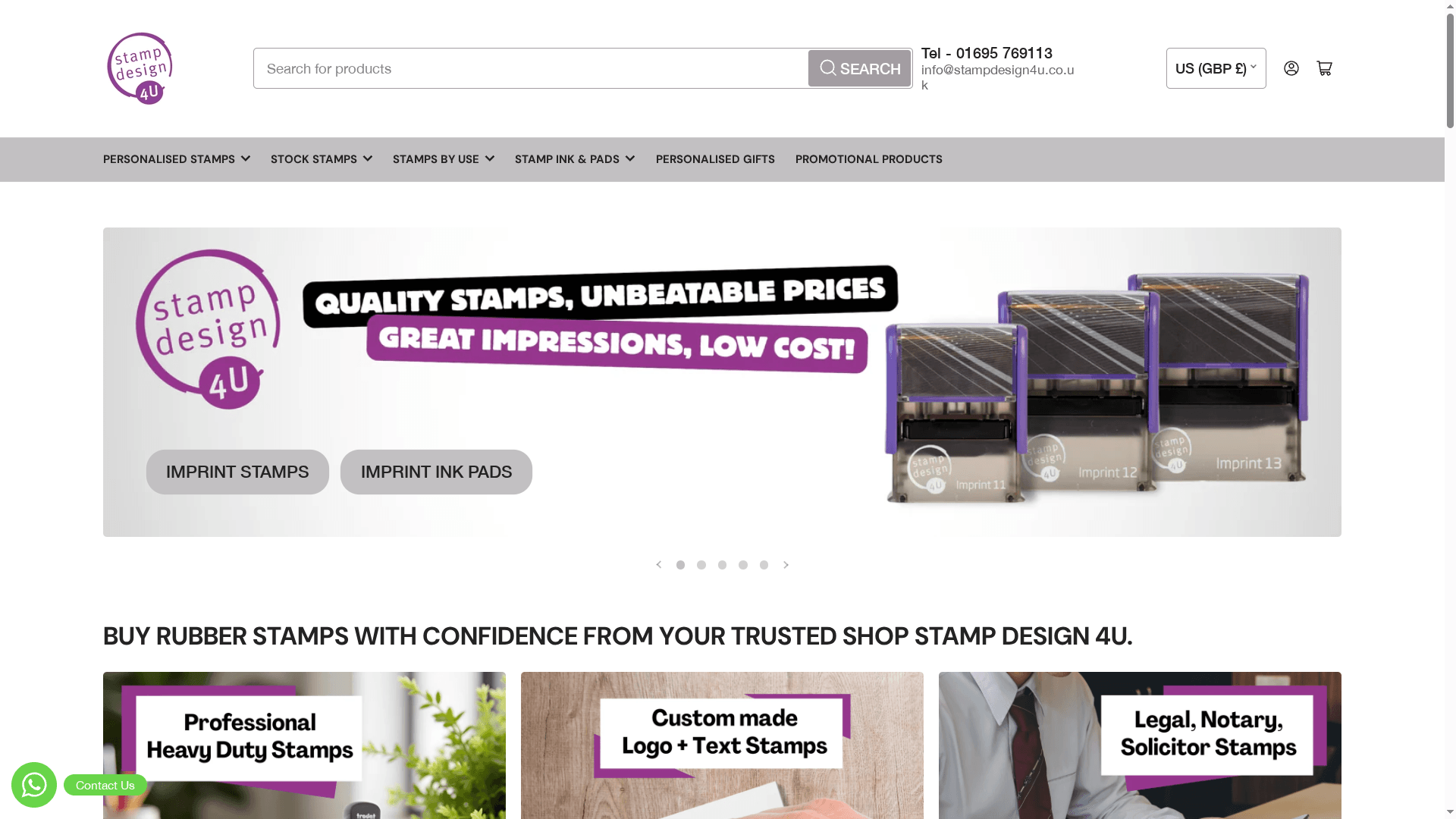
Once your basics are set, we make it simple to put your brand on everything you send. Our personalised logo stamps suit boxes, tags and gift wrap. Our personalised packaging stamps and three-line address stamp cover parcels, invoices and letters. You supply the artwork and text, check a proof, and we make the stamp. Current prices are on our website. Pick your first stamp and start branding your next order today.
FAQ
How early should a startup invest in branding?
Start before launch. Defining your audience, mission and name costs time rather than money, and research reported by Marketing Week shows that investing in brand alongside activation drives stronger sales and profit for startups.
Should I design my brand myself or hire an agency?
Do the strategy yourself and hire help only for craft work such as the logo. A clear audience profile, voice rules and a one-page style guide let you brief a freelancer cheaply and avoid rework.
How much does it cost to register a trade mark in the UK?
Costs depend on how many classes you file in. GOV.UK’s step-by-step guidance gives an online example of £205 for one class and £60 for each additional class. Take advice before applying.
What should I secure first: domain, handles or trade mark?
Secure your domain and social handles first, because they can be taken at any moment and cost little. A trade mark filing can follow once your name is settled, as the guidance on protecting your business name suggests.
Sources
- Investing early in brand drives ‘stronger sales’ for startups
- Business
- Gov
- Winning hearts and minds for a brand update CIPR