

TL;DR:
- A rectilinear stamp is a rectangular rubber or pre-inked stamp suited for longer text lines and wide logos. There are traditional, self-inking, and pre-inked models, each ideal for different levels of use and impression quality. It is most suitable for business and personal applications involving addresses, logos, and multi-line text.
A rectilinear stamp is a rubber or pre-inked stamp with four straight sides and right-angled corners — in plain terms, a rectangular stamp. The shape suits longer lines of text and wide company logos better than circular or oval alternatives, because the horizontal space maps directly to how text and most logos are laid out. Two common models illustrate the format well:
- Trodat 4927 (60 x 40mm): accommodates up to nine lines of logo and text, making it a standard choice for mixed-content business stamps
- Trodat Printy 4926: a compact rectangular model frequently used for return address impressions
- Stampdesign4u stocks both models alongside a wider range of personalised rectangular stamps for individuals and businesses
Note: in postal history, “rectilinear” has a separate technical meaning. It describes machine postmarks made from horizontal lines of text, distinct from circular cancels. That historical usage is unrelated to modern commercial stamp shapes.
Table of Contents
- What types of rectangular stamp are available?
- Common sizes and how much text fits
- How are rectangular stamps used in the UK?
- What to prepare when ordering a rectangular stamp
- How to care for and maintain a rectangular stamp
- UK legal and postal points to be aware of
- When should you choose a rectangular stamp over a round one?
- Key takeaways
- A note on rectangular stamps from Stampdesign4u
- Useful sources and where to order
What types of rectangular stamp are available?
Three main types cover most needs, each with a different trade-off between speed, cost and impression quality.
Traditional rubber stamps use a rubber die mounted on wood or a foam cushion, inked from a separate pad. They are durable and economical for occasional use, but slower because you re-ink manually between impressions.
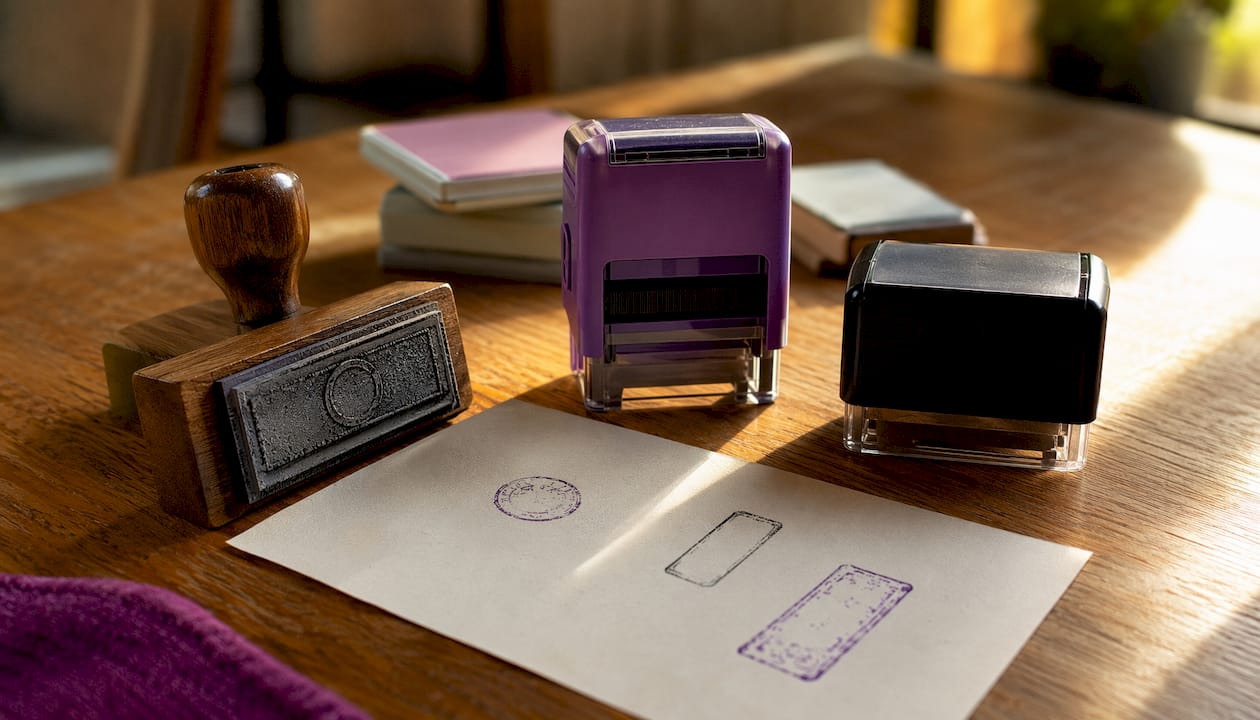
Self-inking stamps contain a built-in mechanism that re-inks the die automatically after each press. They are fast, tidy and well suited to repetitive admin tasks. Ink colour options are more limited than with separate pads, and the internal pad will eventually need replacing.
Pre-inked stamps hold ink inside the die itself, producing very crisp detail and a high impression count before refilling is needed. The upfront cost is higher, and not all models are user-refillable.
- Individuals stamping occasional mail: traditional rubber with a pad is sufficient
- Small businesses with moderate admin volume: self-inking is the practical default
- High-volume branding or packaging use: pre-inked delivers the sharpest, most consistent results
Pro Tip: If you stamp more than 20–30 items per day, a self-inking or pre-inked model will save noticeable time compared with a pad-based stamp.
Common sizes and how much text fits
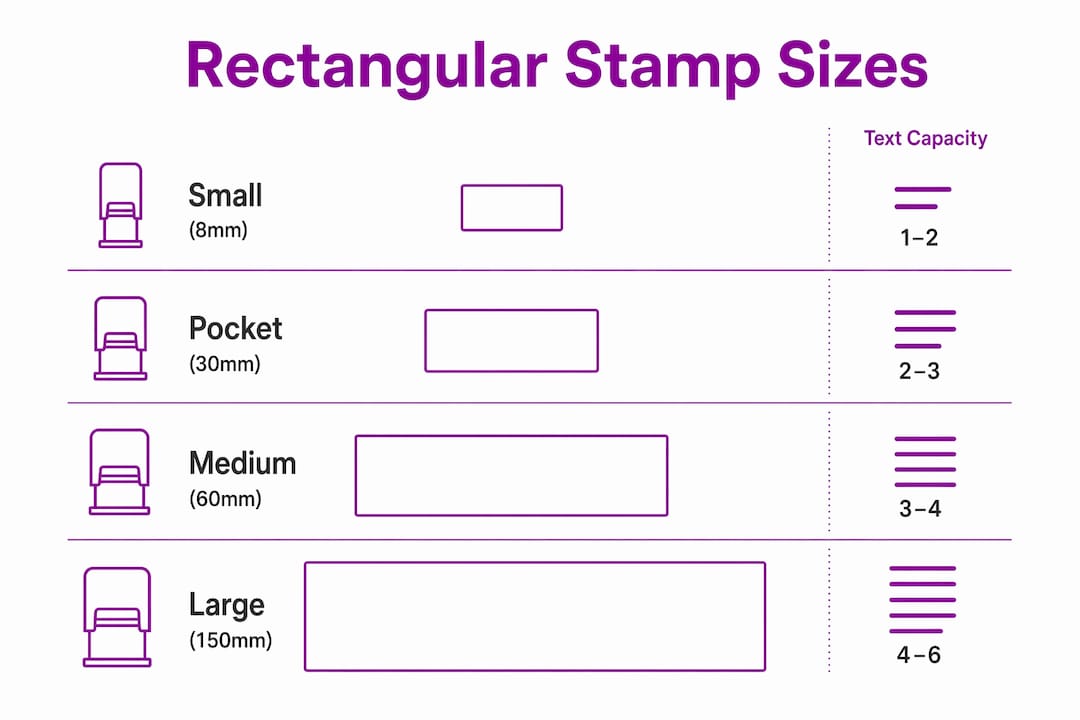
Rectangular stamps range from small pocket sizes of around 8mm up to large branding stamps of approximately 150mm. The Trodat 4927 at 60 x 40mm is a widely requested format for mixed logo-and-text use, and a 70 x 35mm layout is another common choice for wide logo stamps.
| Size bracket | Typical use | Max recommended lines |
|---|---|---|
| Up to 40 x 20mm | Address, short text | 3–4 lines |
| 60 x 40mm | Logo + address block | 6–9 lines |
| 70 x 35mm | Wide logo imprint | 4–6 lines |
| — | Large branding, packaging | 8+ lines |
Layout points worth noting:
- Font size below 6pt becomes illegible at stamp scale; 8pt is a safer minimum
- Allow a margin of at least 2mm on all sides to prevent ink bleed at the edges
- Wide logos suit landscape orientation; tall logos suit portrait
- For address blocks, left-align text and keep line spacing consistent
Pro Tip: If your logo is wider than it is tall, a landscape-oriented 70 x 35mm or 60 x 40mm stamp will use the space more efficiently than a square format.
How are rectangular stamps used in the UK?
Rectangular stamps cover a broad range of tasks for both businesses and individuals. The horizontal format handles address blocks and multi-line text without wasted space.
Business uses:
- Return address stamps on envelopes and parcels
- Logo impressions on packaging, bags and tissue paper
- Invoice and file stamps: “Received”, “Paid”, “Approved”, “Confidential”
- Authorisation marks on internal documents
Personal uses:
- Address stamps for regular mail, saving time on handwriting
- Craft and cardmaking: repeating patterns across paper, card and fabric
- Labelling household items, books or storage boxes
For bulk business mailings, Royal Mail recommends clear, legible address formatting. A stamp produces consistent results, though for very high volumes a printed label or franking machine may be more practical. A small personalised address stamp at around 37 x 13mm suits personal mail; a larger self-inking model suits daily office dispatch.
What to prepare when ordering a rectangular stamp
A clear brief to your supplier avoids delays and reprints. Work through this checklist before placing an order:
- Artwork file: supply a vector file (SVG, EPS or PDF) for any logo; editable text for any wording
- Exact dimensions: specify width x height in millimetres
- Ink colour: common options include black, blue, red, green and purple
- Line count and font: confirm the number of text lines and preferred typeface; avoid thin or decorative fonts below 8pt
- Margins: request at least 2mm clear on all sides
- Proof approval: confirm you want a digital proof before production begins
Suppliers often simplify complex logos to maintain clarity at stamp scale, adjusting stroke widths and removing fine detail that would fill in when inked. This is normal practice, not a quality issue. The Trodat 4927 (60 x 40mm) and Trodat Printy 4926 are useful reference points when discussing size with a supplier: quoting a model number gives the manufacturer a precise starting point.
Turnaround times for UK custom stamps typically run from one to five working days depending on the supplier and whether a proof round is needed. Costs vary by model, size and quantity; contact Stampdesign4u directly for current pricing.
Pro Tip: Send a printed or digital impression of a similar existing stamp alongside your brief. It gives the supplier an immediate sense of the detail level and layout you expect.
How to care for and maintain a rectangular stamp
Consistent maintenance keeps impressions clean and extends the life of the die.
- Clean rubber dies with a damp cloth or a dedicated stamp cleaner after use; avoid alcohol-based solvents, which can degrade rubber
- For self-inking models, wipe the die face gently; do not submerge the mechanism
- Re-ink pad-based stamps when impressions appear faint or patchy; use ink matched to the pad type
- Store stamps flat, face down on a clean surface or in a case, away from direct sunlight and heat
- Check pre-inked stamps periodically with a test impression on scrap paper to monitor ink distribution
Pro Tip: For stamps with fine logo detail, do a test impression on plain paper every few weeks. Catching uneven ink distribution early prevents a run of poor-quality impressions on documents or packaging.
UK legal and postal points to be aware of
- Trademark and copyright: only reproduce a logo on a stamp if you own it or have written permission; using a third-party logo without authorisation infringes intellectual property rights
- Personal data: avoid stamping full personal data (name, address, account numbers) on external-facing documents where it could be read in transit; use secure methods for sensitive information
- Royal Mail address format: Royal Mail guidance recommends the postcode on its own final line and no punctuation in the address; a rectangular stamp formatted to this layout produces compliant impressions
- Company-stamped approvals: keep a record of who holds authority to use an approval stamp; in administrative workflows, a stamped authorisation carries the same weight as a signature and should be treated accordingly
When should you choose a rectangular stamp over a round one?
Choose a rectangular stamp when:
- The content includes two or more lines of text
- The logo is wider than it is tall
- You need an address block or label-style impression
- The design reads left-to-right in horizontal lines
Round or oval stamps suit single-logo impressions, seal-style marks, and centred emblems with no surrounding text. The practical decision rule: if the content is structured in lines, a rectilinear format fits it naturally.
Key takeaways
A rectilinear stamp is the default choice for any text-heavy or wide-logo impression, and matching the type to your usage volume is the single most important buying decision.
| Point | Details |
|---|---|
| Definition | A rectangular stamp with four right-angled sides, suited to text and wide logos. |
| Choose the right type | Traditional for occasional use; self-inking for daily admin; pre-inked for high-volume branding. |
| Size and line count | The Trodat 4927 at 60 x 40mm accommodates 6–9 lines; always allow 2mm margins and keep fonts at 8pt minimum. |
| Prepare your files | Supply a vector logo (SVG, EPS or PDF) and request a digital proof before production. |
| Maintenance | Test impressions periodically and re-ink when output appears faint or uneven. |
A note on rectangular stamps from Stampdesign4u
A common size at Stampdesign4u is a format around 60 x 40mm, typically for customers combining a logo with an address block or a short line of contact details. Common supplier actions on incoming orders include issuing a digital proof and simplifying logo artwork — both steps that prevent reprints and keep lead times short.
Stampdesign4u’s personalised logo stamp collection covers the main rectangular formats, including the Trodat 4927 and Trodat Printy 4926, alongside options for packaging and address use. Customers are encouraged to request a proof before approving any order.
Useful sources and where to order
- Trodat 4927 (60 x 40mm) at Stampdesign4u: the reference model for mixed logo-and-text rectangular stamps
- Personalised address stamps at Stampdesign4u: address-focused rectangular options for personal and business mail
- Stamps for small businesses at Stampdesign4u: a curated range covering admin, branding and packaging needs
- Craft Bliss stamping guide: practical guidance on inking and mounting techniques for craft projects
- Gathered rubber stamping beginner’s guide: surfaces, re-inking and repeat-pattern methods
Request a digital proof from your supplier before approving any final stamp. It costs nothing and prevents the most common ordering errors.