

What belongs on your stamp order checklist?
A well-structured checklist for stamp orders removes guesswork from every acquisition. Before you commit to a purchase, you need a fixed set of data points recorded for each item, covering identity, condition, provenance, and physical location.
The core fields every UK collector should capture are:
- Country of issue — the issuing nation, recorded in full
- Catalogue number — preferably the Stanley Gibbons reference, the standard for UK philately
- Year of issue — the precise year, not an estimated decade
- Denomination — face value and currency as printed on the stamp
- Condition — mint, used, lightly hinged, or faults noted
- Purchase date — the exact date of acquisition
- Seller name and source — dealer, auction house, or private sale
- Purchase price — including any shipping fees or auction premiums
- Authenticity certificate reference — certificate number and issuing body where applicable
- Physical storage location — album name, page number, and slot reference
- Photographic record — a scan or photograph filed against the unique inventory ID
Provenance details matter more than many collectors expect. For higher-value items, purchase receipts and authenticity certificates are the difference between a verifiable asset and an unsubstantiated claim. Missing even one field, particularly the storage location, creates retrieval problems as a collection grows.
Pro Tip: Log each new acquisition into your digital record on the same day you receive it. Waiting even a week creates a backlog that is surprisingly difficult to clear accurately.
How each checklist component works in practice
Catalogue numbers and UK standards
The Stanley Gibbons catalogue number is the primary identifier for UK collectors. It ties each stamp to a universally recognised reference, making condition comparisons, valuations, and sale listings straightforward. Recording both the catalogue number and the catalogue edition year matters, because valuations shift between editions.

For collectors working across multiple markets, Michel numbers (used widely in continental Europe) or Scott numbers (standard in North America) may also appear on items you acquire. Note whichever system the seller used, then cross-reference to Stanley Gibbons for your master record.
Grading condition accurately
The Royal Philatelic Society London sets the benchmark for condition grading in the UK. The standard categories are:
- Mint Never Hinged (NH) — pristine gum, no disturbance
- Lightly Hinged (LH) — minor hinge remnant, gum largely intact
- Used — postmark present; check for thins or tears
- Fine / Very Fine — centring and perforation quality assessed
- Faults — tears, creases, missing perforations, or staining noted explicitly
Never leave the condition field blank. A vague note like “good” is useless for insurance purposes and misleading at resale.
Documenting provenance and seller credibility
Keeping detailed purchase records including price, seller, date, and additional costs helps track overall investment and supports accurate valuation. For UK buyers, reputable sources include members of the Philatelic Traders’ Society and auction houses with established philatelic departments. Always verify that a dealer is a recognised member of a professional body before purchasing higher-value items.

A comprehensive stamp checklist record
| Field | Example entry |
|---|---|
| Country of issue | Great Britain |
| Stanley Gibbons number | SG 1 (Penny Black) |
| Year of issue | — |
| Denomination | — |
| Condition | Used, four margins, light cancel |
| Purchase date | — |
| Seller | London Stamp Exchange |
| Purchase price | — |
| Certificate reference | RPSL cert. no. — |
| Storage location | Album A, Page 3, Slot — |
| Photograph filed | ID: —.jpg |
Thematic versus country-based checklists
The Association of British Philatelic Societies highlights thematic collecting as flexible and accessible, particularly for collectors working within a limited budget. A thematic checklist adds one extra field: the theme or topic category (birds, space, royalty, and so on). Country-based collections, by contrast, prioritise completeness within a defined geographic scope, so the checklist leans more heavily on catalogue number sequencing and edition tracking.
Neither approach is superior. The checklist simply needs to reflect whichever structure you have chosen, applied consistently across every entry.
How to use your checklist to verify purchases before you commit
Verification before purchase is where a stamp order guide earns its value. A checklist used only after acquisition misses the point entirely.
Red flags to check before confirming any order:
- Catalogue number absent or unverifiable against a current Stanley Gibbons edition
- Condition described vaguely (“good,” “fine”) without specifying gum status or faults
- No seller membership of a recognised professional body (e.g., Philatelic Traders’ Society)
- Photographs blurred, cropped, or showing only the front of the stamp
- Authenticity certificate missing for any item priced above your personal threshold
- Price significantly below catalogue value with no explanation offered
- Seller unable or unwilling to provide a receipt or invoice
Cross-checking condition and catalogue numbers
Request a high-resolution scan of both sides of the stamp before purchasing online. Compare the catalogue number the seller quotes against your current Stanley Gibbons catalogue. Discrepancies between the described condition and what the photograph shows are a reliable indicator of misrepresentation, whether deliberate or careless.
Verifying seller credibility in the UK market
Established UK auction houses with philatelic departments publish detailed lot descriptions and offer buyer guarantees. For private sales, ask for the seller’s trading history and check whether they carry membership of a recognised philatelic trade body. The Royal Philatelic Society London also offers expertisation services, providing certificates that confirm or deny the authenticity of individual items.
Why photographic evidence and receipts matter
Photographic evidence and purchase receipts are vital for insurance claims and provenance documentation. Scan paper receipts immediately and store them alongside the corresponding inventory record. For items of significant value, a single PDF combining the photograph, receipt, and certificate reference is the most efficient format for an insurer or future auctioneer.
Pro Tip: Use a dedicated folder in cloud storage, named by your unique inventory ID, to hold all documents for each stamp. Linking the folder path in your digital ledger means you can retrieve everything for any item in seconds.
How to organise and maintain your stamp inventory
Start with a digital ledger
Maintaining a digital ledger with provenance details prevents the single most common problem in collection management: inventory drift, where the physical collection and the written record gradually diverge. A spreadsheet in Google Sheets or Microsoft Excel works well for most collectors. Purpose-built software adds barcode support and built-in catalogue integration for larger collections.
The non-negotiable rule is immediate entry. Adding each stamp to the inventory on the day of acquisition prevents the backlog that makes records unreliable. Out-of-sight storage without a corresponding ledger entry leads directly to neglect and, eventually, to items being lost, undervalued, or duplicated.
Physical labelling and location codes
Connect physical items to digital records using a consistent location code system. A format such as ALB-A-12-03 (Album A, Page 12, Slot 3) is readable, printable on a label maker, and sortable in a spreadsheet. Apply the same code to the album page and to the digital record simultaneously. For stockbooks, a paper index pasted inside the back cover serves the same purpose and costs nothing.
Recommended practices for physical organisation:
- Assign a unique ID to every stamp, separate from its catalogue number
- Label album pages with location codes, not just country names
- Store stamps in polyester mounts on acid-free, archival-quality pages
- Handle stamps with clean cotton gloves or stamp tweezers only
- Keep unused stamps in glassine envelopes until they are mounted
Regular audits prevent drift
Auditing a portion of the collection monthly keeps physical and digital records aligned. Pick one album or box per month, check each item against the digital record, and correct any discrepancies immediately. This approach catches errors while they are still easy to trace. A full annual audit of the entire collection is also worth scheduling, particularly before renewing insurance cover.
For collectors who also sell, recording sales prices, buyer details, and selling expenses helps monitor collection profitability and market trends. Link each sold item back to its original inventory record rather than deleting the entry, so you retain a complete transaction history.
What UK philatelic authorities recommend for checklist and inventory management
The Royal Philatelic Society London frames philately as stewardship of historical assets. That framing has practical consequences: precise tracking of cost, condition, and provenance is not optional for a serious collector. It protects financial value, supports insurance, and makes the collection usable by whoever inherits or purchases it in the future.
Storage conditions
Philatelic material should be stored at a relative humidity of 55–60% and a temperature below 18°C. These conditions reduce stress on gummed and perforated material and prevent the foxing and toning that damp storage causes. A repurposed wine cooler lined with silica gel packets creates an affordable micro-climate that meets these standards in a home setting. Liebherr produces coolers well suited to this purpose, though budget alternatives are available.
Storage standard: 55–60% relative humidity and below 18°C, as recommended by the Royal Philatelic Society London for philatelic collections.
High-quality albums on acid-free, archival paper protect colour and prevent oxidisation. Many albums produced in the 1980s do not meet current archival standards, so upgrading pages is worth considering for any collection of lasting value.
Handling and repairs
Only professional paper conservators should perform repairs or cleaning on philatelic material. Bleaching, amateur cleaning, and DIY repairs have permanently devalued collections. In philately specifically, repairs can constitute fraud in a sale or exhibition context. The rule is straightforward: if a stamp needs treatment, consult a professional conservator. The British Library Philatelic Collections uses polyester mounts on conservation-quality pages as its standard, a useful benchmark for serious collectors.
Thematic flexibility and the ABPS approach
The Association of British Philatelic Societies advises that thematic collecting is one of the most accessible and budget-friendly entry points into philately. For thematic collectors, the checklist gains a topic field and becomes more flexible in its catalogue number requirements, since stamps from any country qualify as long as they fit the chosen theme. This flexibility makes thematic checklists particularly useful for collectors who want to expand their scope without committing to the completeness demands of a single-country collection.
If you collect thematic items and want design inspiration for complementary stationery, greeting card designs from specialist stationery partners can provide useful visual reference for display and presentation themes.
Expert guidelines for UK collectors
- Record every acquisition in your digital ledger on the day it arrives
- Audit one album or box per month against your digital records
- Store at 55–60% relative humidity and below 18°C
- Use acid-free, archival-quality album pages and polyester mounts
- Handle material with tweezers or clean cotton gloves only
- Never clean or repair stamps yourself; use a professional conservator
- Keep all purchase receipts, certificates, and photographs linked to the relevant inventory record
- Treat your inventory as a working tool, not a static archive; update it after every sale, trade, or rehousing
Stampdesign4u: custom stamps for collectors and organisers
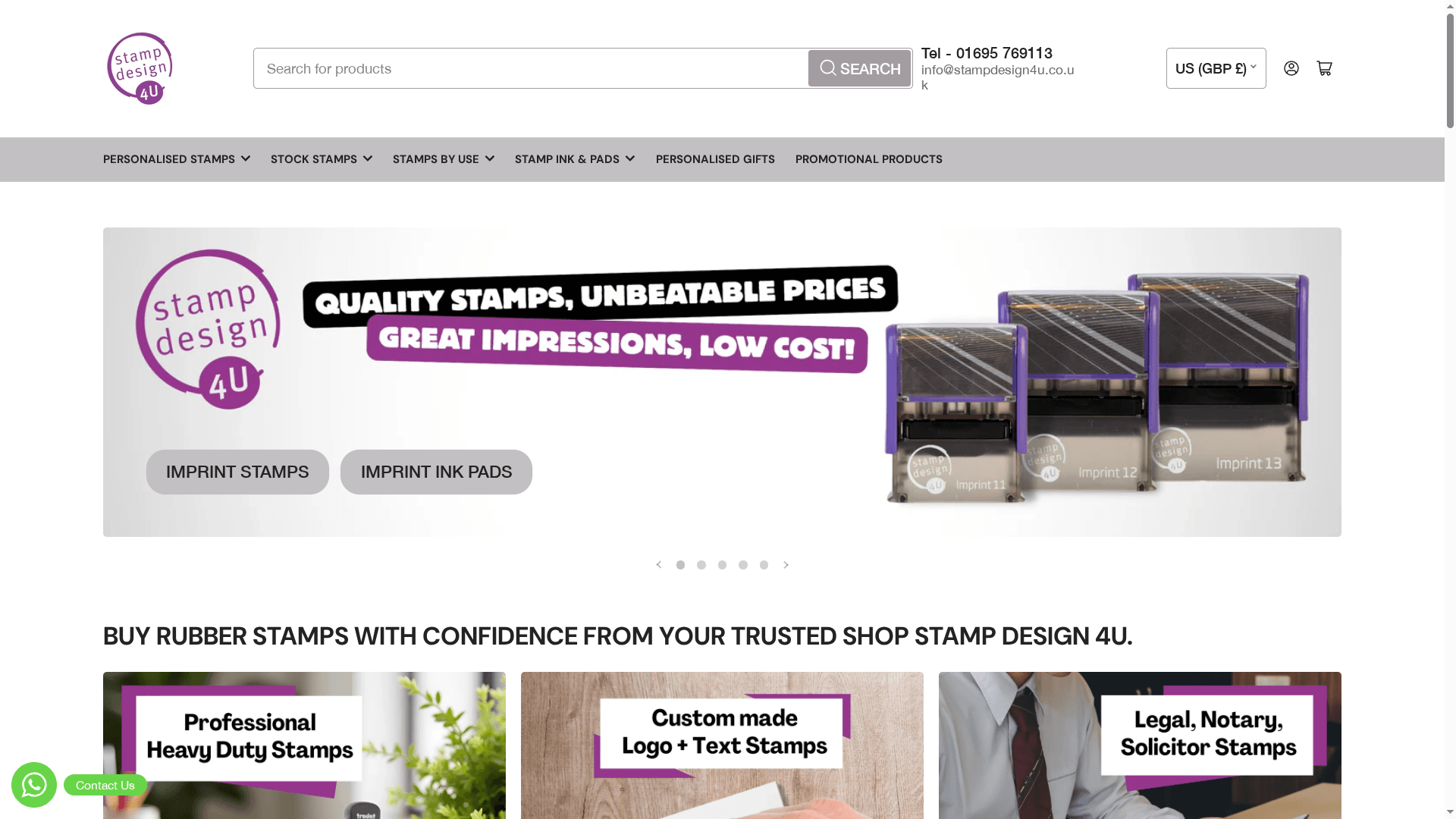
Collectors who want to label albums, mark storage boxes, or create branded inventory stamps will find a practical range at Stampdesign4u. The Trodat 4927 rubber stamp accommodates up to nine lines of text and a logo, making it well suited for printing location codes, collection names, or ownership details directly onto album covers and storage materials. For broader labelling needs, the personalised logo stamps range offers custom designs for collectors who want a consistent, professional mark across their physical organisation system.
Key takeaways
A complete checklist for stamp orders must capture catalogue number, condition, provenance, and physical location for every item, with records updated on the day of acquisition.
| Point | Details |
|---|---|
| Core checklist fields | Record country, Stanley Gibbons number, year, denomination, condition, seller, price, and storage location for every stamp. |
| Provenance documentation | Keep purchase receipts, authenticity certificates, and photographs linked to each inventory record, especially for higher-value items. |
| Verification before purchase | Cross-check catalogue numbers, request high-resolution scans of both sides, and confirm seller membership of a recognised trade body. |
| Storage conditions | Maintain 55–60% relative humidity and temperature below 18°C; wine coolers lined with silica gel are a practical home solution. |
| Inventory discipline | Log acquisitions immediately and audit one album or box per month to prevent drift between physical and digital records. |