

Around 80 percent of british small businesses agree that consistent branding impacts customer trust. For owners and managers looking to stand out in a crowded market, every detail counts. Customised rubber stamps offer a practical way to reinforce your brand identity, ensuring every package, document, or invoice carries your unique professional mark. Discover why personalised stamps have become essential for british companies aiming to strengthen their marketing and create lasting brand impressions.
Table of Contents
- Branding Stamps Defined And Their Unique Value
- Key Types Of Branding Stamps For Business
- How Branding Stamps Enhance Customer Experience
- Cost Savings And Sustainability Benefits
- Critical Branding Mistakes And Best Practices
Key Takeaways
| Point | Details |
|---|---|
| Importance of Branding Stamps | Branding stamps are versatile tools that enhance brand visibility and create consistent professional representation across various platforms. |
| Types of Branding Stamps | Different types of branding stamps, such as logo and address stamps, serve distinct organisational needs and improve communication efficiency. |
| Cost Efficiency and Sustainability | Proper use of branding stamps can lead to significant cost reductions and support eco-friendly practices, enhancing a business’s financial and environmental credentials. |
| Avoiding Branding Mistakes | Businesses should avoid common branding errors by ensuring design consistency and maintaining legal protections to safeguard their brand identity. |
Branding stamps defined and their unique value
Branding stamps represent powerful visual tools that enable businesses to create consistent, professional brand representations across various communication channels. These custom-designed stamps serve as compact, reusable markers that capture an organisation’s core identity through logos, contact details, or official emblems. Understanding brand identity principles reveals how these small yet significant tools communicate trust and quality to potential customers.
In the United Kingdom, branding stamps have evolved beyond mere administrative tools to become strategic marketing assets. They offer businesses a cost-effective method of reinforcing brand recognition through repeated, standardised impressions on documents, packaging, and promotional materials. Government guidelines emphasise the importance of consistent visual representation, recognising that official branding stamps carry significant authority and trust, particularly when representing institutional identities.
The unique value of branding stamps lies in their versatility and efficiency. Small businesses can leverage these tools to:
- Create professional document authentication
- Enhance brand visibility across multiple touchpoints
- Reduce manual administrative work
- Maintain consistent brand presentation
- Improve document tracking and record-keeping
Custom stamps transform routine administrative processes into brand-building opportunities, allowing organisations to communicate their professional identity with every impression.
Pro tip: Select a branding stamp design that remains legible and clear across different surfaces and document types to maximise your brand’s visual impact.
Key types of branding stamps for business
Businesses in the United Kingdom utilise several distinctive types of branding stamps, each designed to serve specific organisational needs. Trade mark registration frameworks highlight the importance of selecting stamps that effectively represent a company’s unique brand identity and legal protections.
The primary categories of branding stamps include:
- Logo Stamps: Featuring a company’s registered logo or emblem
- Address Stamps: Displaying official business contact information
- Signature Stamps: Used for authorising documents and correspondence
- Custom Text Stamps: Allowing personalised messaging or specific legal disclaimers
- Return Address Stamps: Streamlining mailing and correspondence processes
Each stamp type offers distinct advantages for businesses seeking to maintain professional communication standards. Logo stamps, for instance, transform routine documents into branded marketing opportunities, while address stamps ensure consistent and efficient information distribution across multiple platforms.
The following table contrasts the main types of branding stamps, highlighting their typical uses and the benefits offered to businesses:
| Stamp Type | Common Use | Business Benefit |
|---|---|---|
| Logo | Brand documents, packaging | Strengthens brand recognition |
| Address | Mark correspondence | Ensures contact accuracy |
| Signature | Approve or authorise forms | Speeds up official processes |
| Custom Text | Legal notices or disclaimers | Meets compliance requirements |
| Return Address | Streamline outbound mail | Reduces repeated manual entry |
Small and medium enterprises can strategically deploy these stamps to enhance brand recognition, reduce administrative overhead, and create a cohesive visual identity. By carefully selecting stamps that align with their brand guidelines, businesses can transform mundane paperwork into powerful branding touchpoints.
Pro tip: Invest in high-quality, durable stamp designs that maintain crisp impressions across various paper types and can withstand frequent use.
How branding stamps enhance customer experience
Branding stamps play a crucial role in transforming customer interactions from mundane transactions to meaningful brand experiences. Effective visual branding strategies demonstrate how consistent visual markers can build public trust and create a sense of reliability that resonates deeply with customers.
Customers interact with brands through multiple touchpoints, and branding stamps serve as subtle yet powerful communication tools. They communicate professionalism, attention to detail, and organisational integrity through:
- Creating a sense of authenticity
- Reinforcing brand recognition
- Establishing visual consistency
- Demonstrating professional commitment
- Building emotional connections with customers
Brand identity research reveals that these stamps do more than simply mark documents. They create psychological connections, transforming routine interactions into opportunities for brand storytelling. When customers consistently encounter well-designed, thoughtful branding stamps, they develop a deeper sense of trust and familiarity with the organisation.

Small businesses can leverage these stamps as cost-effective marketing tools that communicate quality and professionalism in every interaction. By carefully selecting designs that reflect their brand’s personality, companies can turn even the most ordinary communication into a memorable brand experience.
Pro tip: Select branding stamps that reflect your company’s unique personality and ensure they are used consistently across all customer touchpoints.
Cost savings and sustainability benefits
Businesses are increasingly recognising branding stamps as strategic tools for achieving both financial efficiency and environmental responsibility. Sustainable branding strategies demonstrate how organisations can reduce operational costs while minimising their ecological footprint through intelligent design choices.
The primary cost-saving advantages of branding stamps include:
- Reducing printing expenses
- Minimising administrative time
- Decreasing document processing costs
- Eliminating repeated manual data entry
- Lowering stationery procurement expenses
Intellectual property guidelines highlight how strategic use of branding stamps can prevent costly legal disputes and potential trademark infringement issues. By investing in high-quality, reusable stamps, businesses can create a standardised approach to documentation that simultaneously reduces expenses and maintains professional consistency.
Sustainability benefits extend beyond immediate financial savings. Eco-conscious stamp designs using recycled materials, refillable ink systems, and long-lasting production techniques contribute to reduced environmental impact. Small businesses can demonstrate corporate social responsibility by selecting stamps that align with sustainable manufacturing practices and minimise waste generation.
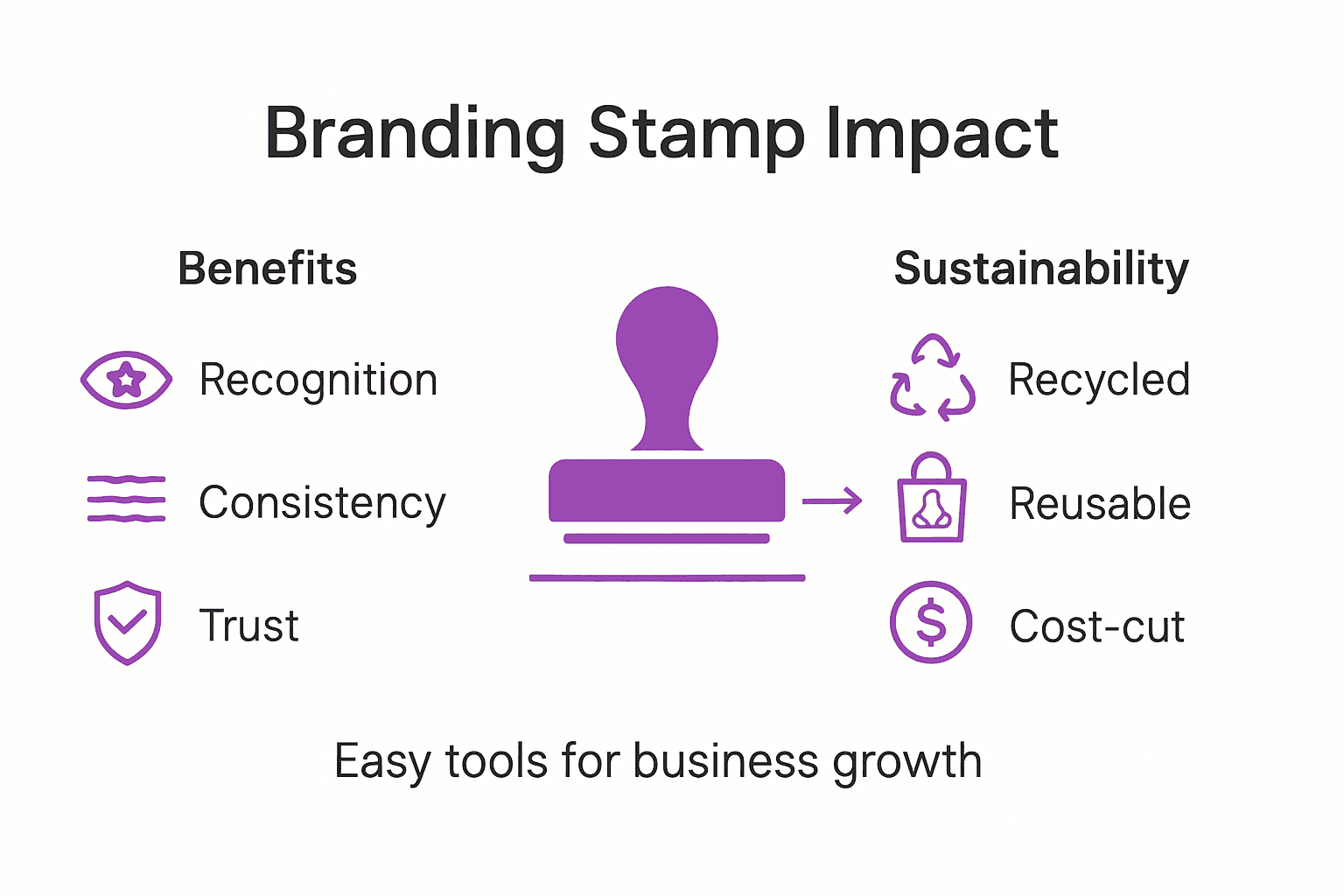
This summary table outlines how branding stamps contribute to sustainability and cost-efficiency for organisations:
| Area | Example Impact | Long-term Advantage |
|---|---|---|
| Financial Savings | Less printing, lower admin | Increased profit margin |
| Environmental Impact | Use of recycled materials | Improved corporate reputation |
| Time Efficiency | Streamlined document workflow | Faster business operations |
| Legal Protection | Trademark clarity | Minimised risk of disputes |
Pro tip: Choose multi-purpose branding stamps made from sustainable materials that can be easily updated or refilled, maximising both cost-effectiveness and environmental consciousness.
Critical branding mistakes and best practices
Intellectual property regulations emphasise the critical importance of strategic branding approaches that protect a company’s visual identity. Businesses must navigate a complex landscape of legal and design considerations when developing their branding stamp strategies.
Common branding mistakes to avoid include:
- Using inconsistent design elements
- Neglecting trademark registration
- Producing low-quality stamp impressions
- Failing to align stamps with brand guidelines
- Overlooking potential legal implications
- Implementing stamps without comprehensive quality control
Design consistency research highlights the critical role of maintaining uniform visual representations across all branding materials. Successful organisations develop comprehensive guidelines that ensure every stamp reflects the organisation’s core visual identity, professionalism, and commitment to quality.
Professional best practices demand a holistic approach to branding stamps. This involves conducting thorough design reviews, securing appropriate legal protections, investing in high-quality manufacturing, and establishing clear usage protocols that maintain brand integrity across all communication channels.
Pro tip: Develop a comprehensive branding stamp style guide that details precise design specifications, usage protocols, and quality standards to ensure consistent brand representation.
Elevate Your Brand with Customised Branding Stamps
The article highlights how branding stamps are essential for UK businesses aiming to enhance professionalism, ensure consistency, and create lasting customer trust. If you are looking to overcome challenges like inconsistent brand presentation or costly manual administration, investing in high-quality, personalised stamps is the perfect solution. Whether you want logo stamps, address stamps, or custom text stamps, the right design can transform everyday documents into powerful brand assets.
Explore a wide range of customisable options at StampDesign4U, your go-to platform for bespoke rubber stamps tailored to your unique brand identity. Acting now means you gain efficiency, improve customer experience, and enjoy sustainable cost savings with stamps designed to last. Start crafting your perfect branding tools today by visiting custom stamp design services and discover how easy it is to maintain consistent, professional impressions that elevate your business image.
Frequently Asked Questions
What are branding stamps?
Branding stamps are custom-designed tools that allow businesses to create consistent visual representations of their brand identity, including logos, contact information, and official emblems.
How do branding stamps benefit small businesses?
Branding stamps enhance brand recognition, streamline administrative processes, and ensure consistent communication, all while allowing small businesses to present a professional image to their customers.
What are the different types of branding stamps?
The main types of branding stamps include logo stamps, address stamps, signature stamps, custom text stamps, and return address stamps, each serving unique purposes in maintaining professional communication.
How can branding stamps improve customer experience?
Branding stamps communicate professionalism and attention to detail, helping to create an authentic brand experience and build trust with customers through consistency in branding across various touchpoints.
Recommended
- Complete Guide to Branding With Custom Stamps – Stamp Design 4U
- Custom Logo Stamps: Why They Matter for your Brand Identity – Stamp Design 4U
- Complete Guide to Why Choose Custom Stamps – Stamp Design 4U
- Boost Your Branding: Custom Logo Stamps For Businesses – Stamp Design 4U
- The Rise of Pre-Loved Luxury: Why Secondhand Designer Bags Are a Very
- Premium Men’s Clothing Brands – Expert Comparison 2025 – Vellure Homme