

TL;DR:
- Promotional stamps are versatile tools that enhance brand recognition and foster customer loyalty through repeat engagement.
- Effective strategies include simple loyalty cards, customized packaging stamps, and digitally tracked stamps that leverage visual appeal and behavioral incentives.
Promotional stamps are custom-designed impressions used to build brand recognition, reward customer loyalty, and drive repeat engagement across physical and digital touchpoints. The term covers everything from rubber logo stamps pressed onto packaging to loyalty card stamps collected in exchange for a free coffee. Whether you call them marketing stamps, branding stamps, or loyalty stamps, the mechanics are the same: a visible, repeatable mark that connects your business to your customer. This article covers the most effective examples of promotional stamps, with practical design ideas and comparisons to help you choose the right format for your goals.
1. Common examples of promotional stamps and how they work
Promotional stamps fall into several distinct categories, each serving a different marketing function. Understanding the differences helps you select the right tool before committing to a design or supplier.
- Loyalty stamp cards. These reward repeat visits with a stamp per purchase, typically requiring 6 to 10 stamps before a free reward is earned. Paper cards are low cost and tactile; digital versions on apps like Favecard add tracking and analytics.
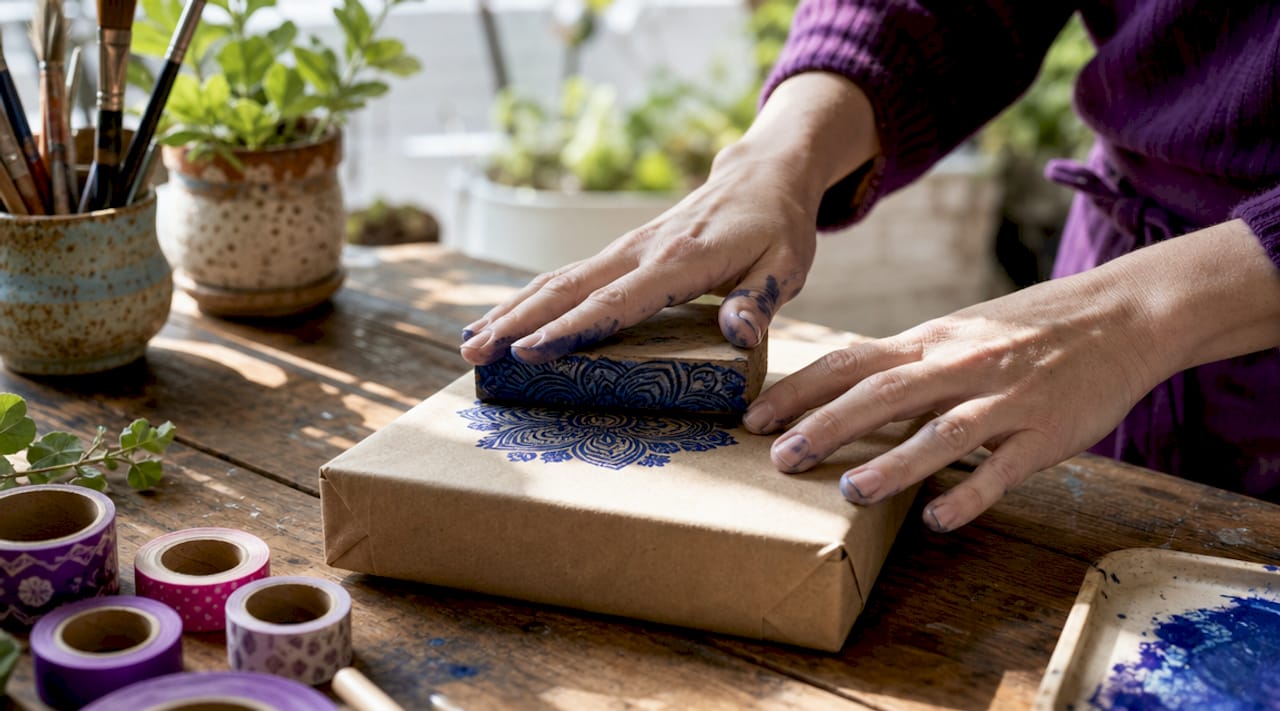
- Custom logo stamps. A rubber or self-inking stamp bearing your logo, pressed onto packaging, envelopes, or receipts. Branding packaging with custom stamps reduces upfront print costs while creating a personal, premium feel at the point of unboxing.
- Promotional postage stamps. Issued by postal services to mark events or causes, these carry genuine postage value and act as miniature advertisements. The USPS Postcrossing triangular stamps, released in May 2026, are a recent example of a postage stamp designed specifically to encourage international postcard sending.
- Cause-marketing stamps. Non-postage decorative stamps used to promote a cause or brand value. The 1908 American Red Cross Christmas Stamp is the earliest documented example: sold to fund anti-tuberculosis efforts, it carried a goodwill message without postal value.
- Trading and collectible stamps. Limited-edition stamp sets tied to a campaign or product launch, designed to be collected and shared.
Pro Tip: If you run a café, bakery, or independent retailer, a simple paper loyalty stamp card with a clear reward at stamp 8 or 10 will outperform a complex multi-tier programme every time. Simplicity drives completion.
2. Creative promotional stamp designs in real marketing campaigns
The most memorable promotional stamp designs do two things at once: they deliver a brand message and they give the customer a reason to act. The examples below show how that works in practice.
The 1908 Red Cross Christmas Stamp is the original cause-marketing stamp. Designed by Howard Pyle and sold without postal value, it was placed on envelopes and gift packages to spread awareness of the anti-tuberculosis campaign. Small businesses can replicate this model today by producing a limited-edition decorative stamp tied to a charity partnership or seasonal cause, combining goodwill with brand storytelling.
The USPS Postcrossing triangular stamps demonstrate how unconventional shape alone can generate attention. Released on 26 May 2026, these Global Forever stamps were designed to encourage worldwide postcard sending through visual novelty. For marketing professionals, the lesson is clear: shape, colour, and format are part of the message, not just the container.
Digital loyalty stamps add a gamification layer that paper cards cannot match. Apps display progress bars, send push notifications when a customer is one stamp away from a reward, and collect purchase data for future campaigns. This turns a simple stamp into a data asset.
“Promotional stamps integrate visible brand marks with repeat-action mechanics that encourage customers to collect and engage, making them both branding and loyalty tools.” — Favecard
Bonus stamp promotions are another creative stamp idea worth considering. Offering double stamps on a slow Tuesday or triple stamps on a new product creates an engagement burst without discounting. The perceived value is high; the actual cost is low.
Large logo stamps on outer packaging create a premium unboxing moment. A 60 x 40mm logo stamp pressed in a contrasting ink colour on kraft paper or a plain cardboard box signals craft and care, at a fraction of the cost of custom-printed packaging.
3. How to compare promotional stamp options for your business
Choosing between stamp types comes down to four variables: volume, detail quality, budget, and the customer behaviour you want to encourage.
Pro Tip: Order a test impression before committing to a full run. Self-inking stamps and pre-inked stamps produce noticeably different results on textured surfaces like kraft paper or card stock.
| Stamp type | Best for | Impression quality | Cost per use | Typical use case |
|---|---|---|---|---|
| Self-inking stamp | High-volume branding | Good, consistent | Very low | Packaging, receipts, envelopes |
| Pre-inked stamp | Fine logo detail | Excellent, sharp | Low | Signatures, premium stationery |
| Loyalty card stamp | Repeat customer rewards | Functional | Very low | Cafés, salons, retail |
| Digital loyalty stamp | Data-driven campaigns | N/A (digital) | Low monthly fee | Apps, e-commerce follow-up |
| Decorative/cause stamp | Events, campaigns | Variable | Low to medium | Seasonal promotions, charity tie-ins |
Self-inking stamps deliver approximately 10,000 impressions per refill, making them the most cost-effective choice for businesses stamping dozens of items daily. Pre-inked stamps last up to 50,000 impressions and produce quieter, more precise marks, which matters when your logo includes fine lines or small text.
Paper loyalty cards cost almost nothing to produce but offer no data. Digital stamp cards cost more to set up but tell you which customers are close to a reward, which days drive the most visits, and which products trigger repeat purchases. For a business with more than 200 regular customers, the digital option pays for itself quickly.
4. Which promotional stamp strategies work best for small businesses?
Small businesses get the most from promotional stamps when the strategy is specific, low-friction, and tied to a clear customer action. The following approaches consistently deliver results.
- Set an achievable reward threshold. A reward threshold of 6 to 10 stamps keeps customers motivated without requiring too many visits before they see a benefit. Fewer than six feels too easy and cheapens the reward; more than ten risks customers abandoning the card before completion.
- Stamp your packaging. A custom logo stamp on your outgoing parcels or bags adds a personal branding touch without the cost of pre-printed packaging. It also makes your brand visible to anyone who handles the parcel after it leaves your premises.
- Use digital stamp apps for tracking. Platforms like Favecard let you monitor redemption rates, identify your most loyal customers, and send targeted offers. This turns a simple loyalty mechanic into a marketing channel.
- Run limited-time bonus stamp events. Double stamps on a specific day or for a specific product create urgency and lift footfall without requiring a discount. Announce these via social media or email the day before for maximum effect.
- Keep the rules simple. One stamp per visit or per purchase. One reward per completed card. Any more complexity creates confusion at the till and disputes with customers. The simplest loyalty schemes have the highest completion rates.
For practical stamp ideas that go beyond loyalty cards, consider stamping thank-you notes, tissue paper inserts, or the inside of a paper bag. These touches cost almost nothing but create a memorable brand moment.
5. How to use promotional stamps for mail-based marketing
Mail-based promotional stamp campaigns follow different rules from in-store loyalty schemes, and getting the details wrong is costly.
The USPS First-Class Mail Advertising Promotion offers a 3% postage discount for mailpieces with qualifying marketing messages. The critical requirement: promotional messages must be printed directly on the mailpiece. Stickers or inserts placed separately do not qualify. This rule pushes businesses toward integrated stamp design, where the promotional mark is part of the physical mail item rather than an afterthought.
For UK-based businesses, the equivalent approach is to use a custom rubber stamp to print your logo, offer, or URL directly onto envelopes before posting. This is legal, low cost, and far more noticeable than a plain white envelope. A 60 x 40mm self-inking stamp from a supplier like Stampdesign4u covers enough space to include a logo and a short call to action.
The USPS Postcrossing campaign also shows that stamps act as conversation starters in global marketing. If your business sends physical mail internationally, a distinctive stamp design on the envelope is the first thing the recipient sees. That first impression is worth investing in.
Key takeaways
The most effective promotional stamps combine a clear brand mark with a specific customer action, whether that is collecting a reward, receiving a parcel, or opening a piece of mail.
| Point | Details |
|---|---|
| Loyalty thresholds matter | Set rewards at 6 to 10 stamps to keep customers motivated and reduce drop-off. |
| Packaging stamps add value | A custom logo stamp on parcels creates a premium feel without pre-print costs. |
| Pre-inked beats self-inking for detail | Pre-inked stamps last up to 50,000 impressions and produce sharper logo marks. |
| Digital stamps deliver data | Digital loyalty apps track customer behaviour and enable targeted follow-up campaigns. |
| Mail rules are strict | Promotional messages on mailpieces must be printed directly on the item to qualify for postage discounts. |
Why I think most businesses underestimate the stamp
Most marketing conversations skip straight to social media and paid ads. Stamps rarely come up. That is a missed opportunity, and I say that having seen dozens of small business owners spend hundreds on digital campaigns while ignoring a £30 self-inking stamp that would have done more work per day.
The physical nature of a stamp is the point. When a customer holds a loyalty card with seven stamps on it, they feel progress. That feeling is more powerful than a push notification. Digital loyalty apps are genuinely useful for data, but they work best when they replicate the psychology of the physical card, not replace it.
I have also noticed that businesses overthink the design. A clean logo, a clear reward, and a well-chosen ink colour are all you need. The businesses that get into trouble are the ones that add too many rules, too many tiers, or too many conditions. The best promotional stamp designs are the ones a customer understands in three seconds.
One more thing: cause-marketing stamps are underused. The 1908 Red Cross Christmas Stamp proved that a non-postage decorative stamp can carry genuine emotional weight. If your business supports a local charity or environmental cause, a limited-edition stamp tied to that cause tells a story that a discount code never will.
— Steven
Get your promotional stamp designed with Stampdesign4u
Stampdesign4u offers a full range of custom rubber stamps suited to every promotional use case described in this article. The Trodat Printy 4927 logo stamp is a 60 x 40mm self-inking stamp that holds up to nine lines of text and a logo, making it the practical choice for packaging, envelopes, and branded stationery. For businesses building a loyalty programme, the Traxx 9021 loyalty stamp is designed specifically for repeat-use card stamping. Both products are available with custom designs through Stampdesign4u, with support available for businesses that need guidance on artwork or stamp selection.
FAQ
What are the most common examples of promotional stamps?
The most common examples include custom logo stamps on packaging, loyalty card stamps for repeat-purchase rewards, and decorative cause-marketing stamps. Digital loyalty stamp cards are increasingly common for businesses that want customer data alongside the reward mechanic.
How many stamps should a loyalty card require?
A reward threshold of 6 to 10 stamps is the most effective range. Fewer than six reduces perceived value; more than ten risks customers abandoning the card before completing it.
What is the difference between self-inking and pre-inked stamps?
Self-inking stamps deliver around 10,000 impressions per refill and suit high-volume branding tasks. Pre-inked stamps produce sharper, finer marks and last up to 50,000 impressions, making them better for detailed logos or professional signatures.
Can I use a rubber stamp on outgoing mail for marketing?
Yes. Stamping your logo or a short promotional message directly onto envelopes is a low-cost way to brand outgoing mail. For postage discount programmes like the USPS First-Class Mail Advertising Promotion, the marketing message must be printed directly on the mailpiece, not added via a sticker or insert.
Are digital loyalty stamps better than paper stamp cards?
Digital loyalty stamps offer tracking, push notifications, and purchase data that paper cards cannot provide. Paper cards are lower cost and require no app download, which suits businesses with older or less tech-savvy customers. Many businesses run both formats simultaneously.
Recommended
- Marketing with custom stamps: 10 ideas that work – Stamp Design 4U
- 7 Practical Personalised Stamp Uses for Businesses and Hobbyists – Stamp Design 4U
- Why Use Custom Address Stamps for Small UK Brands – Stamp Design 4U
- Business branding with stamps: Practical steps for small businesses – Stamp Design 4U