

TL;DR:
- Choosing the right stamp size depends on your document’s purpose, content complexity, and available space. Medium-sized stamps, typically between 50 and 60mm wide, offer the best balance between clarity and fit for most business and personal applications. Proper measurement and proofing at actual size are essential to ensure the impression is legible and well-proportioned before placing an order.
Choosing optimal stamp size is defined as selecting the dimensions that best match your stamp’s purpose, the complexity of its content, and the space available on the target surface. Get it wrong and you end up with cramped text, smudged impressions, or a stamp that dwarfs the document it sits on. The three standard categories, small (35–45mm wide), medium (50–60mm wide), and large (65mm and above), each serve distinct applications across branding, paperwork, and personal projects. Brands such as Trodat and manufacturers like Textappear have built their product ranges around these categories precisely because size is the single biggest factor in print quality.
What are the standard stamp size categories?
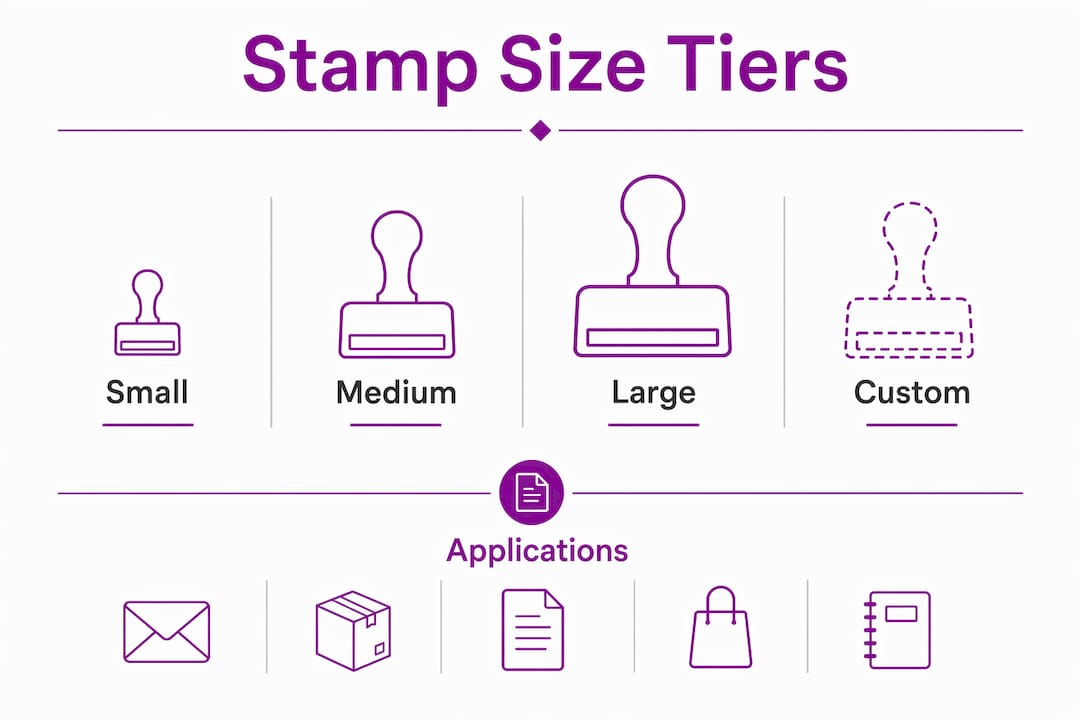
Stamp size selection follows three recognised tiers, each matched to specific document types and use cases.
Small stamps (35–45mm wide) suit compact areas such as receipts, approval marks, and small forms. They produce neat, contained impressions without wasting space on a crowded document. The trade-off is that fine detail, such as thin script or small logos, can blur at this scale if the design is not kept simple.
Medium stamps (50–60mm wide) offer the most versatile balance between clarity and fit. They maintain proper letter spacing and natural signature flow, making them the standard choice for invoices, contracts, and business correspondence. The Trodat Printy 4927 at 60 x 40mm is a widely used example of this category in professional settings.
Large stamps wider than 65mm accommodate long strokes, loops, and ornate design details with clear impressions. They are best suited to legal documents, high-visibility branding, and complex signatures where every detail must read cleanly at a glance.
| Size Category | Typical Width | Common Applications |
|---|---|---|
| Small | 35–45mm | Receipts, approval marks, compact forms |
| Medium | 50–60mm | Invoices, contracts, business letters |
| Large | 65mm and above | Legal documents, complex signatures, branding |
Signature complexity directly affects which tier you need. A simple printed name fits comfortably in the small or medium range. An ornate cursive signature with loops and extended strokes requires the larger format to avoid losing detail in the impression.
How does stamp size affect clarity and readability?
Size and legibility are directly linked. A stamp that is too large for its surface spreads ink beyond the intended boundary, producing blurred edges and wasted white space around the imprint. A stamp that is too small forces text and graphic elements into a cramped area, causing letters to merge and fine lines to disappear entirely.
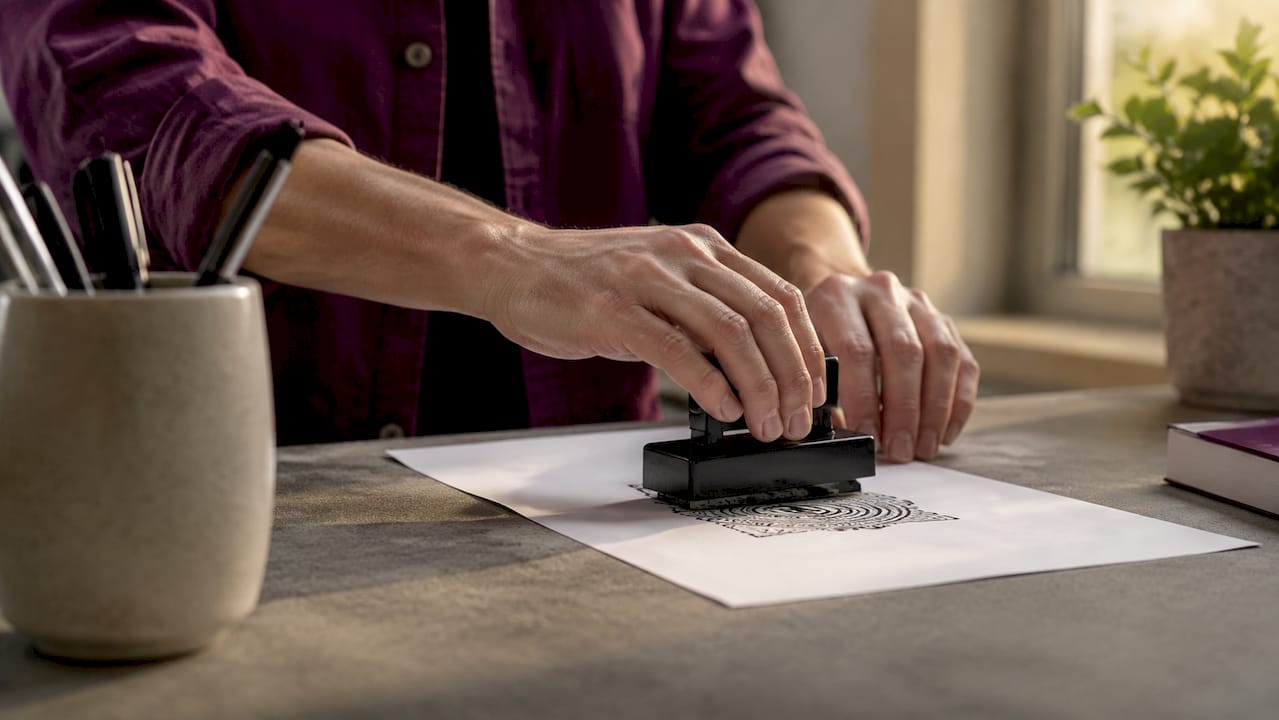
Shape compounds this effect. Rectangular stamps distribute horizontal text evenly across their width, which suits names, addresses, and multi-line content. Square stamps concentrate content into a tighter area, which works well for logos and short approval marks but poorly for sentences. Round stamps create visual tension with straight text lines, so they perform best with circular or radial layouts.
Proofing your stamp layout at actual size before ordering catches errors that are invisible on screen. A design that looks balanced at 30% zoom on a monitor can reveal cramped spacing, misaligned text, or disproportionate logos when printed at true dimensions. This single step prevents the most common and costly ordering mistakes.
- Oversized stamps on small documents create visual imbalance and risk ink spread beyond the document margin.
- Undersized stamps lose fine detail, particularly in logos with thin lines or signatures with tight loops.
- Rectangular shapes suit multi-line text; square shapes suit compact marks; round shapes suit seals and badges.
- Always proof at 100% scale, either printed on paper or displayed at actual size on screen.
Pro Tip: Measure the printable or signing area on your most common document before selecting a size. Use a ruler to record the exact width and height available, then choose a stamp that fills no more than 70–80% of that space to allow visual breathing room.
Which stamp shapes and sizes suit different content types?
Matching stamp shape to content type is as important as selecting the correct width. The wrong shape forces content to compress or stretch, reducing both legibility and visual impact.
Rectangles suit horizontal text blocks, squares fit logos or compact marks, and rounds work well for seals and badges. This is not a matter of preference. It is a functional constraint driven by how text and graphics fill two-dimensional space.
| Stamp Shape | Best Content Type | Typical Use Cases |
|---|---|---|
| Rectangle | Multi-line text, addresses, names | Business correspondence, return address stamps |
| Square | Compact logos, short notices | Approval marks, loyalty cards, branding |
| Round | Seals, badges, decorative marks | Official seals, craft projects, circular logos |
Document constraints also shape the decision. A narrow column on a form may only accommodate a rectangular stamp no wider than 40mm. A loyalty card, such as those used with the Trodat 4921 compact stamp, requires a small square or round format to fit within the card’s printed grid. Paper type matters too. Glossy or coated paper requires a stamp with a firm, even impression to avoid smearing, which generally favours medium sizes with consistent ink distribution.
For personal and business mail, address stamps in a rectangular format at 58 x 22mm, such as the Imprint 13 range, represent a practical standard that fits envelopes of all common sizes without overlapping postal barcodes or address windows.
What practical steps help you select the right size?
A structured approach to stamp size selection removes guesswork and reduces the risk of ordering a stamp that does not perform as expected.
- Define the stamp’s primary purpose. Branding, document approval, address marking, and personal projects each have different size requirements. Identify the single most common use case first.
- Measure the available imprint area. Accurate dimensions on your target surface prevent stamps that are too large or too small for their intended space. Use a ruler and record both width and height.
- Assess content complexity. A simple text block needs less space than a detailed logo or an ornate signature. If your design includes fine lines, thin fonts, or intricate graphics, size up to preserve detail.
- Consider frequency of use. High-volume business use favours self-inking stamps in the medium range, which are built for repeated impressions without re-inking. Low-frequency personal use allows more flexibility.
- Use a digital preview tool. Platforms such as Textappear and the Stampdesign4u design interface allow you to preview your content at actual stamp dimensions before committing to an order.
- Request and review a proof. Custom stamp sizes are available from many manufacturers beyond the standard tiers. Always confirm the proof at 100% scale to catch spacing and alignment issues before production.
For businesses producing small batch printed materials, stamp size consistency across product lines and paperwork matters for brand cohesion. Selecting one standard size for all routine documents reduces re-ordering complexity and keeps your visual identity uniform.
Pro Tip: If you are unsure between two sizes, order the smaller one first. A stamp that is slightly too small is easier to work around than one that overlaps document borders or obscures adjacent text.
For guidance on matching stamp content to document type, the Stampdesign4u resource on types of document stamps covers the most common business formats in detail.
Key takeaways
The most reliable approach to stamp size selection is to measure your target surface first, then match the stamp dimensions to the content complexity and document type.
| Point | Details |
|---|---|
| Use size tiers as a starting point | Small (35–45mm), medium (50–60mm), and large (65mm+) each serve distinct document types. |
| Match shape to content | Rectangles suit text, squares suit logos, and rounds suit seals and badges. |
| Proof at actual size | Always review your design at 100% scale before ordering to catch spacing and alignment errors. |
| Measure before ordering | Record the exact printable area on your target document to avoid costly fitting mistakes. |
| Default to medium when uncertain | Medium sizes balance clarity and fit on most standard business documents. |
Why medium sizes are underrated and oversized stamps are overused
From working with both individual buyers and business clients, the pattern I see most often is this: people overestimate how large their stamp needs to be. There is a common assumption that a bigger stamp looks more authoritative or professional. In practice, an oversized stamp on a standard A4 invoice looks cluttered and draws attention to itself for the wrong reasons.
The medium range, particularly around 50–60mm wide, handles the vast majority of real-world applications without compromise. Medium sizes balance clarity and fit on typical business documents, and that holds true whether you are stamping contracts, correspondence, or approval forms. When clients come back to me after ordering a large stamp that does not fit their documents, the fix is almost always a medium replacement.
The other mistake I see regularly is ordering without measuring. People approximate based on what looks right on screen, then receive a stamp that either crowds the document or sits lost in a sea of white space. Spending 60 seconds with a ruler before placing an order would prevent the majority of returns and re-orders I encounter.
My practical advice: keep two sizes in rotation if your work spans multiple document formats. A medium rectangular stamp for standard correspondence and a small square or round stamp for compact marks, loyalty cards, or approval boxes covers almost every scenario a small business or individual will face. Review your document standards once a year, particularly if your paperwork formats change, and adjust your stamp sizes accordingly.
— Steven
Find the right stamp size at Stampdesign4u
Stampdesign4u stocks a range of sizes to match every use case described in this article, from compact loyalty marks to full-format business stamps.
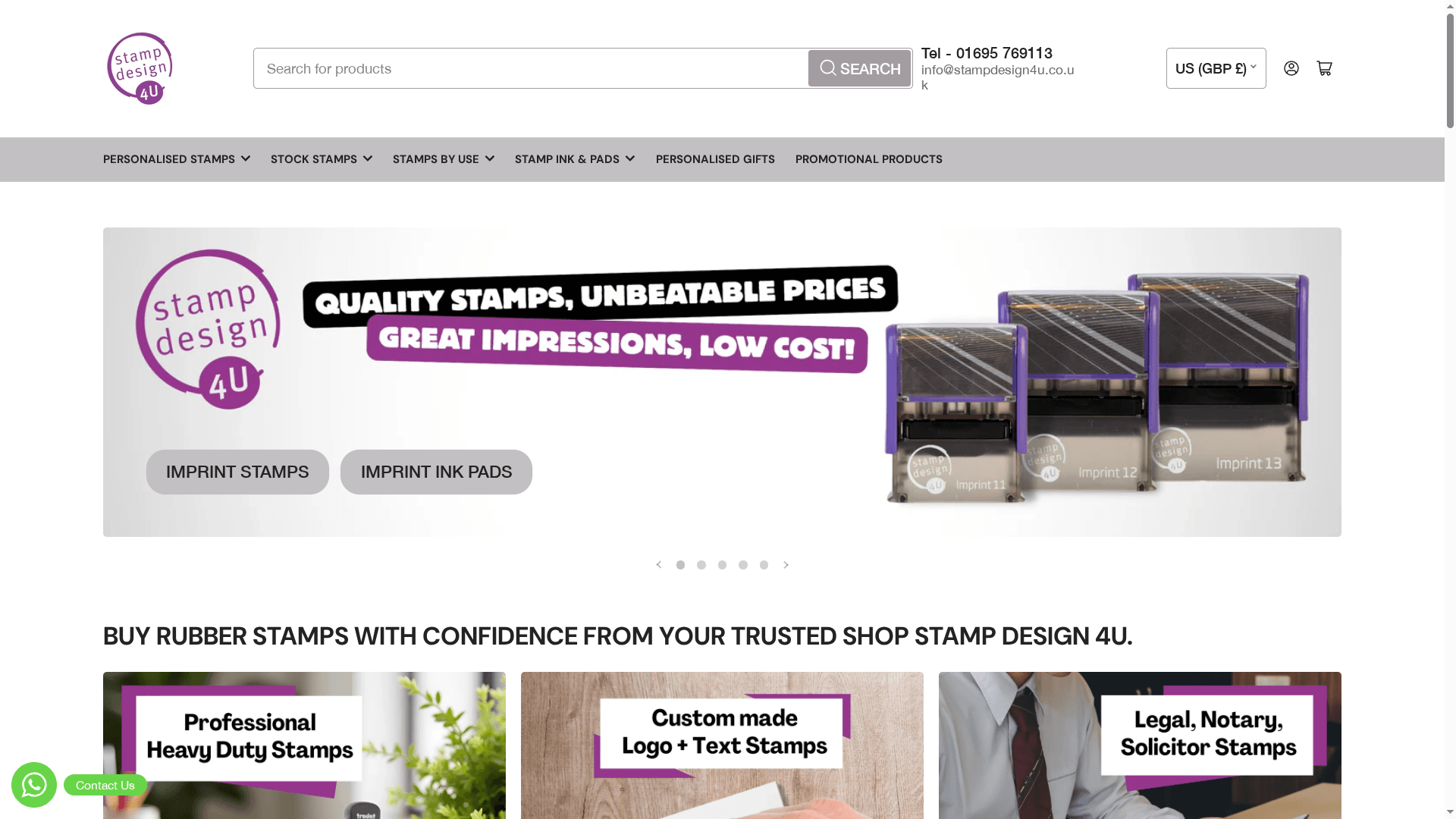
The Trodat 4927 60 x 40mm is the most popular medium-sized choice for business logos and text, suited to contracts, invoices, and correspondence. For smaller marks, the SD4U Imprint 12 at 47 x 17mm accepts custom logo uploads and fits neatly within compact document spaces. Every order includes a proof for review before production, so you can confirm dimensions and layout at actual size. Visit Stampdesign4u to browse the full range and select the dimensions that match your documents.
FAQ
What is the most versatile stamp size for general business use?
Medium stamps in the 50–60mm width range are the most versatile choice for general business use. They maintain clear letter spacing and fit standard documents such as invoices and contracts without crowding the page.
How do i know if my stamp design will be legible at a small size?
Proof your design at actual stamp dimensions before ordering, either printed on paper or displayed at 100% scale on screen. Fine lines, thin fonts, and intricate logos often lose detail at small sizes and may require a larger format or a simplified design.
Can i order a stamp in a custom size outside the standard tiers?
Custom stamp sizes are available from many manufacturers, including options on Stampdesign4u, to fit unique document layouts or signature proportions beyond the standard small, medium, and large categories.
Does stamp shape affect how readable the impression is?
Yes. Rectangular stamps suit horizontal text blocks, square stamps suit compact logos, and round stamps suit seals and badges. Choosing the wrong shape forces content to compress or stretch, which reduces legibility regardless of size.
What is the best stamp size for a return address?
A rectangular stamp at approximately 58 x 22mm, such as the Imprint 13 format, is the standard choice for return addresses. It fits all common envelope sizes without overlapping postal barcodes or address windows.