

Standing out in a crowded market can feel like an uphill battle for many UK small business owners. Creating a lasting impression on customers requires more than just a memorable logo online. Personalised rubber stamps offer a tactile, affordable way to put your mark on every package, receipt, and business card. With roots tracing back to around 2000 BC, when branding evolved from simple stamped marks of ownership, businesses have long understood that consistency builds trust and recognition in the minds of customers.
Table of Contents
- What Are Stamps In Branding? Core Definition
- Types Of Branding Stamps And Key Features
- Smart Applications For Small Businesses
- Brand Identity, Consistency, And Personalisation
- Cost Savings And Common Mistakes To Avoid
Key Takeaways
| Point | Details |
|---|---|
| Brand Stamps Build Recognition | Consistent use of physical stamps fosters brand recall and builds customer trust through repeated exposure. |
| Select the Right Stamp Type | Choosing the appropriate type of stamp is crucial for effectiveness and cost-efficiency in branding applications. |
| Maximise Brand Touchpoints | Identify key customer interactions to strategically deploy stamps, enhancing both brand presence and operational efficiency. |
| Maintain Consistency to Strengthen Identity | A unified stamp design reinforces brand identity, while personalisation can be integrated around this consistent visual anchor. |
What Are Stamps in Branding? Core Definition
Stamps in branding represent a physical mark of identity that your business places on products, packaging, and marketing materials to establish ownership and reinforce recognition. Put simply, a brand stamp is a custom-designed tool that reproduces your logo, company name, or distinctive symbol repeatedly and consistently across tangible items. Unlike digital branding, which exists purely on screens, stamps create a tactile, real-world presence that customers can see and feel. This distinction matters because people remember physical interactions more vividly than fleeting digital encounters.
The concept has deep historical roots. Branding evolved from marking ownership on livestock and goods dating back around 2000 BC, when manufacturers used stamps and symbols to distinguish their products in early marketplaces. This ancient practice recognised something your business needs today: consistency builds trust. When customers see your stamp repeatedly on invoices, parcels, product labels, and correspondence, they develop familiarity and confidence in your brand. For UK SMEs particularly, this repetition creates what call "brand recall"—the ability of customers to remember and recognise your business without conscious effort.
In contemporary branding, stamps function as a visual identity component that differentiates your business from competitors. Your stamp communicates your unique proposition through consistent graphical representation, whether it's an embossed logo on packaging, a date stamp on perishable goods, or a company seal on official documents. The beauty of using stamps lies in their versatility and affordability. A single investment in a custom rubber stamp design can deliver thousands of branded touchpoints without reprinting costs. For a small bakery, a date stamp proves product freshness whilst reinforcing brand identity. For a boutique fashion label, a logo stamp on tissue paper and boxes elevates perceived value at minimal expense.
Pro tip: Consider the specific touchpoints where your stamp will appear before design, as this shapes whether you need a larger format for packaging or a smaller version for correspondence—thinking ahead prevents costly redesigns later.
Types of Branding Stamps and Key Features
Branding stamps come in several distinct varieties, each serving different business purposes and applications. Understanding which type suits your needs prevents wasted investment and ensures your stamp delivers consistent brand reinforcement. The main categories break down into rubber stamps, self-inking stamps, pre-inked stamps, and embossing stamps, though hybrid designs and custom variations exist for specialised use cases. Your choice depends on volume requirements, frequency of use, and the materials you're stamping onto.
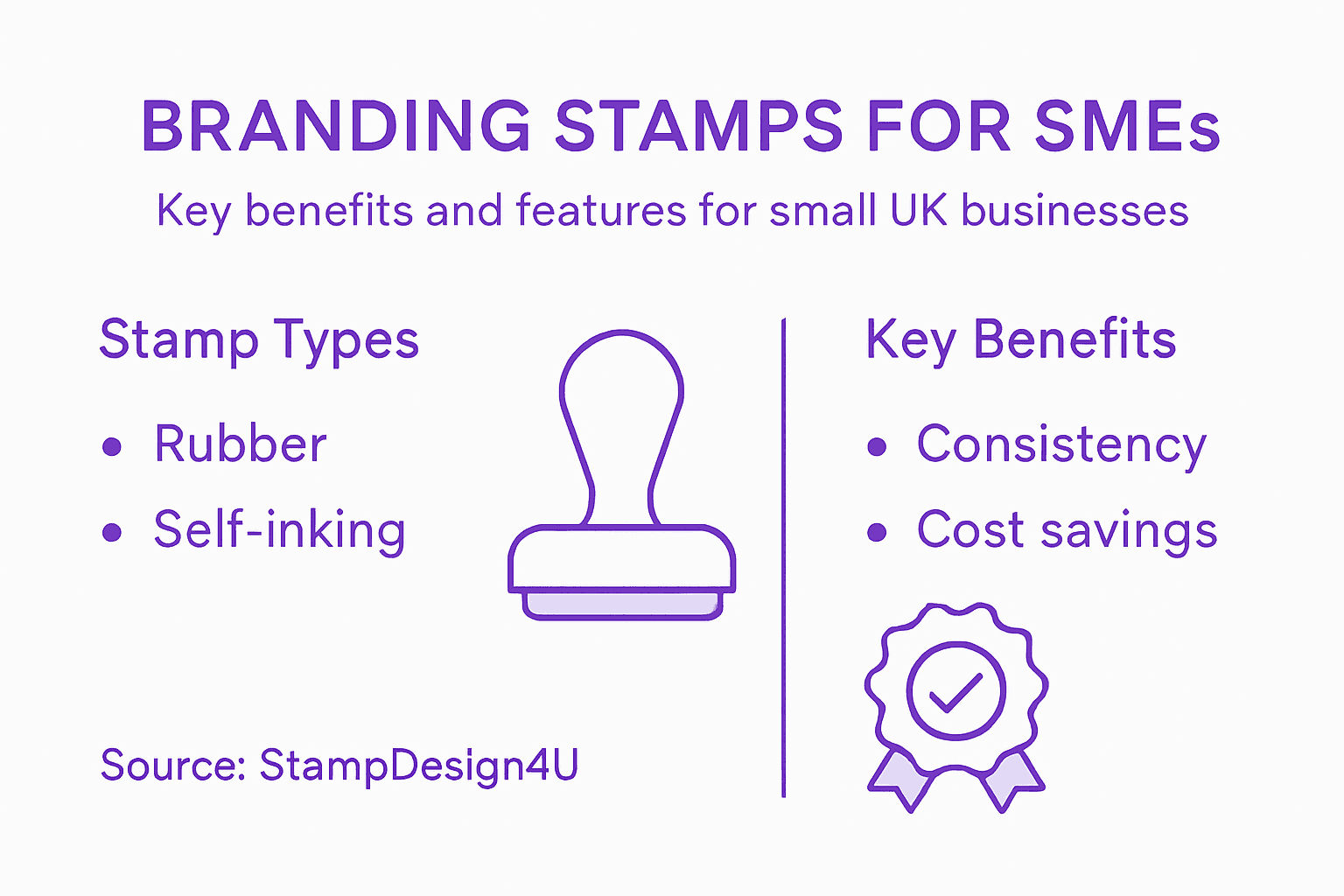
Rubber stamps remain the most affordable and customisable option for UK SMEs starting their branding journey. These traditional stamps require manual inking with a separate pad, making them ideal for low to moderate stamping volumes. They're durable, last for years with proper care, and work on virtually any surface from cardboard to fabric. Self-inking stamps automate the process by incorporating an internal ink reservoir, eliminating the need for a separate pad. This suits businesses handling regular correspondence or package labelling where speed matters. Pre-inked stamps deliver the sharpest impressions and maintain consistency across thousands of stamps before requiring replacement, making them perfect for high-volume operations or situations where precision is paramount. Branding stamps require distinctiveness and consistent application to maintain your brand's professional appearance and ensure customers instantly recognise your mark.
Key features to prioritise when selecting your stamp type include design clarity, ink durability, and application consistency. Your stamp design should be distinctive enough that it stands out on busy packaging without overwhelming the layout. Ink durability matters because faded or smudged stamps damage brand perception rather than enhance it. Application consistency ensures every impression looks identical, building the visual repetition that strengthens brand recall. Embossing stamps create raised or debossed impressions without ink, offering a premium feel for luxury branding or official documents. Many UK SMEs combine stamp types across different touchpoints. A small business might use a rubber stamp for invoice authentication, a self-inking stamp for parcel labelling, and an embossing seal for formal correspondence. This strategic variety maximises brand exposure whilst optimising cost and effort for each specific use.
Pro tip: Test your stamp design on the actual materials you'll be using before ordering large quantities, as ink absorption varies dramatically between cardboard, tissue paper, and kraft packaging.
To help UK SMEs decide which branding stamp fits their needs, see this feature and suitability comparison:
| Stamp Type | Best Use Cases | Key Benefit | Typical Drawback |
|---|---|---|---|
| Rubber | Invoices, low-volume runs | Most affordable, highly flexible | Slow for large batches |
| Self-inking | Package labelling, forms | Fast, clean, repeatable | Limited ink capacity |
| Pre-inked | High-volume, precision | Crisp detail, thousands of uses | Higher upfront cost |
| Embossing | Formal docs, luxury packs | Premium, tamper-proof finish | No colour, only raised graphic |
Featured Collection
Custom Logo Stamps for UK Businesses
Put your brand on every package, invoice, and parcel. Our custom logo stamps are built to deliver a sharp, consistent impression across all your key touchpoints.
Shop Logo Stamps →Smart Applications for Small Businesses
Stamps work hardest when you deploy them strategically across the exact touchpoints where your customers interact with your brand. For most UK SMEs, the real opportunity lies not in choosing a stamp type, but in identifying where stamps solve genuine business problems whilst reinforcing identity simultaneously. A bakery stamping expiry dates on boxes kills two birds with one stone: meeting food safety requirements whilst displaying the company logo. A freelance designer stamping invoices adds authenticity and prevents disputes about authenticity. An online boutique stamping thank you cards in parcels creates an unboxing moment that customers photograph and share. These aren't just stamp uses. They're strategic brand moments disguised as operational necessities.
Consider your customer journey from first contact through repeat purchase. Where does a physical stamp actually appear? On order confirmations printed at your desk. On packaging as items ship. On receipts at point of sale. On business cards during networking. On invoices awaiting payment. Each of these touchpoints represents a chance to either reinforce your brand or let it fade into generic anonymity. The most effective small businesses recognise that maintaining customer trust through transparent practices builds long-term loyalty, and visible branding through stamps contributes to that perception of professionalism and authenticity. When customers see your consistent mark repeatedly, they unconsciously build confidence in your operation.
Small businesses often overlook stamps because they seem old-fashioned compared to digital marketing. That's precisely why they work so well. Your Instagram ads blend into thousands of others. Your stamp stands out because it's tactile, memorable, and distinctly yours. A handwritten note with a company stamp lands differently than a generic email. A parcel with your embossed seal says quality. A date stamp on products communicates transparency. The applications vary wildly by industry, but the principle remains constant: stamps fill operational gaps whilst amplifying brand presence. Charity shops use date stamps to track donations. Accountants use stamps to mark completed returns. Hairdressers use stamps for loyalty cards. Construction firms use stamps on safety documentation. Your job is simply identifying where your business already stamps things, then upgrading those stamps with intentional design.
Pro tip: Map out your customer touchpoints for the next month, mark where physical impressions currently happen, then prioritise upgrading the three most visible stamp opportunities first rather than attempting a complete overhaul.
Here is a summary of smart branding stamp applications by industry to inspire your approach:
| Sector | Common Application | Branding Impact |
|---|---|---|
| Bakery | Date on boxes, logo on bags | Shows freshness, builds trust |
| Boutique retail | Logo on tissue and cards | Enhances unboxing experience |
| Accountancy | Approval mark on returns | Signals verification, authority |
| Charity shop | Date on donated goods | Tracks stock, professional image |
| Hairdressing | Logo on loyalty cards | Drives repeat custom, memorability |
| Construction | Stamp on safety documents | Demonstrates compliance, reliability |
Shop the Range
Personalised Address Stamps
Brand every parcel and envelope with your business address. Our personalised address stamps make every delivery a professional brand moment.
Shop Address Stamps →Brand Identity, Consistency, and Personalisation
Your brand identity lives or dies by consistency. Not the boring, soul-crushing kind where everything looks identical, but the kind where people instantly recognise your mark regardless of context. A stamp is one of the most powerful tools for achieving this because it forces discipline. You cannot stamp something with five different designs and claim coherent branding. You choose one mark, refine it, and deploy it relentlessly across every surface where your business touches customers. That repetition builds what marketing professionals call "brand equity," which translates directly into customer loyalty and pricing power. When someone sees your stamp on a parcel before opening it, they already know what to expect from the contents. That knowledge comes entirely from consistency.

Personalisation within consistent branding isn't a contradiction; it's the sweet spot most small businesses struggle to find. You might use your core logo stamp on all packaging, but personalise the message or add a handwritten note inside. Customers appreciate the consistent identity combined with the personal touch. This approach works because it signals both professionalism and care simultaneously. A coffee roaster might stamp its logo on every bag (consistency) but personalise the roast date and tasting notes for each batch (personalisation). The stamp itself becomes a quality signal, whilst the customisation makes customers feel seen. Strong branding through consistent trade mark usage builds consumer trust and differentiates your business from competitors who lack that intentional coherence. Your stamp is that trade mark made tangible.
Many UK SMEs wrongly assume that personalisation means abandoning brand standards. The truth is messier and more nuanced. You can personalise customer interactions, product variations, and communication styles whilst maintaining strict consistency in your visual identity through stamps. A jeweller might stamp its hallmark on every piece (consistent identity), but the piece itself is unique to each customer (personalisation). Your customers remember the stamp consistently, yet feel the personalisation deeply. This balance prevents your brand from feeling cold or corporate whilst preventing it from becoming chaotic or unprofessional. The stamp becomes your visual anchor that holds everything together, regardless of how personalised the experience becomes around it.
Here's what matters practically: design your stamp carefully, use it everywhere without exception, then personalise everything around it. Don't stamp different logos on different products. Don't sometimes include your stamp and sometimes omit it. Don't vary the stamp design based on the season or campaign. That inconsistency destroys the recognition you're building. Personalise your messages, products, packaging variations, and customer interactions freely. Just keep the stamp itself constant. Over time, customers will develop an almost Pavlovian response to seeing your mark. That's not manipulation. That's successful branding.
Pro tip: Create a simple one-page brand stamp guide documenting the exact size, colour, placement, and usage rules for your stamp, then share it with anyone who handles your materials to prevent inconsistency creeping in as your business scales.
Cost Savings and Common Mistakes to Avoid
Stamps represent one of the most cost-effective branding investments available to UK SMEs, yet many businesses squander this advantage through preventable errors. A single custom stamp costs between £20 and £100 depending on complexity, then produces thousands of branded impressions before needing replacement. Compare this to reprinting business cards, letterheads, or packaging with your logo embedded, and the mathematics become obvious. One stamp delivers what would otherwise require multiple print runs across different materials. But cost savings evaporate quickly if you make fundamental mistakes that force redesigns, reprints, or worse, damage to your brand reputation.
The most expensive mistake is designing a stamp without considering where it will actually be used. You order a detailed, intricate design only to discover the ink doesn't transfer clearly onto kraft paper. Or you choose colours that look professional on screen but appear muddy when stamped onto cardboard boxes. Or you design a stamp so large it dominates your packaging, leaving no room for product information. These errors force you to scrap the stamp entirely and start over, converting your cost-saving tool into a costly disaster. Effective brand management improves customer retention and reduces marketing waste by avoiding such oversights. Before commissioning your stamp, test your design on the actual materials you'll stamp. Purchase a sample sheet of your packaging stock and request a test stamp. This small investment prevents thousands in wasted materials later.
Another critical mistake involves treating stamps as set-and-forget investments. You design a stamp, use it for two months, then abandon it when you rebrand or redesign your logo. This inconsistency destroys the recognition you were building. Your early customers see mark A, your new customers see mark B, and nobody develops strong brand association. Worse, if you've already stamped thousands of items with the old design, you've wasted resources on materials that now clash with your new direction. Avoid this by designing a stamp you genuinely intend to use for at least three to five years. Make it timeless rather than trendy. A simple, clean design withstands the test of time far better than elaborate artwork that dates quickly.
Compliance represents another often-overlooked cost area. When you personalise communications with customer details and stamp them, you're handling personal data. Non-compliance with data protection laws in marketing activities can result in costly fines and damage your brand reputation significantly. Ensure any customer information you stamp onto materials follows General Data Protection Regulation requirements. Don't stamp customer names and addresses on external packaging visible to postal workers. Don't stamp email addresses on invoices without consent. These small oversights can cascade into regulatory investigations that cost far more than the savings your stamps provide.
Finally, resist the temptation to order in bulk without testing. A cheap supplier might offer 500 stamps at a bargain price, but if the quality is poor, you'll stamp your way into brand damage rather than brand building. Order a smaller quantity first, test the results thoroughly, then scale up with a supplier you trust. The per-unit savings of bulk ordering vanish when you're paying to redo thousands of stamped items because the quality was substandard.
Pro tip: Create a cost tracking spreadsheet documenting your stamp investment, ink costs, and the number of items stamped, then calculate your cost-per-branded-touchpoint to see the true value compared to traditional printing methods.
Elevate Your UK SME Brand with Custom Stamps from StampDesign4U
Building a consistent and memorable brand identity requires tangible tools that reinforce your presence at every customer touchpoint. As highlighted in the article, stamps play a crucial role in establishing trust, authenticity, and professionalism—especially for UK SMEs seeking affordable yet effective solutions. Whether you need a precise rubber stamp for invoices or an elegant embossing seal for premium packaging, addressing clear challenges like maintaining brand consistency and creating a lasting impression is vital for your business growth.
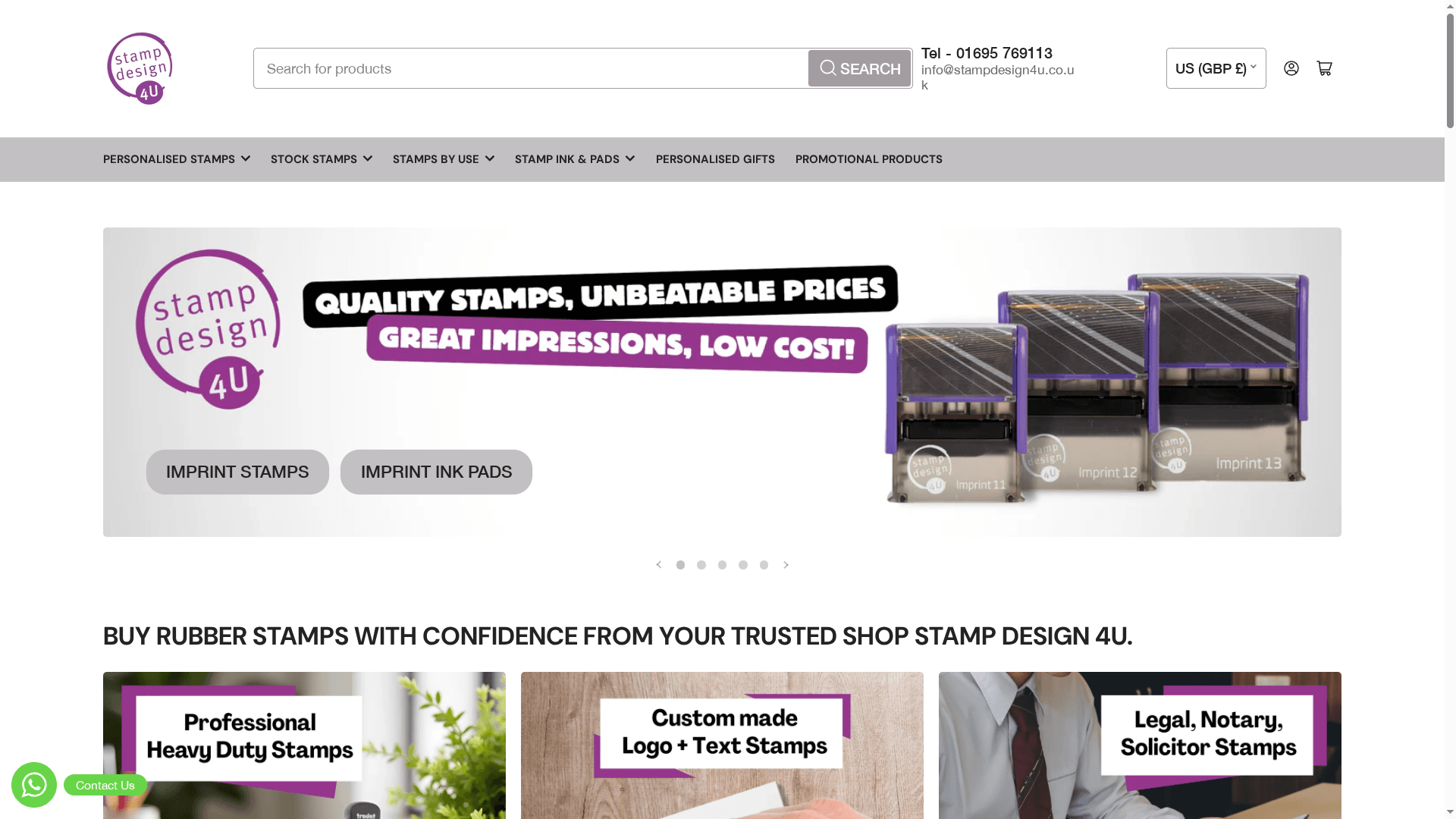
Take control of your branding today by exploring customisable stamp options tailored to your unique needs at StampDesign4U. Our platform offers easy navigation, country-specific selections, and expert support designed to help your business achieve consistency and personalise your brand touchpoints effectively. Do not let outdated or inconsistent branding hold you back. Visit custom rubber stamps now to start creating your perfect brand stamp and watch your business stand out with every impression.
Shop All Branding Stamps
Build Your Brand with Every Impression
From logo stamps and address stamps to self-inking and pre-inked — explore the full Stamp Design 4U range and find the perfect stamp to represent your UK business.
Browse Branding Stamps →Frequently Asked Questions
What are the benefits of using stamps in branding for small businesses?
Stamps provide a cost-effective way to enhance brand recognition and consistency across various touchpoints. They create a tangible presence that customers can see and feel, reinforcing trust and familiarity through repeated use.
How do I choose the right type of stamp for my business needs?
Consider your stamping volume, the frequency of use, and the materials you'll be stamping on. Rubber stamps are great for low volumes, while self-inking and pre-inked stamps are suited for higher frequencies and precision. Embossing stamps offer a premium feel for formal documents.
How can I effectively integrate stamps into my customer journey?
Identify key touchpoints where physical interactions occur, such as packaging, invoices, and receipts. By strategically placing your stamp at these points, you reinforce brand recognition and add a personal touch, enhancing the overall customer experience.
What common mistakes should I avoid when designing and using branding stamps?
Avoid creating overly complex designs that may not transfer well to various surfaces. Additionally, ensure consistent usage of your stamp to prevent confusion among customers. Remember to comply with data protection laws when stamping personal information to avoid legal issues.